

Bladderwrack Benefits Dr. Sebi Followers Rely On
Bladderwrack earns its place in Dr. Sebi–style herbal practice as a mineral-dense seaweed used mainly for iodine and trace-mineral replenishment, plus topical skin preparations. That is the honest verdict. What it is not, based on current evidence, is a proven treatment for weight loss, arthritis, or thyroid disease in controlled human trials.
The main safety flag is iodine variability. Wild-harvested bladderwrack (Fucus vesiculosus) can carry wildly different iodine loads depending on where and when it was harvested, and that same unpredictability applies to heavy-metal contamination in poorly sourced batches. Anyone on thyroid medication, blood thinners, or immunotherapy should treat this herb with real caution, not casual enthusiasm.
Here’s what matters most before you buy or brew a cup:
- Primary traditional uses: thyroid and mineral support, topical skin formulas, and general alkaline mineral replenishment.
- Biggest caution: iodine content swings by harvest location, so unlabeled or untested product is a gamble, not a supplement.
- Evidence status: most of what’s claimed comes from traditional use and lab studies, not large human trials.
Alkaherbs sources and tests its bladderwrack specifically to manage that iodine and contaminant variability, which is the practical difference between a risky wildcrafted scoop and a supplement you can dose with some confidence.
Key Takeaways
Bladderwrack works best as a tested, mineral-dense addition to an alkaline herbal routine, not as an unverified cure for thyroid disease, arthritis, or weight loss.
| Point | Details |
|---|---|
| Evidence gap is real | Most bladderwrack claims rest on traditional use and lab studies, not large human trials. |
| Iodine varies by harvest | Wild-harvested bladderwrack can deliver very different iodine doses batch to batch. |
| Skin evidence is strongest | Topical extracts show improved collagen and reduced cellulite in small trials; oral evidence is weaker. |
| Certain groups need medical input first | Pregnant people, thyroid medication users, and immunotherapy patients should consult a doctor before use. |
| Sourcing determines safety | Alkaherbs tests and traces its bladderwrack and blended sea moss capsules to manage iodine and contaminant risk. |
Table of Contents
- Bladderwrack Benefits Dr. Sebi Followers Should Understand First
- What the Research Actually Shows, and Where It Falls Short
- System-by-System: Thyroid, Skin, Joints, Metabolism, and Gut
- How Much Bladderwrack to Take and How to Source It Safely
- Dr. Sebi’s Mineral Philosophy and How Alkaherbs Applies It
- My Take: Respect the Minerals, Question the Miracle Claims
- Where to Find Tested Bladderwrack for Dr. Sebi Protocols
- Frequently Asked Questions
- Sources
Bladderwrack Benefits Dr. Sebi Followers Should Understand First
Bladderwrack is the common name for Fucus vesiculosus, a brown seaweed that grows along rocky Atlantic and Pacific coastlines and gets its name from the small air bladders that keep its fronds floating near the surface. It is distinct from kelps like kombu or wakame, which belong to different genera entirely and carry different mineral profiles. Dr. Sebi’s herbal approach grouped bladderwrack with other alkaline, mineral-rich plants meant to replenish the body rather than mask symptoms, a framing still central to how Dr. Sebi emphasized mineral-rich herbs for healing.
The plant’s reputation rests on a handful of compounds:
- Iodine — the mineral most associated with thyroid hormone production, and the one requiring the most caution.
- Fucoidan — a sulfated polysaccharide studied for anti-inflammatory and antioxidant activity in lab and animal models.
- Phlorotannins — polyphenol compounds with antioxidant properties similar in concept to those found in tea or berries.
- Alginic acid — a fiber-like substance that swells with water, giving bladderwrack its mild bulking and demulcent effect in the gut.
- Fucoxanthin — a carotenoid pigment studied for metabolic and antioxidant effects, mostly in preclinical work.
These compounds show real antioxidant and anti-inflammatory activity in preclinical studies on Fucus species, though that is a different claim than proven benefit in people.
You’ll find bladderwrack sold as dried whole fronds, coarse powder, encapsulated extract, liquid tincture, and topical creams or masks. Some brands blend it with sea moss for a combined mineral profile, which is how many Dr. Sebi followers actually take it day to day. One detail gets lost in most product descriptions: iodine concentration in Fucus vesiculosus varies significantly depending on where and when it was harvested, so two bags labeled identically can deliver very different doses.
What the Research Actually Shows, and Where It Falls Short
Clinical summaries are consistent on one point: human evidence for bladderwrack’s most popular claims, including weight loss and osteoarthritis relief, remains limited and often inconclusive. That is not the same as saying the herb does nothing. It means the leap from “shows promise in a petri dish” to “will fix your joints” has not been made in rigorous human trials, and readers deserve to know exactly where that gap sits.
The preclinical case is genuinely interesting. Fucoidan has demonstrated anti-inflammatory signaling in cell and animal studies, phlorotannins show measurable antioxidant activity in lab assays, and alginic acid behaves as a soluble fiber that can bind water and bulk stool. Multiple PubMed-indexed reviews document these mechanisms in detail while explicitly noting that human clinical trials confirming the same effects in living people are scarce. That caveat appears again and again across the literature, which tells you something about the current state of the science: mechanism is well mapped, outcome in humans is not.
Traditional use spanning generations explains why bladderwrack earns trust, but clinicians draw a firm line between mineral-replacement use, like getting dietary iodine from a known, tested source, and claims that the herb treats or cures a specific disease. That distinction is the single most useful filter for evaluating any bladderwrack claim you encounter.
Small human studies do exist, and they’re worth naming specifically rather than lumping into vague “some research suggests” language. Topical trials applying bladderwrack extract to skin have reported improved collagen synthesis and reduced visible cellulite in small samples, a genuinely promising result for skin-focused use, according to Healthline’s review of bladderwrack. A handful of trials have also examined bladderwrack or related seaweed extracts for menstrual symptom relief, with mixed and modest results. Where the evidence gets thinner is oral supplementation for weight loss and joint pain: small studies here have produced marginal or inconsistent findings, not the kind of clean, repeatable result that would let anyone call bladderwrack a proven arthritis remedy.
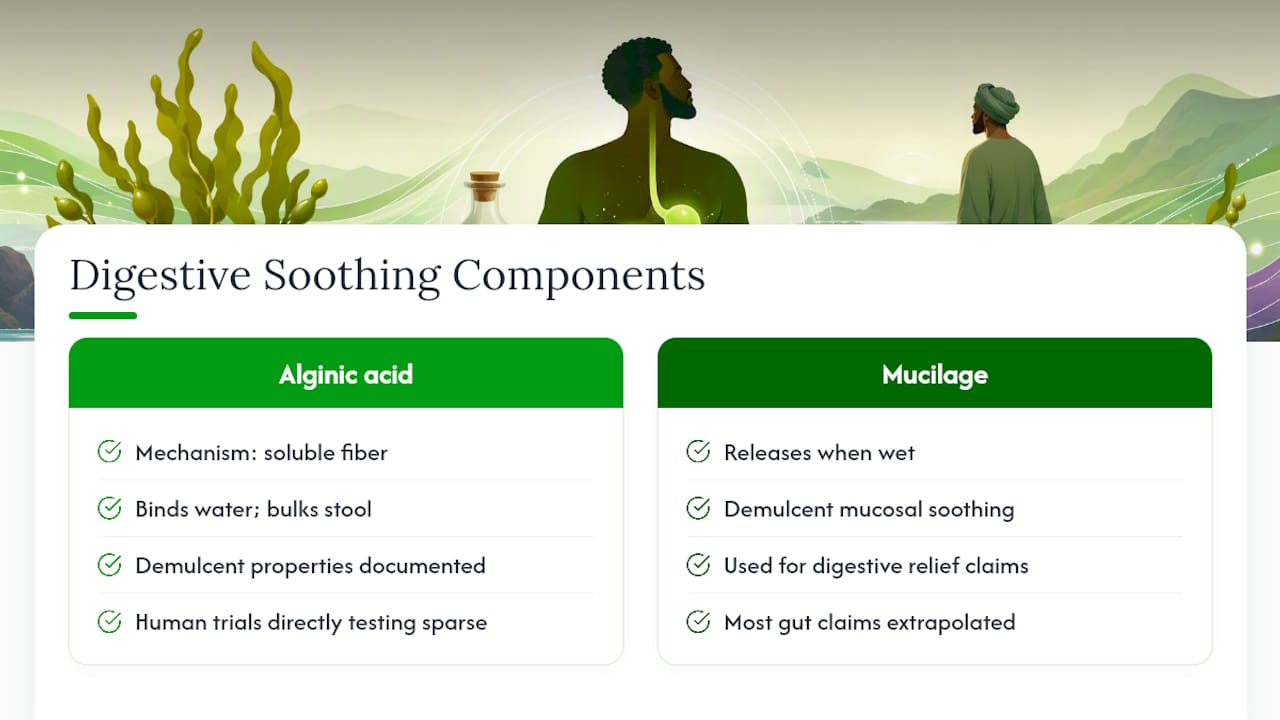
Digestive and mucosal-soothing effects come from alginic acid and the mucilage bladderwrack releases when wet, both of which have documented demulcent properties, per PeaceHealth’s clinical summary. But even here, human trials directly testing bladderwrack for digestive relief are sparse. Most of what’s written about gut benefits comes from extrapolating fiber and mucilage science generally, applied to this specific plant, rather than dedicated bladderwrack trials.
The honest summary: traditional use tells you this plant has been trusted for generations, and preclinical science tells you plausible mechanisms exist for several of its reputation-building claims. Neither one substitutes for a well-designed human trial, and for most of bladderwrack’s headline benefits, that trial simply hasn’t been run yet at meaningful scale.
System-by-System: Thyroid, Skin, Joints, Metabolism, and Gut
Breaking bladderwrack’s claimed benefits down by body system makes it much easier to separate what’s plausible from what’s oversold. Here’s how each one actually holds up.
-
Thyroid support. Bladderwrack’s iodine content can genuinely help someone who is iodine deficient, since iodine is a required building block for thyroid hormone. But this is a two-edged sword: excess iodine intake can just as easily disrupt thyroid function, especially in people with existing thyroid disease or those taking thyroid medication. The adult recommended dietary allowance for iodine is generally recognized as a moderate amount, with an upper intake limit to avoid excess, and a single serving of unlabeled bladderwrack can exceed safe iodine levels without clear indication. This is precisely why dosing blind, with wildcrafted or untested product, is a real risk rather than a theoretical one.
-
Skin. The strongest evidence in this entire article lives here, and it’s topical, not oral. Extract applied directly to skin has shown measurable improvements in collagen synthesis and cellulite appearance in small human trials. Swallowing a capsule and hoping for the same skin outcome is a mechanistically different claim, and one that current research does not support nearly as well.
-
Joints and inflammation. Fucoidan’s anti-inflammatory signaling in animal and cell studies is real and reasonably well documented. What’s missing is a strong human trial showing bladderwrack meaningfully reduces osteoarthritis pain or swelling. If you’re taking it hoping for joint relief, treat it as a mineral-support addition to your routine, not a substitute for what’s actually working (or not working) for your joints already.
-
Metabolism and weight. The logic chain here, iodine supports thyroid function, thyroid function influences metabolic rate, gets repeated constantly in wellness content. It’s mechanistically coherent. It is also not the same as a solid human trial showing bladderwrack causes weight loss, and no such trial currently exists at a scale worth citing.
-
Gut and digestion. Alginic acid and the mucilage bladderwrack releases in water act as a mild demulcent and bulking agent, which can ease occasional constipation. This use has the most direct traditional-use support of the group, and it lines up with well-understood fiber science, but dedicated bladderwrack digestion trials in humans remain rare.
Pro Tip: If your goal is mineral replenishment rather than a specific medical outcome, start with a tested product and a conservative dose, then track how you feel over two to three weeks before increasing anything. Bladderwrack rewards patience, not aggressive dosing.
How Much Bladderwrack to Take and How to Source It Safely
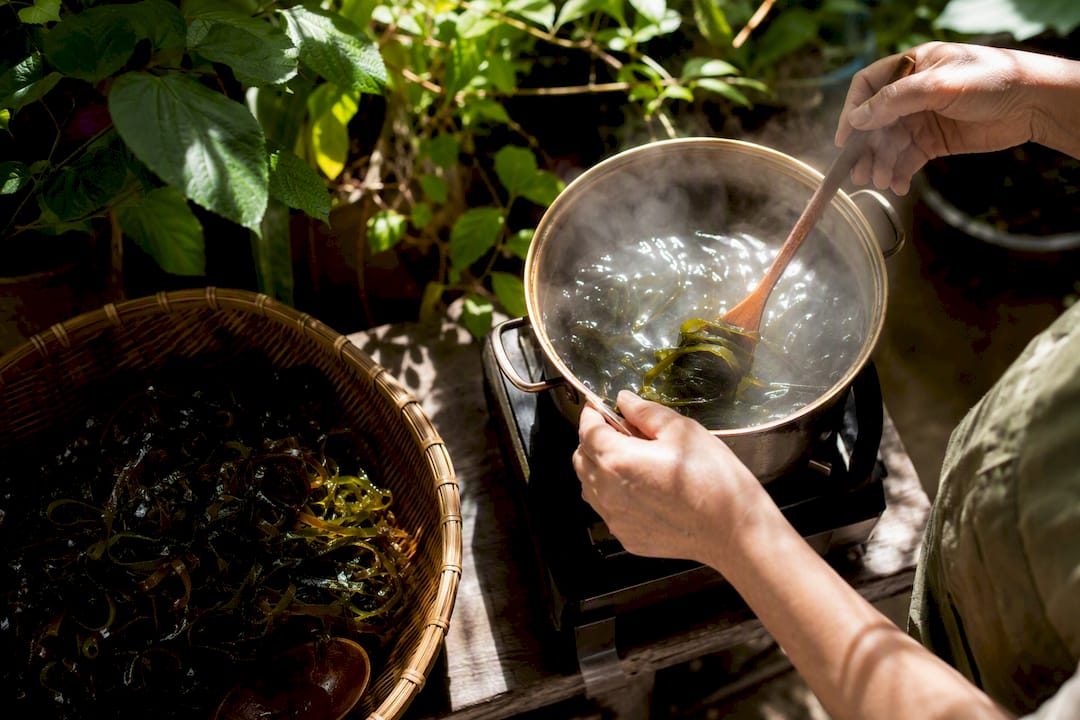
Most Dr. Sebi–aligned routines use bladderwrack in a few consistent forms: brewed as tea, roughly one teaspoon of dried herb per cup, steeped ten minutes; stirred into water or juice as a powder, often starting around a quarter to half teaspoon; or taken as capsules, where herbal references commonly cite ranges in the 400 to 600 milligram territory per dose, though this varies by product concentration. None of these numbers matter much if the underlying iodine content is unknown, which is the entire point of buying from a source that tests its harvests rather than guessing.
A practical sourcing checklist before you buy any bladderwrack product:
- Harvest origin disclosed. Know which coastal region the seaweed came from, since iodine and contaminant levels track geography.
- Heavy-metal testing available. Arsenic, lead, and cadmium can accumulate in seaweed; ask whether batches are tested, not just “sourced responsibly.”
- Iodine content labeled or estimated. Vague labeling is a red flag, not a minor inconvenience.
- Wild versus farmed noted. Wild harvests carry more variability; farmed or controlled-harvest product tends to be more consistent.
- Third-party verification where possible. Independent testing adds a layer of accountability beyond the brand’s own claims.
Certain groups should talk to a doctor before starting bladderwrack at all: pregnant or breastfeeding people, anyone on thyroid medication, people with kidney disease, and anyone on blood thinners or undergoing chemotherapy or immunotherapy. That last group matters more than most articles mention. Supplements with anticoagulant-like or immune-modulating activity can complicate cancer treatment in ways patients don’t always anticipate, and the Hippocratic Cancer Research Foundation’s patient guide on supplements to avoid during immunotherapy is worth reading before combining bladderwrack with active treatment.
One processing detail deserves more attention than it gets: blanching or brief heat treatment can measurably reduce iodine and certain heavy metals in several seaweed species, a manufacturing control that matters far more than most consumers realize when comparing raw wildcrafted seaweed to a processed, tested product.
Dr. Sebi’s Mineral Philosophy and How Alkaherbs Applies It
Dr. Sebi built his herbal approach around the idea that the body heals when it receives real, absorbable minerals, not synthetic replacements, and that alkalinity supports the environment those minerals need to work. Bladderwrack fit that philosophy as a mineral-dense, ocean-sourced plant rather than a stand-alone cure for any single condition.
Alkaherbs applies that same mineral-first logic to how it sources and formulates bladderwrack:
- Organic, non-GMO sourcing standards applied to every batch, not just flagship products.
- Formulations that pair bladderwrack with sea moss to broaden the mineral profile beyond iodine alone.
- A preference for traceable harvests over anonymous wildcrafted material, addressing the iodine variability problem directly.
One safety reminder still applies regardless of brand: even a well-tested product should be started at a low dose and increased gradually, especially for anyone new to iodine-containing seaweed.
My Take: Respect the Minerals, Question the Miracle Claims
The evidence supports treating bladderwrack as a mineral-replenishment tool within a broader alkaline diet, not as a stand-alone treatment for arthritis, thyroid disease, or stubborn weight. Conventional wellness content oversells the metabolism and joint claims far past what the preclinical data actually justifies, while consistently underselling the one area with real human evidence: topical skin use.
If you take one thing from Dr. Sebi’s original framing, it should be this: he emphasized minerals as building blocks, not bladderwrack as magic. That’s a more modest claim than most supplement marketing makes, and it happens to be the one the science can actually back up.
Prioritize sourcing before dosing. A perfectly measured teaspoon of untested, high-iodine bladderwrack is still a gamble. Ask where your product comes from and whether it’s been tested before you ask how much to take.
Where to Find Tested Bladderwrack for Dr. Sebi Protocols
If you’re ready to add bladderwrack to your routine, the product itself matters more than the ritual around it. Alkaherbs’ Bladderwrack Herb (Fucus vesiculosus) is sourced with the iodine variability problem front of mind, so you’re not left guessing what a teaspoon actually delivers.
For followers building a fuller mineral protocol, the Sea Moss and Bladderwrack Capsules combine both plants into one dose, which is how many Dr. Sebi–aligned routines already pair them. Each product page lists the form, testing approach, and suggested dosing directions so you can make an informed choice instead of estimating from a random forum post. Browse the full range of alkaline herbs to see how bladderwrack fits alongside other mineral-dense options, and if you’re managing a thyroid condition, take blood thinners, or have any other medical concern, talk to your doctor before starting, and reach out to Alkaherbs’ support team with dosing questions before you order.
Frequently Asked Questions
Does bladderwrack actually support thyroid health the way Dr. Sebi followers claim?
It can help if you’re genuinely iodine deficient, since iodine is essential for thyroid hormone production. But excess iodine from unlabeled bladderwrack can just as easily disrupt thyroid function, especially for anyone with existing thyroid disease.
Is there real science behind bladderwrack health benefits, or is it mostly tradition?
Both. Preclinical studies confirm real antioxidant and anti-inflammatory activity in bladderwrack’s key compounds, but human clinical trials for most claimed benefits, including weight loss and joint pain, remain sparse or inconclusive.
What’s the safest way to start using bladderwrack in an alkaline protocol?
Start with a low dose from a tested, traceable source, ideally one micron labeled for iodine content, and increase gradually while watching how your body responds over a few weeks.
Can bladderwrack help with digestion the way Dr. Sebi taught?
Alginic acid and mucilage in bladderwrack have demulcent, mild bulking properties that can ease occasional constipation, though dedicated human trials on bladderwrack specifically for digestion are limited.
Who should avoid bladderwrack entirely?
Pregnant or breastfeeding people, anyone on thyroid medication or blood thinners, and patients undergoing chemotherapy or immunotherapy should consult a doctor before use, given documented interaction and contamination risks.
Sources
- Bladder wrack | Memorial Sloan Kettering Cancer Center
- Phycochemical Constituents and Biological Activities of Fucus spp – PMC
- Bladderwrack – Health Information Library | PeaceHealth
- Bladderwrack: Benefits, uses, and side effects | Healthline