

Why Dr. Sebi Emphasized Mineral Rich Herbs for Healing
Dr. Sebi emphasized mineral-rich herbs because he believed the human body is fundamentally electrical, and minerals are what keep that electrical system running. Without adequate minerals, cells lose their charge, pH tips acidic, and the body becomes a breeding ground for disease. His African Bio-Mineral Balance theory built everything around this single premise: restore the minerals, restore the body.
His core argument was straightforward. Modern diets strip the body of bioavailable minerals through processed foods, depleted soils, and synthetic supplements that the body cannot properly absorb. Mineral-rich, alkaline herbs correct that deficit at the cellular level, not by masking symptoms but by rebuilding the internal environment that makes disease difficult to sustain.
The primary benefits Dr. Sebi attributed to mineral-rich herbs include:
- Detoxification by dissolving and expelling mucus that traps toxins in tissues
- Blood purification through iron-rich plants that rebuild and oxygenate red blood cells
- Cellular energy restoration by replenishing the minerals that conduct electrical signals
- pH normalization to shift the body away from the acidic conditions he linked to chronic illness
- Immune strengthening through trace minerals that regulate enzymatic and hormonal processes
He rejected synthetic supplements entirely, arguing that isolated, lab-made minerals create acidic byproducts and lack the co-factors found in whole plants. Plant-based minerals arrive packaged with the enzymes, phytonutrients, and water content that make absorption efficient and gentle.
Table of Contents
- Why Dr. Sebi’s mineral-rich herb philosophy centers on electricity and alkalinity
- What key minerals Dr. Sebi focused on and why they matter
- How mineral-rich herbs support detoxification and restore health
- Profiles of the key mineral-rich herbs Dr. Sebi recommended
- How Alkaherbs sources and delivers these alkaline herbs
- What science says about Dr. Sebi’s claims on mineral-rich herbs
- How mineral-rich herbs affect pH in traditional vs. scientific terms
- Real benefits and honest limitations of Dr. Sebi’s mineral-rich herb approach
- The historical and cultural roots of mineral-rich herbal medicine
- Alkaherbs brings Dr. Sebi’s mineral-rich herbs to you
- Key Takeaways
Why Dr. Sebi’s mineral-rich herb philosophy centers on electricity and alkalinity
Dr. Sebi described the body as an electrical organism that runs on minerals the same way a battery runs on electrolytes. His concept of “electric herbs” refers specifically to plants that carry bioavailable minerals in forms the body can conduct, not just digest. That distinction shaped every herb he recommended.
Alkalinity was the other half of the equation. He taught that an alkaline internal environment, roughly above a neutral pH, prevents the mucus accumulation he considered the root cause of most disease. Acidity, in his view, corrodes cell membranes, thickens mucus secretions, and disrupts the electrical gradients that cells need to communicate. Mineral-rich herbs counteract all three effects simultaneously.
Modern holistic medicine has arrived at a compatible position. The principle of medicine-food homology holds that natural botanicals serve as both nourishment and therapy simultaneously, which is precisely the framework Dr. Sebi built his practice around decades before the term entered mainstream wellness discourse.
- Electric herbs carry minerals in ionic, water-soluble forms that cells absorb without conversion
- Alkaline herbs reduce systemic acidity, which Dr. Sebi linked directly to mucus-driven disease
- Whole-plant minerals arrive with co-factors that synthetic isolates lack
- Replenishing mineral status addresses root causes rather than surface symptoms
What key minerals Dr. Sebi focused on and why they matter
Dr. Sebi’s teachings highlighted a specific cluster of minerals, each tied to a concrete physiological function. His most distinctive concept was “iron fluorine,” a naturally occurring, bioavailable iron form found in certain plants that he considered superior to both synthetic iron supplements and animal-derived heme iron. He argued that plant-based iron supports oxygen transport without the acidic residue that synthetic sources leave behind.
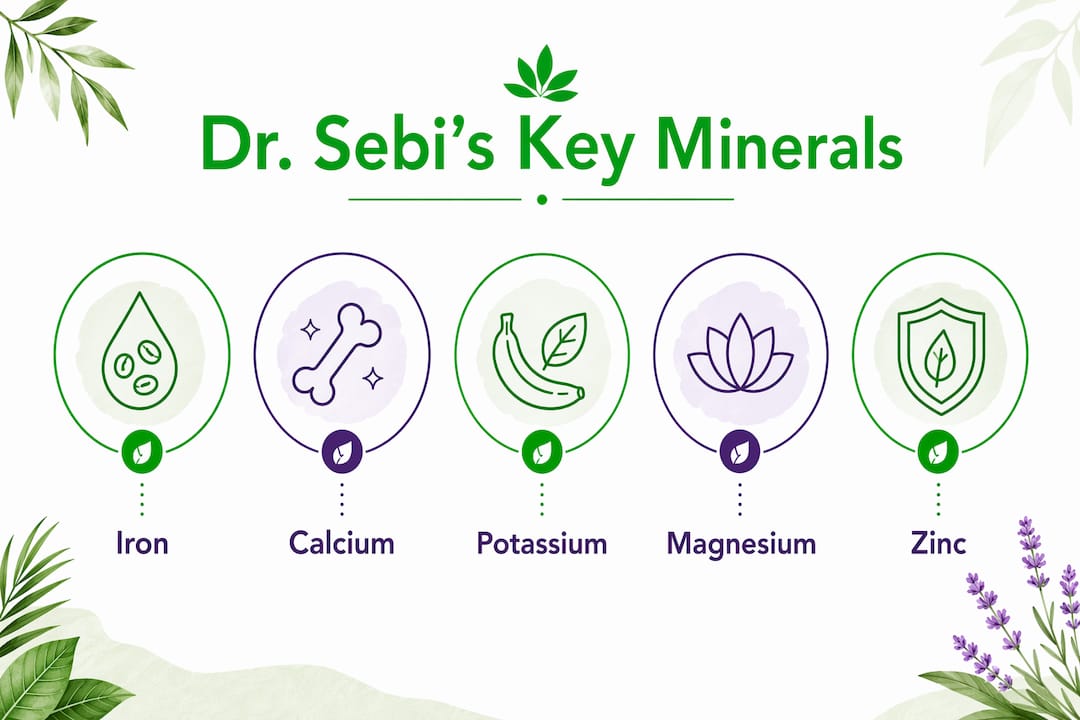
Mineral depletion from stress, poor diet, and soil degradation underlies a wide range of health complaints, from fatigue and poor immunity to nerve dysfunction and digestive instability. Herbs address that depletion by drawing minerals from soil and converting them into forms the body absorbs readily.
| Mineral | Primary physiological role |
|---|---|
| Iron (iron fluorine) | Oxygen transport, red blood cell formation, cellular energy |
| Fluorine | Bone and tooth integrity, cellular membrane strength |
| Calcium | Nerve signaling, muscle contraction, bone density |
| Magnesium | Enzyme activation, stress regulation, sleep quality |
| Potassium | Fluid balance, heart rhythm, nerve conduction |
| Iodine | Thyroid hormone production, metabolic regulation |
- Iron fluorine from plants avoids the constipation and oxidative stress associated with synthetic iron
- Magnesium deficiency is one of the most common mineral gaps in modern diets, affecting nerve and muscle function
- Potassium and sodium work together to maintain the electrical gradient across every cell membrane
- Fluorine in Dr. Sebi’s framework refers to its natural plant form, not the industrial fluoride added to water supplies
Pro Tip: When choosing mineral-rich herbs, look for whole-plant preparations rather than isolated mineral extracts. The co-factors present in the whole plant, including enzymes and trace phytonutrients, are what make the mineral bioavailable.
How mineral-rich herbs support detoxification and restore health
Minerals do not just feed cells. They run the organs responsible for clearing waste. The liver, kidneys, and lymphatic system all depend on specific mineral cofactors to process and expel toxins efficiently. When those minerals are depleted, detox pathways slow down, waste accumulates, and the mucus Dr. Sebi described begins to build up in tissues.

Mineral-rich herbs replenish those cofactors, which restores organ function and accelerates the body’s natural cleansing processes. They also carry bitter compounds and alkaloids that stimulate bile production, support liver filtration, and encourage lymphatic drainage. That combination makes them more than passive nutrient sources.
Specific ways mineral-rich herbs contribute to health restoration:
- Mucus reduction: Alkaline minerals shift pH away from the acidic conditions that cause mucus overproduction
- Liver support: Iron and magnesium activate detox enzymes that process fat-soluble toxins
- Kidney function: Potassium and calcium support the filtration pressure kidneys need to clear waste
- Immune regulation: Trace minerals like zinc and selenium activate white blood cell production
- Nerve and emotional stability: Magnesium and calcium calm the nervous system, reducing stress-driven inflammation
- Tissue repair: Bioavailable iron supports collagen synthesis and cellular regeneration
The stress-resilience benefit is one people often overlook. Chronic stress depletes magnesium faster than almost any other factor, which then amplifies the stress response in a feedback loop. Mineral-rich herbs interrupt that cycle by replenishing magnesium continuously rather than in a single synthetic dose.
Profiles of the key mineral-rich herbs Dr. Sebi recommended
Dr. Sebi’s approved herb list was not arbitrary. Each plant was selected for its mineral density, alkaline nature, and traditional track record across African, Caribbean, and Central American healing systems. His formulas like Maya Electra and Iron Plus combined these herbs to amplify their individual effects.
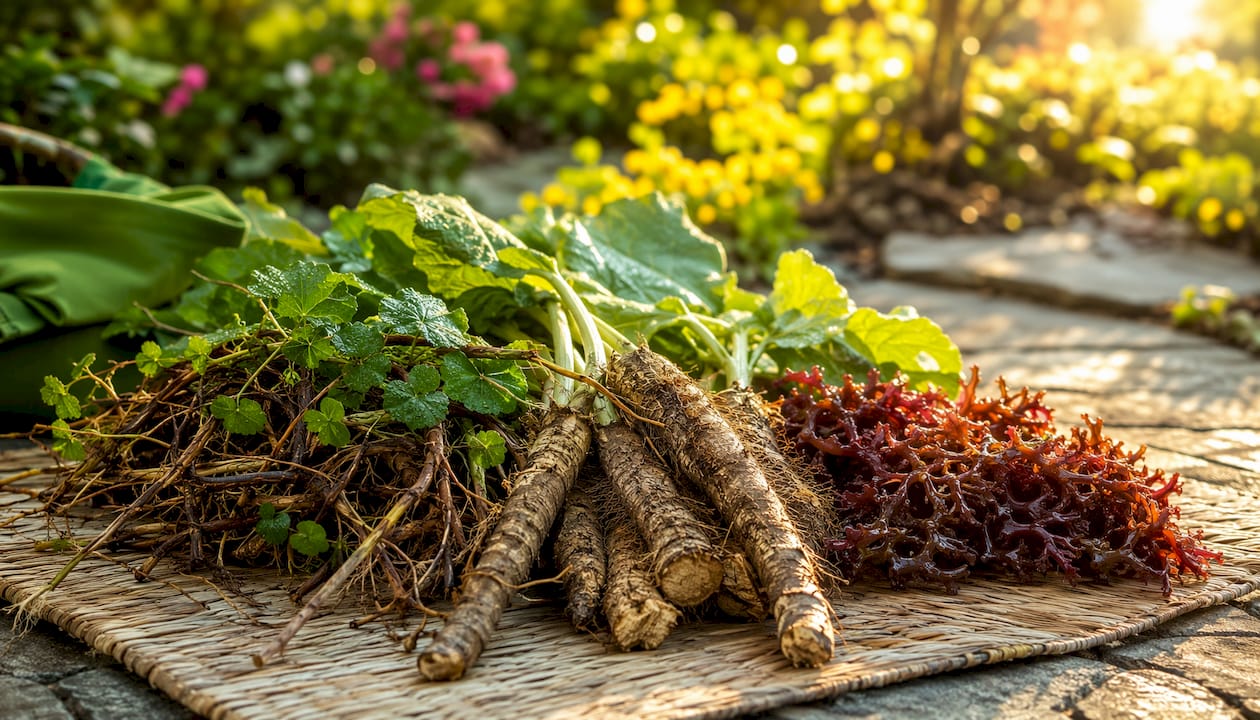
Sarsaparilla (Smilax ornata) carries iron, manganese, and zinc alongside saponins that bind to endotoxins in the gut and carry them out of the body. Dr. Sebi considered it one of the most effective blood purifiers on his list, and traditional Central American medicine used it for exactly that purpose for centuries. It also supports testosterone and hormone balance through its steroidal saponin content.
Burdock root (Arctium lappa) is dense in iron, calcium, and potassium, and its inulin content feeds beneficial gut bacteria while its bitter compounds stimulate liver bile. It appears in Dr. Sebi-approved formulas specifically for its dual action on blood and lymphatic cleansing.
Chaparral (Larrea tridentata) contains nordihydroguaiaretic acid (NDGA), one of the most studied antioxidant compounds in desert plants, alongside calcium and magnesium. Native American healers used it for respiratory conditions and skin disorders. Dr. Sebi valued it for its ability to break down mucus in the lungs and upper respiratory tract.
Yellow dock (Rumex crispus) is one of the highest plant sources of bioavailable iron, making it a cornerstone of Dr. Sebi’s blood-building protocols. It also stimulates bile flow, which supports fat digestion and liver detox. The iron content in yellow dock aligns directly with his iron fluorine concept, providing iron in a form the body recognizes as food rather than supplement.
Guaco (Mikania glomerata) is a South American herb with a long history in respiratory healing. It carries potassium and calcium alongside coumarin compounds that act as natural bronchodilators. Dr. Sebi included it for its ability to open airways and reduce inflammation in mucus-lined passages.
Sea moss (Chondrus crispus) is arguably the most mineral-dense plant on Dr. Sebi’s approved list, containing a broad spectrum of minerals including iodine, calcium, potassium, and magnesium. It supports thyroid function through its natural iodine content and coats the gut lining with mucilaginous compounds that soothe inflammation. Alkaherbs carries Sebian Sea Moss sourced from Honduras, one of the cleaner growing environments available.
How Alkaherbs sources and delivers these alkaline herbs
Alkaherbs built its entire catalog around Dr. Sebi’s approved herb list, sourcing organic and non-GMO plants that meet the alkaline, whole-plant standard his teachings require. The Duck Flower, used for deep detox protocols, and Sebian Sea Moss, used for mineral replenishment, are two of the most requested products on the site.
Alkaherbs focuses on sourcing plants that retain their full mineral profile from soil to shelf, because processing and heat can degrade the very minerals that make these herbs effective. Every product is selected with that standard in mind.
The difference between a genuine alkaline herb and a generic supplement is sourcing integrity. A sarsaparilla capsule made from a low-quality extract may carry the name but not the mineral density that makes the plant work. Alkaherbs addresses that gap by prioritizing whole-plant and minimally processed forms.
Pro Tip: Sea moss works best when consumed as a gel or in its whole dried form rather than as a heavily processed powder. The gel retains the mucilaginous compounds and mineral content that processing tends to reduce.
For people building a daily herbal routine around Dr. Sebi’s principles, starting with a mineral-dense base like sea moss and layering in targeted herbs like burdock root or yellow dock gives the body a steady mineral supply rather than periodic spikes.
What science says about Dr. Sebi’s claims on mineral-rich herbs
Dr. Sebi’s broader claims, particularly his assertion that specific herbs could cure named diseases, were never subjected to clinical trials, and he faced legal challenges in the United States over those claims. That context matters. His disease-cure claims sit outside what peer-reviewed evidence supports.
Where science and his philosophy converge is on the foundational role of minerals. Research published in peer-reviewed journals confirms that trace minerals are critical to enzymatic function, immune regulation, and cellular energy production. Mineral-rich plants do correct deficiencies caused by modern diets, and those corrections produce measurable health improvements. The mechanism Dr. Sebi described, minerals as electrical conductors sustaining cellular energy fields, has a legitimate basis in biophysics, even if his specific disease claims went further than the evidence supports.
Individual herbs on his list have genuine research behind them. Burdock root’s liver-protective compounds have been studied in animal models. Sarsaparilla’s saponins show endotoxin-binding activity in laboratory settings. Sea moss iodine content is well-documented. The herbs are real, the minerals are real, and the general direction of his nutritional philosophy aligns with what integrative medicine now recognizes as foundational to health.
How mineral-rich herbs affect pH in traditional vs. scientific terms
Dr. Sebi taught that mineral-rich herbs raise the body’s pH toward alkalinity, creating an environment where disease cannot thrive. Scientifically, the body maintains blood pH within a very tight range (7.35–7.45) through buffering systems involving the lungs and kidneys. Food and herbs do not meaningfully shift blood pH in healthy people.
What they do affect is urinary pH and the acid load the body must buffer. A diet high in mineral-rich plants reduces the metabolic acid load, which means the kidneys and lungs work less hard to maintain blood pH stability. That reduced burden translates into better organ efficiency, lower systemic inflammation, and improved mineral retention. So while the mechanism differs from Dr. Sebi’s framing, the practical outcome he described, a body that functions better with less internal stress, has a physiological basis.
Traditional healing systems across Africa, Asia, and the Americas have used alkaline-forming plants for this purpose for thousands of years, long before the chemistry was understood. Dr. Sebi’s contribution was systematizing that knowledge into a specific protocol built around African and Caribbean plant traditions.
Real benefits and honest limitations of Dr. Sebi’s mineral-rich herb approach
The genuine benefits of mineral-rich herbs are well-supported: correcting deficiencies, supporting detox organ function, reducing inflammation, and providing bioavailable nutrients that modern diets lack. For people with mineral depletion from stress, poor diet, or chronic illness, these herbs can produce noticeable improvements in energy, digestion, and immune resilience.
The limitations are also real. Herbs like chaparral carry hepatotoxicity risks at high doses, and the FDA has issued warnings about chaparral-containing products. Yellow dock in large amounts can cause oxalate-related kidney stress in susceptible individuals. Sea moss, while mineral-dense, can deliver excess iodine if consumed in large quantities daily, which may stress the thyroid rather than support it. Dr. Sebi’s protocols require attention to dosage and individual health context, not blanket adoption.
His rejection of all animal products and synthetic medicine also creates practical gaps for people managing conditions that require pharmaceutical intervention. Mineral-rich herbs work best as a foundational health practice, not as a replacement for medical care when it is genuinely needed.
The historical and cultural roots of mineral-rich herbal medicine
The use of mineral-rich plants as medicine predates written history. African traditional medicine, Ayurveda, Traditional Chinese Medicine, and Indigenous American healing systems all identified specific plants for their ability to strengthen blood, support organs, and restore vitality. What they were observing empirically was mineral replenishment, even without the biochemical vocabulary to name it.
Dr. Sebi drew most directly from African and Central American traditions, particularly the healing practices of Honduras, where he lived and studied. The herbs on his approved list, including guaco, sarsaparilla, and chaparral, were not inventions. They were plants with centuries of documented use in the communities where he learned. His contribution was framing them within a unified theory of electrical, alkaline health that made the traditional knowledge accessible to a modern, largely African American audience seeking alternatives to conventional medicine.
The medicine-food homology concept now recognized in integrative medicine formalizes what these traditions practiced intuitively: that the line between food and medicine is artificial, and that plants rich in minerals and phytonutrients serve both functions simultaneously. That principle connects Dr. Sebi’s work to a global, multigenerational tradition of using the earth’s mineral-dense plants as the foundation of human health.
Maintaining cellular energy through botanicals is not a fringe idea. It is a thread running through virtually every traditional healing culture, and modern holistic practitioners are returning to it as chronic mineral deficiency becomes a recognized driver of widespread health decline.
Alkaherbs brings Dr. Sebi’s mineral-rich herbs to you
If you have spent time understanding why Dr. Sebi built his entire healing system around mineral-rich, alkaline plants, the next practical question is sourcing. Generic health stores rarely carry the specific herbs he recommended, and when they do, the quality and preparation often fall short of what makes those plants effective.
Alkaherbs was built specifically for this. Every product in the catalog is sourced to meet the organic, non-GMO, whole-plant standard that Dr. Sebi’s philosophy requires. Whether you are starting with alkaline herbal teas to build a daily mineral foundation, looking for targeted herbal detox support, or exploring the full range of alkaline herbs that align with his approved list, Alkaherbs carries what you need without the guesswork of sorting through generic supplement shelves. Browse the full collection and start building the mineral foundation Dr. Sebi spent his life teaching about.
Key Takeaways
Dr. Sebi emphasized mineral-rich herbs because minerals are the electrical and biochemical foundation of cellular health, and plant-based sources deliver them in forms the body absorbs and uses without acidic side effects.
| Point | Details |
|---|---|
| Minerals as electrical conductors | Bioavailable plant minerals sustain cellular energy fields and maintain the alkaline pH Dr. Sebi linked to disease resistance. |
| Iron fluorine concept | Dr. Sebi prioritized plant-based iron fluorine for oxygen transport, rejecting synthetic iron for its acidic byproducts. |
| Six core herbs | Sarsaparilla, burdock root, chaparral, yellow dock, guaco, and sea moss each deliver specific minerals that support blood, detox, and respiratory health. |
| Science and tradition aligned | Research confirms mineral depletion drives health decline; traditional medicine systems across Africa, Asia, and the Americas used mineral-rich plants for the same reasons Dr. Sebi taught. |
| Alkaherbs for sourcing | Alkaherbs offers organic, non-GMO alkaline herbs sourced to the whole-plant standard Dr. Sebi’s protocols require. |