

Why Dr. Sebi Rejected Hybrids: A Clear Explanation
Dr. Sebi rejected hybrid foods because he believed they carry an incomplete molecular structure, making them non-electrical and incompatible with the body’s alkaline balance. That’s the core of his position, and it comes directly from his African Bio-Mineral Balance framework, not from mainstream nutritional science. Before you restructure your diet around this idea, consult a licensed healthcare provider, especially if you manage a chronic condition.
Here’s what his rejection actually rested on:
- Hybrids, in Sebi’s view, are molecularly incomplete and therefore non-electrical
- Non-electrical foods register as acidic on his pH-based scale
- Acidic foods, he argued, promote mucus buildup and poor cellular assimilation
- The solution he offered was a return to wild, heirloom, or naturally occurring alkaline plants
Key Takeaways
Dr. Sebi rejected hybrids because he believed molecularly incomplete, non-electrical foods create an acidic internal environment that promotes mucus, mineral depletion, and poor cellular assimilation, a framework rooted in his African Bio-Mineral Balance philosophy rather than mainstream clinical science.
| Point | Details |
|---|---|
| Sebi’s core claim | Hybrids are molecularly incomplete, non-electrical, and acid-forming in his African Bio-Mineral Balance framework. |
| Specific foods flagged | Carrot, broccoli, peppermint, echinacea, comfrey, seedless fruits, and wheat were among his most-cited examples. |
| Mainstream science gap | No peer-reviewed research has validated Sebi’s molecular-electrical mechanism; hybridization is not considered inherently harmful by nutrition science. |
| Practical sourcing | Look for open-pollinated or heirloom labels, shop at farmers’ markets, and use heirloom seed catalogs to find non-hybrid produce in the U.S. |
| Alkaherbs support | Alkaherbs offers wildcrafted, non-GMO alkaline herbs and sea moss aligned with Sebi’s approved food categories for readers making the transition. |
Table of Contents
- Why Dr. Sebi Rejected Hybrids: His Core Argument
- What Did Dr. Sebi Actually Mean by “Hybrid”?
- Which Foods Did Dr. Sebi Call Hybrid?
- Why Sebi Considered Hybrids Harmful to the Body
- How Mainstream Science Views Hybridization
- What Does Dr. Sebi’s Nutritional Guide Recommend Instead?
- How to Find Non-Hybrid Foods in the U.S.
- Is Strict Non-Hybrid Adherence Actually Realistic?
- Alkaherbs Supports Your Transition to Alkaline, Mineral-Rich Eating
- Sources
Why Dr. Sebi Rejected Hybrids: His Core Argument
Dr. Sebi’s rejection of hybrid foods is inseparable from his broader philosophy. He taught that the human body is fundamentally electrical, and that only foods carrying a complete molecular structure can support that electrical charge. Hybrids, he argued, are laboratory-forced combinations that nature never produced on its own, and that forced origin is exactly what makes them problematic in his framework.
His language was specific. He described natural plants as having a complete molecular structure that is “electrical,” while hybrid plants lack that completeness and therefore differ in pH and mineral characteristics. In practical terms, he placed hybrids on the acid side of his pH scale and excluded them from his Nutritional Guide entirely.
This is Sebi’s interpretive framework, not a claim you’ll find in a peer-reviewed biochemistry journal. The “electrical” vocabulary he used doesn’t map directly to standard biochemical terminology. Keeping that distinction clear matters, because the logic he built is internally consistent within his own system while remaining largely untested by mainstream science.
What Did Dr. Sebi Actually Mean by “Hybrid”?
Sebi’s use of the word “hybrid” is narrower and more specific than how botanists or food scientists use it. Getting this wrong leads to a lot of confusion about his food list.
Sebi’s definition: A hybrid, in his framework, is a plant whose molecular structure was altered through laboratory intervention or forced grafting, producing something that does not exist in nature and therefore cannot be fully assimilated by the human body.
How that differs from other uses of the term:
- Botanical hybrid: A cross between two plant varieties, which can occur naturally in the wild or through selective breeding over generations. Not all botanical hybrids are what Sebi meant.
- GMO (genetically modified organism): A plant whose DNA has been directly edited using biotechnology. Sebi treated GMOs as a separate and equally problematic category, but they are not the same as hybridization.
- Sebi’s “hybrid”: Specifically a plant that could not arise without human intervention and that, in his view, carries an incomplete molecular structure as a result.
A common misconception is that Sebi rejected every domesticated or selectively bred crop. He didn’t frame it that broadly. His concern was with plants he considered molecularly altered to the point of being non-electrical, regardless of whether the method was grafting, forced crossing, or laboratory manipulation.
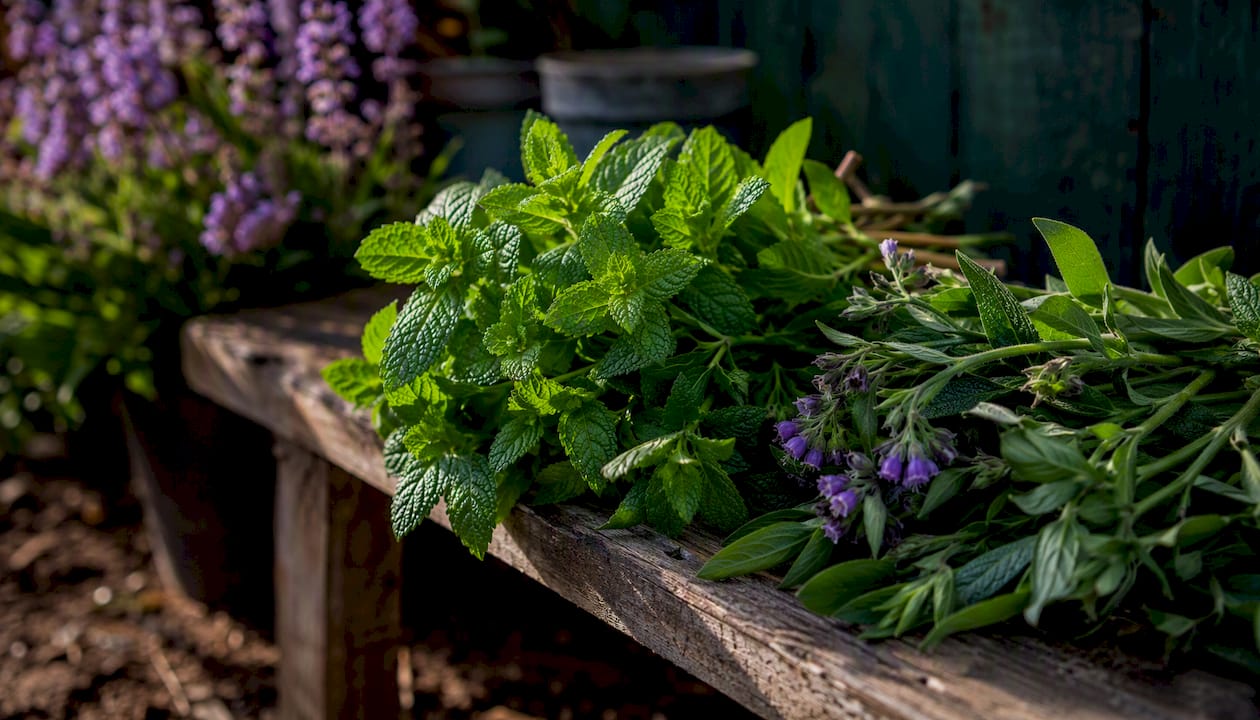
According to transcriptions of Sebi’s talks, he specifically named peppermint, echinacea, carrots, and comfrey as hybridized and excluded them from his guide, contrasting them with mineral-rich wild plants like burdock. His language centered on molecular incompleteness and pH, not on the agricultural method per se.
Which Foods Did Dr. Sebi Call Hybrid?
Sebi’s exclusion list is more specific than many followers realize. These are the foods he most commonly named:
- Carrot: Flagged as a hybrid; Sebi pointed to its altered molecular structure and its absence from his approved food list.
- Broccoli: Considered a human-created vegetable with no natural wild ancestor in its current form; excluded on those grounds.
- Peppermint: Explicitly named as hybridized in Sebi’s talks; he recommended spearmint or other wild mints instead.
- Echinacea: Also named as a hybrid herb in the same transcriptions; Sebi substituted it with non-hybrid alternatives like burdock.
- Comfrey: Described as hybrid and compared unfavorably to burdock, which he considered electrically complete.
- Seedless fruits: Grapes, watermelons, and other seedless varieties were flagged because, in Sebi’s view, a fruit without seeds cannot reproduce naturally and therefore lacks the full molecular profile of a living plant.
- Certain grains: Wheat, in particular, was excluded. Sebi approved only a short list of grains, including amaranth, quinoa, and wild rice, which he considered non-hybrid.
The African Bio-Mineral Balance site’s summary of Sebi’s exclusion criteria also lists refined, fortified, and heavily processed foods alongside hybrids, treating all of them as categories that distort the molecular relationships he considered necessary for health.
Why Sebi Considered Hybrids Harmful to the Body
Sebi’s argument follows a chain of reasoning that starts with molecular structure and ends with disease. Here’s how he connected those points:
An incomplete molecular structure means the plant is non-electrical. A non-electrical food registers as acidic on his pH scale. Acidic foods, he taught, create an environment in the body that promotes mucus accumulation, lymphatic congestion, and eventually chronic disease. The body cannot fully assimilate what it was never designed to receive.
His practical consequences, as he described them:
- Mucus production: Hybrid and acid-forming foods coat the mucous membranes, impairing organ function over time.
- Poor cellular assimilation: The body expends energy trying to process foods it cannot fully use, leaving cells undernourished.
- Lymphatic congestion: Accumulated mucus burdens the lymphatic system, which Sebi linked to a wide range of chronic conditions.
- Mineral depletion: Hybrids, in his view, carry fewer bioavailable minerals than their wild counterparts, leaving the body deficient even when calories are adequate.
To be direct: these are Sebi’s philosophical and theoretical claims. The specific mechanism he described, where molecular incompleteness causes measurable acid accumulation and mucus production, has not been validated by controlled clinical research. His framework is internally coherent but operates outside the vocabulary of mainstream biochemistry. Sebi also connected hybrid avoidance to a spiritual and philosophical reconnection with natural design, framing diet as inseparable from one’s relationship with creation.
Pro Tip: When reading Sebi’s materials, treat “electrical” as his term for “bioavailable and alkaline-forming” rather than a literal electrical charge. That translation makes his framework easier to evaluate on its own terms.
How Mainstream Science Views Hybridization
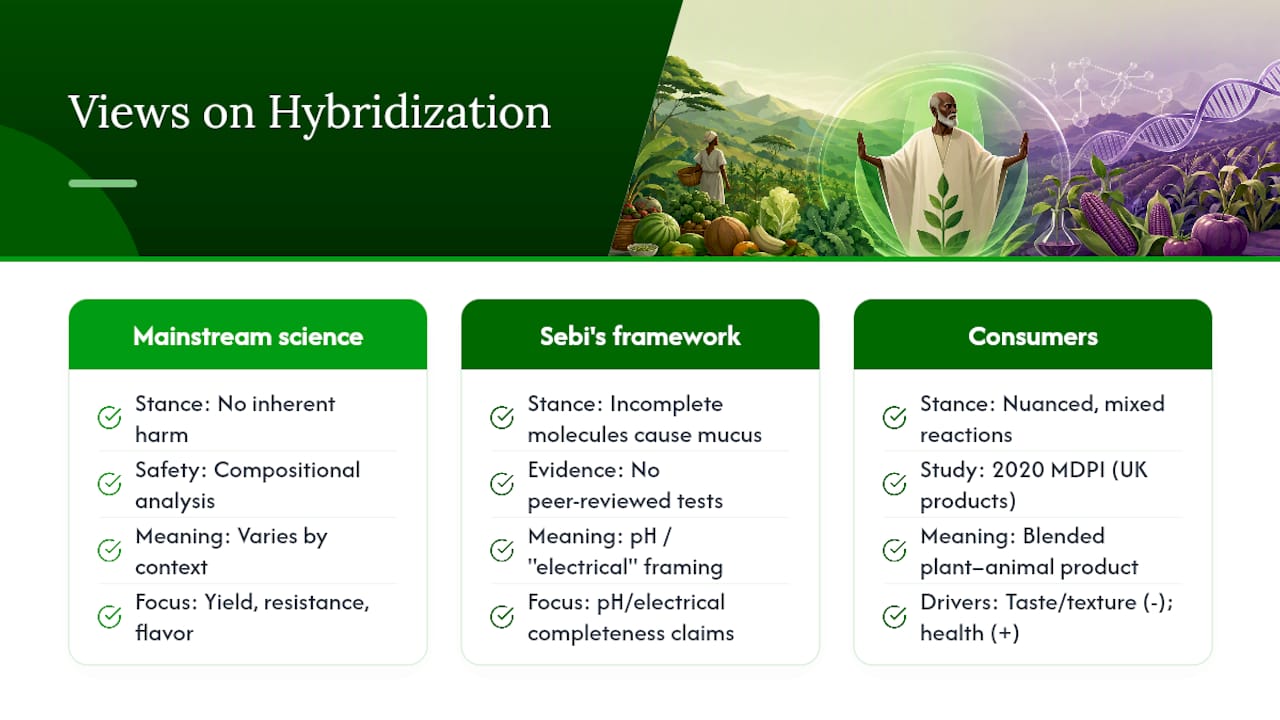
Mainstream nutrition science and agricultural research do not support the claim that hybridization inherently makes food harmful. Plant breeders have used hybridization for centuries to improve yield, disease resistance, and flavor, and regulatory bodies in the United States evaluate food safety based on compositional analysis, not on whether a variety was bred through crossing.
The word “hybrid” itself carries very different meanings depending on context. FoodNavigator’s industry reporting frames hybrid food debates around processing levels, consumer perception, and market positioning, not around molecular-electrical properties. In the alternative-protein space, “hybrid” typically means a blended product combining plant and animal ingredients, a definition that has nothing to do with Sebi’s usage.
Consumer attitudes are more nuanced than either camp suggests. A 2020 MDPI study analyzing online reviews of hybrid meat products found that taste and texture drove negative responses, while healthiness and convenience motivated positive ones. The sample was limited to UK commercial products, so its applicability is narrow, but it illustrates that consumer skepticism about hybrids tends to center on processing and palatability rather than on molecular completeness.
Evidence gap: No peer-reviewed research has tested Sebi’s specific claim that hybridized plants carry an incomplete molecular structure that causes mucus accumulation or impairs cellular assimilation. His pH and “electrical” framework uses terms that don’t correspond to standard biochemical measurements, which makes direct empirical testing of his model difficult.
Where mainstream science and Sebi’s framework do find common ground: whole, minimally processed, mineral-rich foods tend to support better health outcomes than heavily refined ones. That overlap is real, even if the mechanistic explanations differ sharply.
What Does Dr. Sebi’s Nutritional Guide Recommend Instead?
Sebi’s answer to hybrids was a return to what he called natural, electrical, alkaline plants. His African Bio-Mineral Balance food list covers several broad categories:
- Alkaline greens: Amaranth greens, dandelion greens, kale, and watercress. These are among the most mineral-dense options on his approved list.
- Approved fruits: Seeded varieties only. Figs, dates, mangoes, papayas, and Seville oranges appear frequently. Seedless varieties are excluded.
- Heirloom grains: Amaranth, quinoa, kamut, rye, spelt, and wild rice. Wheat and corn are excluded.
- Sea vegetables: Sea moss (Irish moss), dulse, and wakame. These are central to Sebi’s mineral-replenishment strategy.
- Wild and non-hybrid herbs: Burdock root, sarsaparilla, and elderberry are among the most cited. Burdock, in particular, appears repeatedly as the non-hybrid counterpart to comfrey and echinacea.
- Approved oils: Olive oil, coconut oil, and hemp seed oil.
Sourcing these in the U.S. is possible but requires some effort. Farmers’ markets in larger cities often carry heirloom produce. Specialty grocers like Whole Foods stock some approved grains and sea vegetables. For herbs specifically, the Dr. Sebi Alkaline Food Chart on Alkaherbs gives a practical breakdown of approved options and how to use them.
How to Find Non-Hybrid Foods in the U.S.
Mainstream supermarkets almost never label produce as “hybrid” in Sebi’s sense, so you need to know what to look for.
- Check seed packet labels. If you grow your own produce, look for “open-pollinated” or “heirloom” on the packet. These terms indicate varieties that reproduce true to type and were not created through forced crossing. Hybrid seeds are typically labeled “F1.”
- Ask your farmer directly. At a farmers’ market or CSA, growers can usually tell you the varietal name and how it was bred. Small-scale regenerative farms are more likely to grow heirloom varieties than large commercial operations.
- Use heirloom seed catalogs. Suppliers like Baker Creek Heirloom Seeds and Seed Savers Exchange specialize in open-pollinated varieties and provide detailed varietal histories. These are reliable starting points for identifying non-hybrid produce.
- Look for varietal names on produce. A tomato labeled “Brandywine” or “Cherokee Purple” is an heirloom. One labeled simply “tomato” or “beefsteak” is likely a commercial hybrid.
- Prioritize wildcrafted herbs. For the herbal side of Sebi’s protocol, wildcrafted means the plant was harvested from its natural habitat rather than cultivated. Wildcrafted burdock, for example, is closer to what Sebi recommended than a farmed version.
- Verify herb purity before purchasing. Alkaherbs has a practical guide on how to assess herb purity at home that covers what to check for when evaluating wildcrafted versus cultivated options.
- Start with the alkaline diet starter herb list. Rather than overhauling everything at once, begin with the herbs Sebi most consistently approved and build from there.
Pro Tip: When transitioning, swap one food at a time rather than clearing your pantry overnight. Replace peppermint tea with spearmint, swap wheat pasta for spelt, and add sea moss before removing anything else. Gradual substitution makes the shift sustainable and gives you time to notice how each change affects how you feel.
Is Strict Non-Hybrid Adherence Actually Realistic?
Strict adherence to Sebi’s non-hybrid framework is genuinely difficult in the modern U.S. food supply, and that’s worth saying plainly. Most produce in American supermarkets is commercially hybridized. Many herbs sold in health food stores are cultivated varieties that Sebi would have flagged. Even some items that appear on transitional versions of his food list are technically hybrid by his own definition, included as “least detrimental” options for people making a gradual shift.
That doesn’t mean the framework has no value. The foods Sebi approved, wild herbs, sea vegetables, heirloom grains, seeded fruits, tend to be more mineral-dense and less processed than the standard American diet. Moving toward them, even partially, aligns with what most evidence-based nutrition guidance recommends: more whole foods, fewer refined ones.
The realistic approach for most people is prioritization rather than perfection. Focus first on removing the most heavily processed items, then work toward sourcing heirloom produce and non-hybrid herbs as you build relationships with local growers and specialty suppliers. Consult a registered dietitian or licensed healthcare provider before making major changes, particularly if you have existing health conditions. Sebi’s framework is a philosophical and dietary roadmap, not a clinical protocol.
Alkaherbs Supports Your Transition to Alkaline, Mineral-Rich Eating
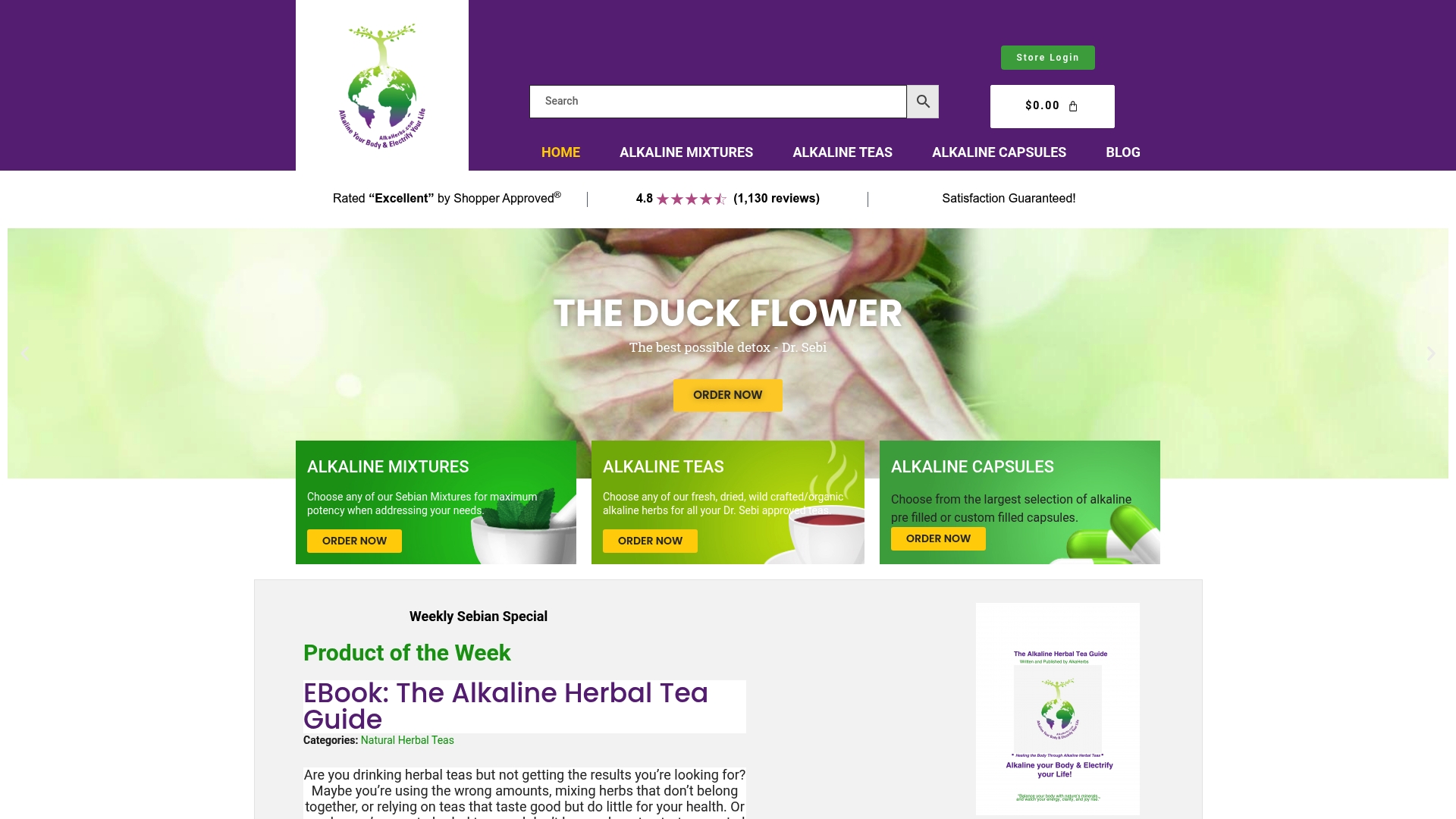
Shifting toward Sebi-style eating is easier when you have reliable sources for the herbs and sea vegetables his guide centers on. Alkaherbs carries organic, non-GMO alkaline herbs and sea vegetables sourced in alignment with Sebi’s principles, so you’re not left guessing about what’s actually in the product.
Three categories worth starting with:
- Sea moss and sea vegetables: Alkaherbs’ Sebian Sea Moss is a mineral-dense staple for anyone following the African Bio-Mineral Balance approach. It covers a wide range of trace minerals that Sebi considered central to cellular health.
- Alkaline herbal teas: A practical daily entry point. These teas use non-hybrid, alkaline-forming herbs that fit directly within Sebi’s approved categories.
- Alkaline herbs: The full herb catalog covers burdock, sarsaparilla, and other wildcrafted options that Sebi consistently recommended over their hybrid counterparts.
These products are not intended to diagnose, treat, cure, or prevent any disease. Browse the Alkaherbs catalog and find the right starting point for your transition.
Sources
- Dr Sebi – Natural Plants Molecular Structure Is Complete » The African Bio-Mineral Balance
- Does the hybrid category have a future? — FoodNavigator
- Consumer attitudes to hybrid meat products — MDPI Foods (2020)
This article is general information, not a substitute for advice from a qualified doctor. Consult a qualified healthcare professional about your own circumstances before acting on anything here.