

What Does Bioelectric Alkaline Mean for Dr. Sebi Followers?
In the Dr. Sebi tradition, “bioelectric alkaline” describes herbs and foods believed to carry a natural electrical charge that supports the body’s alkaline state, used for detox, blood cleansing, and overall wellness. This is an alternative-health framework, not a laboratory measurement. Alkaherbs sources products built around this concept, including Sebian Sea Moss, Duck Flower, and Dulse Flakes, all selected for their place in Dr. Sebi’s African Bio-Mineral Balance system. Blood pH in healthy humans stays within a narrow range of 7.35–7.45 regardless of diet, a point covered in the medical perspective below, but followers use “bioelectric alkaline” as a shorthand for herbs they believe nourish and cleanse at a cellular level.
Key Takeaways
“Bioelectric alkaline” names a wellness framework rooted in Dr. Sebi’s tradition, where specific organic herbs are used for detox and mineral support, not a clinically proven therapeutic effect.
| Point | Details |
|---|---|
| Definition | “Bioelectric alkaline” describes herbs believed to support the body’s alkaline state and cellular vitality in the Dr. Sebi tradition. |
| Medical limits | Blood pH stays at 7.35–7.45 regardless of diet; detox and cure claims lack clinical evidence. |
| Safety first | Seaweeds carry high iodine; consult a clinician if you take thyroid medication, anticoagulants, or immunosuppressants. |
| Buying standard | Require a COA, a Latin botanical name, and organic/non-GMO certification before purchasing any product. |
| Alkaherbs | Carries Duck Flower, Sebian Sea Moss, Honduras Sea Moss, Sea Moss and Bladderwrack Capsules, and Dulse Flakes with organic, non-GMO sourcing. |
Table of Contents
- What does bioelectric alkaline mean in the Dr. Sebi tradition?
- Which herbs do followers consider bioelectric alkaline?
- How do followers typically use these herbs?
- What does mainstream medicine say about these claims?
- What safety risks should you know before starting?
- How do you choose a trustworthy bioelectric alkaline product?
- How do Alkaherbs products map to bioelectric alkaline needs?
- Quick safety and label checklist
- How do bioelectric charge and alkalinity connect at a cellular level?
- What are common dosage ranges for these herbs?
- What are the specific side effects and interactions to watch for?
- What myths circulate in the Dr. Sebi community, and how do you assess them?
- What is the legal and regulatory status of these herbs in the United States?
- How do you verify authenticity and avoid counterfeit products?
- A note on how Alkaherbs approaches this work
- Alkaherbs products built for bioelectric alkaline wellness
- Sources
What does bioelectric alkaline mean in the Dr. Sebi tradition?
Dr. Sebi, born Alfredo Bowman, built his African Bio-Mineral Balance concept around two core ideas: that excess mucus and acidity are the root of most disease, and that specific plant foods and herbs can shift the body toward an alkaline, “electric” state. Medical News Today confirms that Dr. Sebi believed mucus and acidity caused disease and that certain foods and herbs could detoxify the body toward alkalinity.
The word “bioelectric” in this context is energetic language, not an electrochemical measurement. Followers use it to describe herbs they consider alive, unprocessed, and capable of supporting the body’s own electrical signaling. Cooked, hybrid, or chemically treated plants are considered “dead” in this framework and are excluded.
Key doctrines of the Dr. Sebi approach:
- Alkaline diet focus: Only foods from an approved list, emphasizing unprocessed, plant-based items, are considered compatible with the body’s natural state.
- Mucus theory: Disease is framed as the result of mucus buildup caused by acidic, processed foods.
- Bioelectric language: Herbs are described as carrying a charge that supports cellular function, an energetic metaphor rather than a measurable voltage.
- Spring water habit: Followers typically drink spring water rather than tap, believing it carries fewer contaminants and a more compatible mineral profile.
- Banned items: Hybrid plants (seedless fruits, for example), alcohol, animal products, and most processed foods are excluded from the approved list. MedicineNet outlines the full list of allowed and avoided foods in detail.
Which herbs do followers consider bioelectric alkaline?
The herbs below appear consistently in Dr. Sebi-style protocols. Alkaherbs carries each of them, sourced organically and without GMOs.
| Herb | Traditional/Claimed Use | Typical Form | Alkaherbs Product |
|---|---|---|---|
| Duck Flower | Deep detox, lymphatic cleansing | Dried whole flower, tea | Duck Flower |
| Sebian Sea Moss | Mineral replenishment, gut support | Gel, powder, capsule | Sebian Sea Moss |
| Honduras Sea Moss | Mineral support, thyroid nourishment | Gel, raw dried | Honduras Sea Moss |
| Sea Moss & Bladderwrack | Iodine/mineral blend, immune support | Capsule | Sea Moss and Bladderwrack Capsules |
| Dulse Flakes | Culinary mineral source, iodine | Flakes, powder | Dulse Flakes |
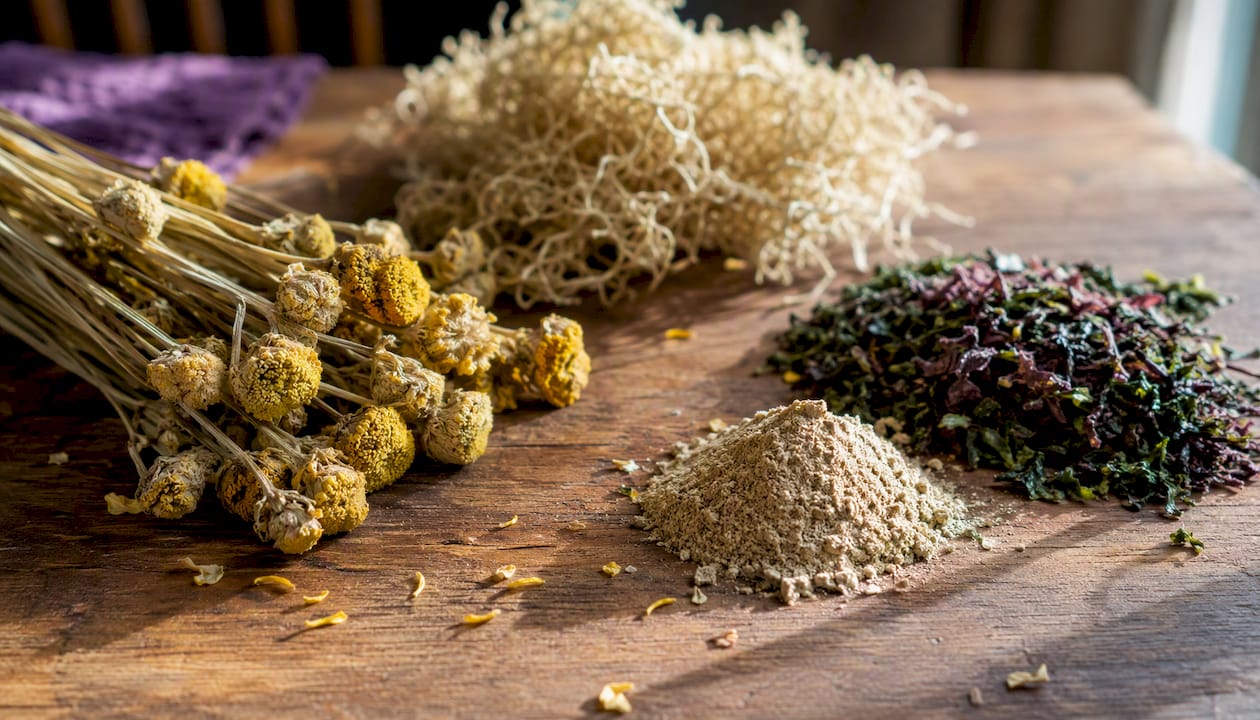
Duck Flower is one of the more intense herbs in this tradition. Followers use it for a single-session detox rather than daily use. Sea moss in its various forms is the most commonly used daily herb, prized for its broad mineral content. Dulse Flakes work well stirred into soups or smoothies for people who want minerals without a capsule routine.
How do followers typically use these herbs?
Most people following a Dr. Sebi-style protocol build a layered daily routine. The Alkaherbs alkaline detox guide and the starter herb list both outline common patterns.
A typical daily structure looks like this:
-
Morning: One to two tablespoons of sea moss gel taken on an empty stomach, often blended into a smoothie with alkaline fruits like berries or key limes.
-
Mid-morning: A cup of herbal tea, commonly made from sarsaparilla, burdock root, or bladderwrack, brewed with spring water.
-
Afternoon: A meal centered on approved alkaline vegetables, dressed with hemp seed oil or avocado.
-
Evening: A lighter herbal infusion, sometimes elderberry or soursop leaf, to support rest and immune function.
Dosage is not standardized across the tradition. Product labels are the most reliable guide for any specific Alkaherbs product. Duck Flower, for instance, is used once or twice per detox cycle rather than daily, and the product label specifies the preparation method. Sea moss gel is commonly used at one to two tablespoons per day, but individual tolerance varies. Always start at the lower end and check the label before adjusting.
What does mainstream medicine say about these claims?
This section reports the scientific critique, not the client’s framework.
Healthline’s review reaches the same conclusion: the diet is plant-based and may support general health through whole-food eating, but no clinical studies support its specific detox or cure claims. The mucus theory has no established basis in pathology. Eating more vegetables and fewer processed foods does benefit most people, but that benefit comes from nutrition, not from shifting blood pH.
Shoppers should treat “bioelectric alkaline” as a wellness and dietary philosophy, not a clinically proven therapeutic effect.
What safety risks should you know before starting?
Certain situations call for a conversation with a clinician before adding any herbal regimen:
- Pregnancy or breastfeeding: Many herbs lack safety data for these populations.
- Anticoagulant medications (warfarin, for example): Several herbs affect clotting and can alter drug levels.
- Immunosuppressants (post-transplant patients): Herb-drug interactions in this group can be serious.
- Active chemotherapy: Herbal products can interfere with treatment protocols.
- Uncontrolled thyroid conditions: Seaweeds like bladderwrack and dulse are high in iodine, which can worsen both hypo- and hyperthyroid conditions.
- Kidney disease: High-mineral herbs may place additional load on compromised kidneys.
Quality risks are real in this product category. Seaweeds can accumulate heavy metals from polluted waters. Mislabeled or adulterated products are a documented problem in the supplement market. MedicineNet’s editorial guidance recommends treating Dr. Sebi-style claims as unproven and prioritizing product quality and safety checks. If you experience severe nausea, heart palpitations, or difficulty breathing after starting any herb, stop use immediately and seek medical attention. Keep a list of every product you are taking when consulting a provider.
Pro Tip: Review common detox mistakes before starting a new herbal protocol. Many adverse reactions come from starting too many herbs at once rather than from any single herb.
How do you choose a trustworthy bioelectric alkaline product?
The label tells you most of what you need to know before you buy. Look for:
- Certified organic and non-GMO labels from recognized certifiers
- Botanical (Latin) name on the label, not just a common name
- Country or region of origin and wildcrafted designation where applicable
- Batch number and expiration date
- Third-party Certificate of Analysis (COA) for heavy metals and microbial testing
- Clear dosage directions with serving size stated in measurable units
- No proprietary blends that hide individual ingredient amounts
- A clear return policy
Ask the seller directly for a COA if it is not posted on the product page. Any reputable brand will provide one.
How do Alkaherbs products map to bioelectric alkaline needs?
Alkaherbs built its catalog around the herbs followers use most, with organic and non-GMO sourcing as the baseline standard. Here is how the core products align with common protocol needs:
- Sebian Sea Moss: Daily mineral replenishment, gut support. Available as gel or powder. Wildcrafted and non-GMO.
- Honduras Sea Moss: Similar mineral profile to Sebian Sea Moss with a slightly different texture. Preferred by some followers for raw gel preparation.
- Sea Moss and Bladderwrack Capsules: A convenient capsule combining iodine-rich bladderwrack with sea moss. Suited for people who want a no-prep daily mineral option.
- Dulse Flakes: A culinary seaweed that adds minerals to meals without a supplement routine. Stir into soups, salads, or smoothies.
- Duck Flower: Used for periodic detox cycles rather than daily supplementation. Alkaherbs provides preparation guidance with the product.
The Alkaherbs alkaline herbs category lists the full range if you want to browse beyond these five. Each product page includes ingredient details and sourcing information.
Quick safety and label checklist
| Check | Risk if Skipped | Action |
|---|---|---|
| Thyroid condition + seaweed | Iodine overload, thyroid disruption | Consult clinician before use |
| Anticoagulant medication | Herb-drug interaction, bleeding risk | Check with pharmacist |
| No COA available | Unknown heavy metal or microbial load | Request COA or choose another brand |
| Missing Latin botanical name | Possible misidentification or substitution | Do not purchase |
| No batch number or expiration | Cannot verify freshness or traceability | Do not purchase |
| Severe reaction (palpitations, breathing difficulty) | Medical emergency | Stop use, seek urgent care |
How do bioelectric charge and alkalinity connect at a cellular level?
In traditional herbalism, “bioelectric” refers to the idea that living, unprocessed plants carry an energetic vitality that supports the body’s own electrical activity. Every cell in the human body does maintain an electrical potential across its membrane, a real and measurable phenomenon in biology. Nerve signaling, muscle contraction, and nutrient transport all depend on this electrochemical gradient.
Where Dr. Sebi’s framework diverges from mainstream biology is in the claim that specific herbs can meaningfully alter or amplify this cellular charge through diet alone. Mainstream physiology holds that cellular electrical potential is regulated by ion channels and pumps, not by the pH or “energy” of ingested plants. The alkalinity concept in traditional herbalism is better understood as a dietary philosophy favoring mineral-rich, unprocessed plant foods rather than a literal claim about shifting cellular voltage.
What are common dosage ranges for these herbs?
No universal dosing standard exists for Dr. Sebi-style herbs. The ranges below reflect common practice among followers and should always be cross-checked against the specific product label.
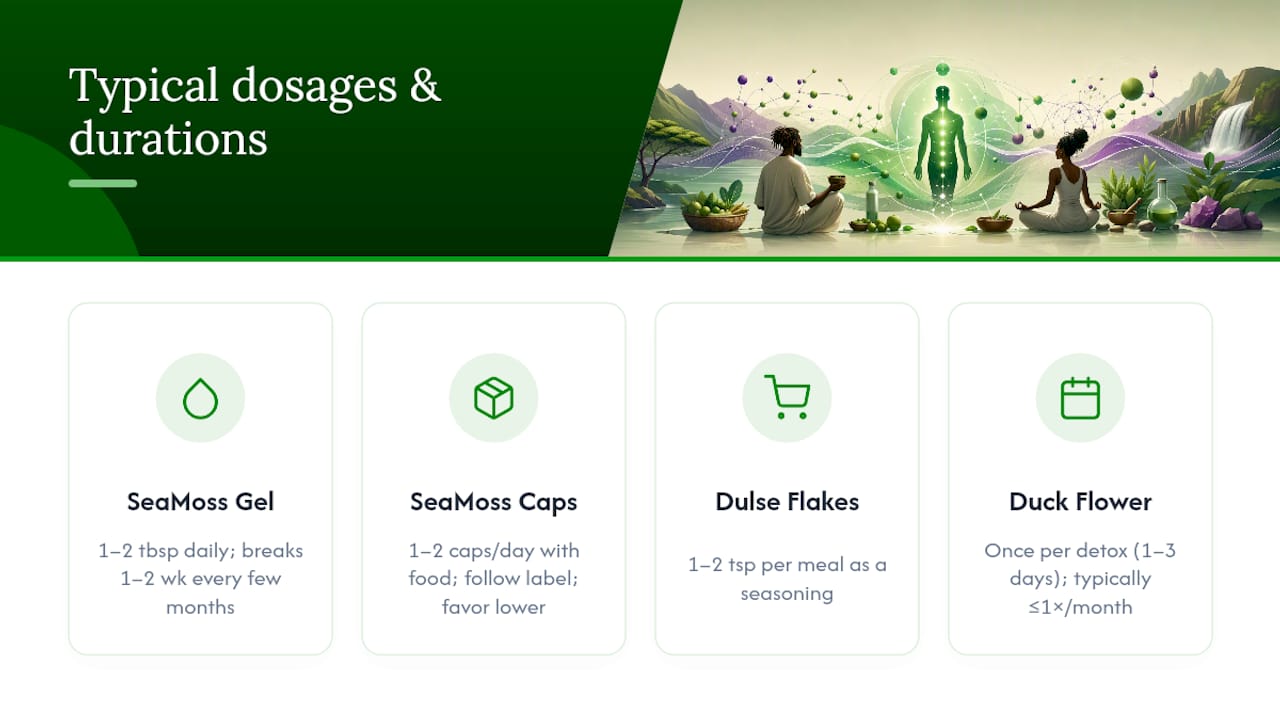
Sea moss gel: 1–2 tablespoons daily. Most followers take it in the morning. Duration is typically ongoing as a daily mineral supplement, with periodic breaks of one to two weeks every few months.
Sea Moss and Bladderwrack Capsules: Follow the label, typically one to two capsules daily with food. Because bladderwrack is iodine-dense, staying at the lower end of the label range is prudent unless a clinician advises otherwise.
Dulse Flakes: Used as a food seasoning rather than a supplement dose. One to two teaspoons per meal is common.
Duck Flower: Used once per detox session, not daily. Preparation involves steeping the dried flower in spring water. The Alkaherbs product page specifies the method. Most followers use it no more than once per month.
Duration for any herbal protocol depends on individual goals. A detox cycle using Duck Flower typically runs one to three days. Daily mineral support with sea moss is often maintained long-term, but checking in with a clinician every few months is reasonable, especially if you are managing a chronic condition.
What are the specific side effects and interactions to watch for?
Beyond the general cautions, certain herbs carry specific risks worth naming.
Sea moss and bladderwrack are both high in iodine. Excess iodine can trigger or worsen hyperthyroidism and, paradoxically, hypothyroidism in susceptible individuals. People on levothyroxine or other thyroid medications should not add these herbs without medical guidance.
Duck Flower can cause significant gastrointestinal purging, including nausea and loose stools, which is considered part of its detox action by followers. This makes it unsuitable for people with inflammatory bowel conditions, those who are dehydrated, or anyone who cannot tolerate a physically demanding detox day.
Dulse contains vitamin K, which can interact with warfarin and other anticoagulants by affecting clotting time.
Sarsaparilla, common in Dr. Sebi teas, may increase the absorption of some medications, potentially raising drug levels beyond intended therapeutic ranges.
What myths circulate in the Dr. Sebi community, and how do you assess them?
Myth: These herbs cure named diseases. Dr. Sebi made this claim and faced legal consequences for it in the United States. No herb in this tradition has been clinically proven to cure any named disease. Treat any seller making cure claims as a red flag.
Myth: Eating alkaline foods raises blood pH. As McGill’s Office for Science and Society explains, blood pH is tightly regulated by the kidneys and lungs. Diet affects urine pH, not blood pH.
Myth: All sea moss is the same. Species, harvest location, and processing method all affect mineral content and contamination risk. Sebian Sea Moss (Chondrus crispus) and Honduras Sea Moss differ in texture, mineral profile, and growing conditions.
Myth: “Natural” means safe at any dose. Iodine toxicity from excessive seaweed consumption is a documented clinical event. Natural origin does not eliminate dose-dependent risk.
A useful critical lens: if a claim cannot be verified with a COA, a botanical name, or a published study, treat it as marketing.
What is the legal and regulatory status of these herbs in the United States?
Herbs and herbal supplements sold in the United States are regulated as dietary supplements under the Dietary Supplement Health and Education Act (DSHEA) of 1994. This means manufacturers do not need FDA approval before selling a product, but they are prohibited from making disease cure claims on labels or in marketing.
Sellers may use structure/function claims (“supports immune health,” “promotes mineral balance”) but cannot claim to diagnose, treat, cure, or prevent any disease. When you see a product page making cure claims, that is a regulatory violation and a quality warning sign.
The FDA does conduct post-market surveillance and can issue warning letters or recalls for unsafe products. Third-party testing is not legally required, which is exactly why requesting a COA matters so much when buying in this category.
How do you verify authenticity and avoid counterfeit products?
The supplement market has a documented counterfeiting and mislabeling problem. Practical steps to protect yourself:
Request the COA before purchasing, not after. A legitimate seller will post it on the product page or provide it on request. The COA should show testing for heavy metals (lead, arsenic, mercury, cadmium), microbial contamination, and identity verification of the botanical species.
Check the Latin binomial name. “Sea moss” is a common name applied to multiple species with different properties. Chondrus crispus (Sebian Sea Moss) and Gracilaria species are not interchangeable. A product that lists only “sea moss” without a species name cannot be verified for identity.
Look for a physical address and contact information for the seller. Anonymous online storefronts with no traceable business address are a consistent pattern in counterfeit supplement cases.
Cross-check the color and texture against known references. Authentic wildcrafted sea moss varies in color depending on sun exposure. Uniformly bright purple or gold sea moss that looks identical across every batch may have been dyed.
A note on how Alkaherbs approaches this work
The sourcing decisions behind every Alkaherbs product reflect a genuine commitment to organic, non-GMO herbs that followers can trust. The emphasis on clear ingredient lists, botanical names, and COA availability comes from understanding that people using these herbs are making real decisions about their health.
Alkaherbs respects the Dr. Sebi tradition and the community built around it. That respect includes being honest: these herbs are wellness tools with a long history of traditional use, and the buying decisions around them deserve the same care as any health purchase. Followers deserve products that are clean, traceable, and accurately labeled, not just products that carry the right marketing language.
Alkaherbs products built for bioelectric alkaline wellness
Alkaherbs carries the full range of herbs covered in this article, each sourced organically and non-GMO, with ingredient lists and sourcing details on every product page. Browse alkaline herbs for the complete catalog, or go directly to alkaline herbal teas if you want a ready-to-brew daily option. The Sea Moss and Bladderwrack Capsules are a strong starting point for anyone new to the tradition who wants a no-prep mineral supplement. Every order includes clear usage directions, and Alkaherbs’ return policy is listed at checkout. COA availability is noted on individual product pages.
Sources
External reviews used in this article:
- Dr. Sebi diet review: Method, evidence, benefits, and risks
- “Dr.” Sebi: What Do We Make of this Non-Doctor? | Office for Science and Society – McGill University
- Dr. Sebi diet review: Weight Loss, Benefits, and Downsides
- Dr. Sebi Diet Rules: Foods to Eat and Avoid
Alkaherbs pages for further reading:
COA availability varies by product. Check individual product pages on Alkaherbs for current lab documentation.
This article is general wellness information, not medical advice. Confirm any herbal regimen with a qualified healthcare provider, especially if you manage a chronic condition or take prescription medications.
This article is general information, not a substitute for advice from a qualified doctor. Consult a qualified healthcare professional about your own circumstances before acting on anything here.