

Dr. Sebi Alkaline Food Chart: Approved Foods and How to Use It
The Dr. Sebi alkaline food chart is a curated list of non-hybrid, plant-based “electric” foods that herbalist Alfredo Darrington Bowman (known as Dr. Sebi) believed supported cellular cleansing and an alkaline internal environment. The canonical reference is the Dr. Sebi Nutritional Guide published on drsebis.com, which organizes approved foods into categories: vegetables, fruits, grains, nuts and seeds, oils, sea vegetables, herbs, spices, and sweeteners.
Here are the five things you need to know before you open the chart:
- Plant-based only. No animal products, no dairy, no eggs.
- Non-hybrid rule. Every approved food must be seed-bearing and naturally occurring. Seedless grapes, seedless watermelon, and most supermarket carrots are out.
- Hydration guidance. Followers drink a substantial amount of spring water daily as part of the protocol.
- No processed ingredients. Iodized salt, refined sugar, and packaged foods with preservatives are excluded.
- Approved grains are a short list. Spelt, teff, amaranth, quinoa, wild rice, and fonio — not wheat, not oats.
The official guide at drsebis.com is the primary source. Everything below mirrors its categories while adding U.S. sourcing notes, meal examples, and evidence context.
Table of Contents
- What does the Dr. Sebi alkaline food chart include?
- Which foods does Dr. Sebi’s chart forbid?
- What are Dr. Sebi’s core diet rules?
- How do you use the chart day to day?
- How do you source and prepare approved foods correctly?
- What does science say about alkaline diets and safety?
- Key Takeaways
- Why people follow the Dr. Sebi chart — and what they’re really after
- Alkaherbs carries Sebi-style herbs and sea moss for U.S. buyers
- Useful sources and further reading
What does the Dr. Sebi alkaline food chart include?
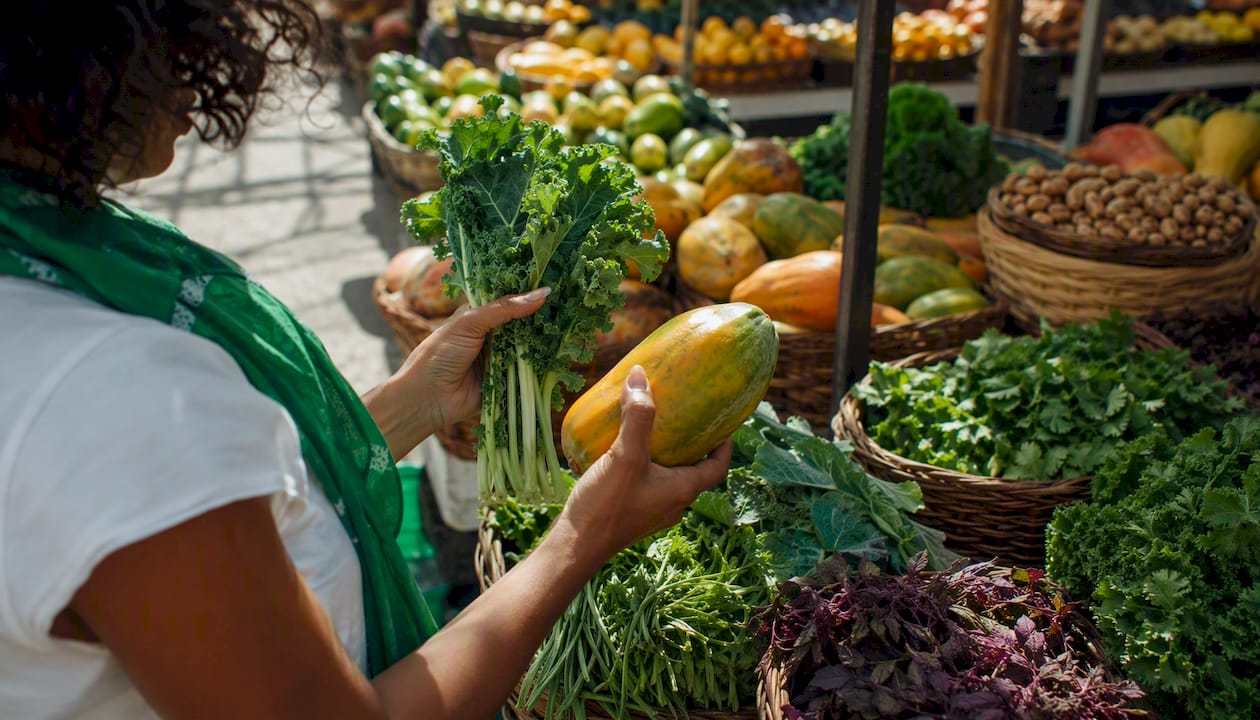
The chart organizes approved foods into nine categories. Use this as your shopping and meal-planning reference.
| Category | Approved Foods |
|---|---|
| Vegetables | Kale, dandelion greens, watercress, arugula, lettuce (not iceberg), zucchini, cucumber, bell peppers, mushrooms (except shiitake), onions, tomatoes (cherry/plum only), nopales (cactus), avocado, olives, purslane |
| Fruits | Apples, bananas (small/burro), cantaloupe, cherries, currants, dates, figs, grapes (seeded), limes (key limes), mango, orange (Seville), papaya, peaches, pears, plums, prickly pear, prunes, raisins (seeded), soursop, tamarind, elderberries |
| Grains | Amaranth, fonio, Kamut, quinoa, rye, spelt, teff, wild rice |
| Nuts & Seeds | Brazil nuts, hemp seeds, raw sesame seeds, raw tahini, walnuts |
| Oils | Avocado oil, coconut oil (raw), grapeseed oil, hemp seed oil, olive oil (uncooked), sesame oil |
| Sea Vegetables | Dulse, kelp, nori, wakame, sea moss (Irish moss) |
| Herbs & Teas | Burdock root, chamomile, elderberry, ginger, nettle, red clover, sarsaparilla, tila (linden flower) |
| Spices & Seasonings | Basil, bay leaf, cayenne, cloves, dill, habanero, onion powder, oregano, pure sea salt, savory, sweet basil, tarragon, thyme |
| Sweeteners | Pure agave syrup, date sugar |
A few items that regularly confuse people:
- Sea moss: — Approved and widely recommended for mineral density. Wildcrafted Irish moss or Chondrus crispus is the preferred form. Sea vegetables like dulse and wakame are also on the list, though some practitioners flag bladderwrack as needing careful sourcing.
Pro Tip: At the store, look for fruits with visible seeds inside. Seeded grapes, seeded figs, and seeded melons are approved; their seedless counterparts are not. When in doubt, cut it open before you buy.
The mineral-rich herbs that anchor many Sebi protocols — burdock root, sarsaparilla, nettle — appear in the herbs category and are central to the detox side of the diet, not just the food side.
Which foods does Dr. Sebi’s chart forbid?
The exclusion list is where most people stumble, because several foods that seem healthy by mainstream standards are off the chart entirely.
Forbidden categories:
- All animal products: Meat, poultry, fish, shellfish, and any broth or stock made from them.
- Dairy and eggs: Milk, cheese, butter, yogurt, whey protein, and eggs in any form.
- Hybrid and seedless produce: Seedless grapes, seedless watermelon, most supermarket carrots, broccoli, and cauliflower (considered modern hybrids).
- Wheat and modern grains: Wheat flour, oats, cornmeal, white rice, and barley are excluded. Corn is treated as a hybrid.
- Processed soy products: Tofu, soy milk, tempeh, and edamame. Dr. Sebi excluded soy because he considered it processed and misaligned with his “electric” food concept — even though soy appears on many generic alkaline food lists.
- Refined sugar and artificial sweeteners: White sugar, brown sugar, high-fructose corn syrup, stevia, and aspartame.
- Alcohol and coffee: Both are excluded.
- Canned or packaged foods with preservatives: If the label lists sodium benzoate, BHA, BHT, or any artificial coloring, it’s out.
- Iodized salt: Replace with pure sea salt or pure mineral salt.
- Baking powder and baking soda: Common in baked goods but excluded from the protocol.
A practical red-flag check for packaged foods: scan the ingredient list for iodized salt, added sugar (any form), preservatives, or enriched flour. Any one of those disqualifies the product. The shorter the ingredient list, the safer the bet.
What are Dr. Sebi’s core diet rules?
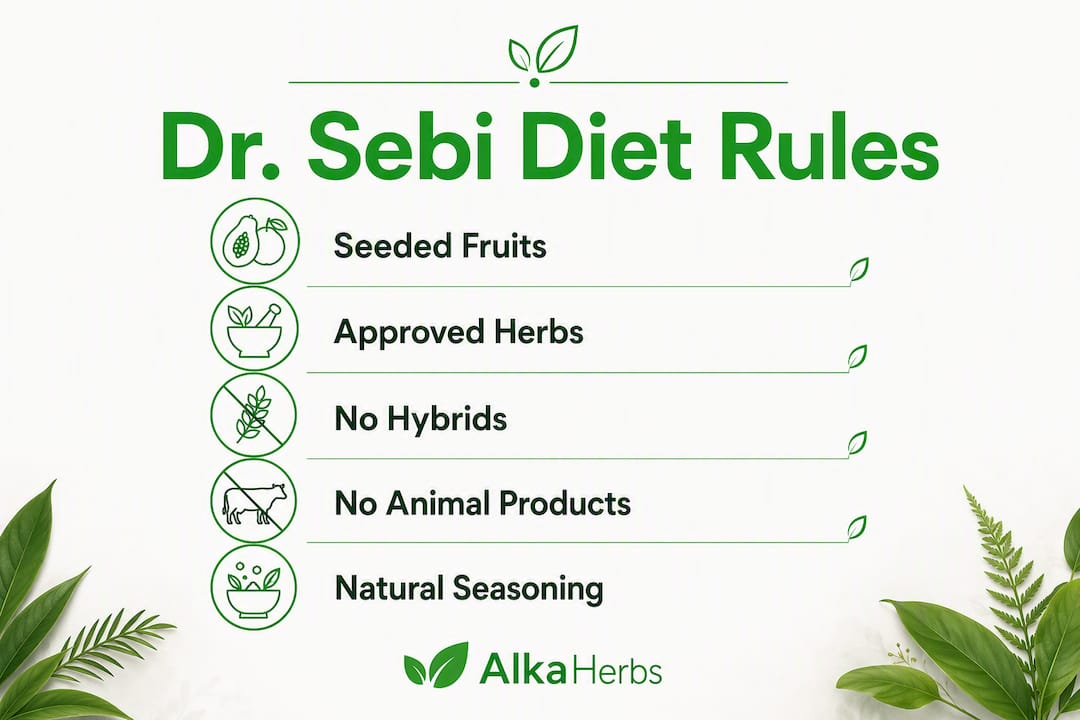
The chart is only half the protocol. These rules govern how you apply it:
- Eat only from the approved food list. No substitutions, no “close enough.” If it’s not on the official Dr. Sebi Nutritional Guide, it’s excluded.
- Choose non-hybrid, “electric” foods only. Practitioners frame “electric” foods as naturally occurring, seed-bearing plants that retain their original genetic structure and are believed to resonate with the body’s natural frequency.
- Drink one gallon of spring water daily. This hydration guidance appears consistently across Sebi resources. Tap water and distilled water are not preferred; natural spring water is specified.
- No animal products of any kind. This includes hidden animal derivatives like gelatin, casein, and whey.
- No processed foods. If it has been chemically altered, refined, or manufactured with additives, it’s excluded.
- Avoid the microwave. Sebi practitioners consistently recommend stove-top or raw preparation to preserve the food’s “living” properties.
- Avoid seedless fruits and hybrid vegetables. Seedless = hybrid = excluded. This applies even to fruits that appear on generic alkaline lists.
- Use approved herbs and teas daily. Herbs like burdock root, sarsaparilla, and nettle are part of the protocol, not optional extras. They support the alkaline detox dimension of the diet.
In practice, rule 7 is the one that catches most beginners. A cherry tomato passes; a large seedless beefsteak does not. Seeded grapes from a specialty market pass; the standard seedless bunch at most grocery chains does not.
How do you use the chart day to day?
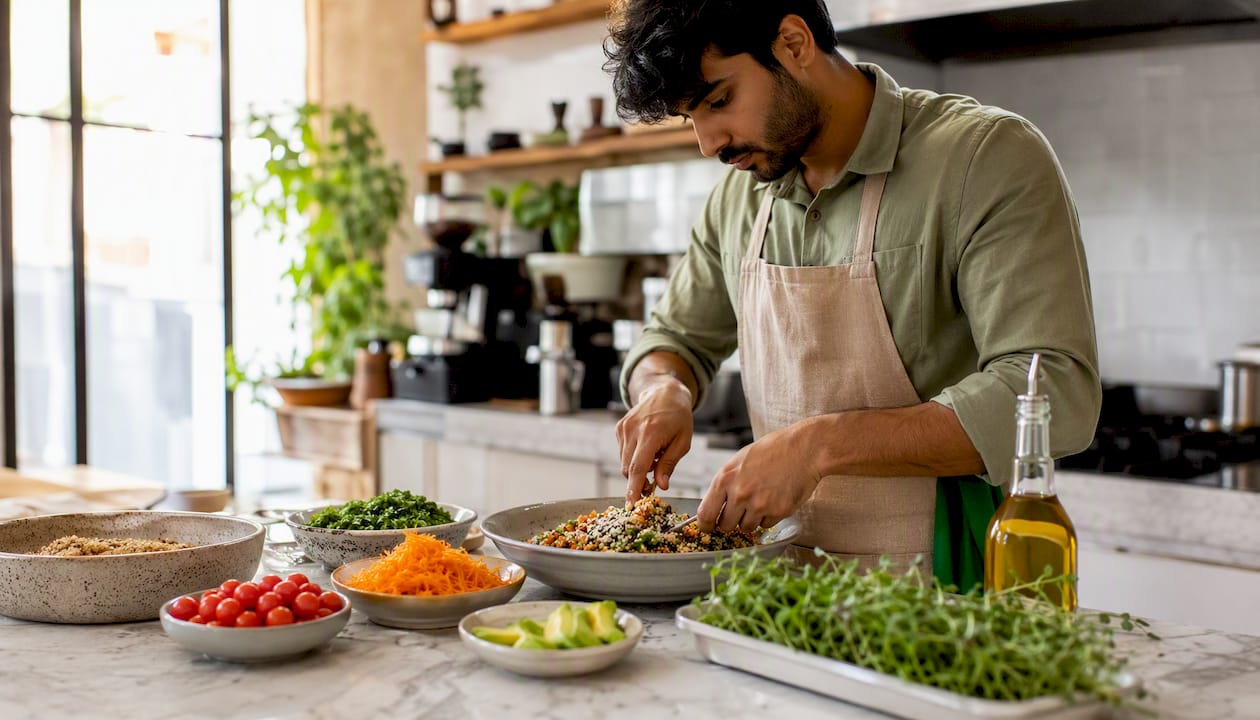
The chart becomes practical when you build a rhythm around it. Here’s what a full day looks like using only approved foods.
Sample day on the Dr. Sebi chart
Breakfast: A smoothie built from papaya, mango, and a handful of hemp seeds blended with spring water. Add a tablespoon of raw tahini for fat and staying power. Followers commonly prepare breakfasts this way, using soft jelly coconut or soursop when available.
Alternatively, cook a warm spelt or quinoa porridge with date sugar and a pinch of cinnamon. Soak the grain overnight first (more on that in the next section).
Lunch: A large salad of kale, arugula, and watercress dressed with olive oil, key lime juice, and pure sea salt. Add sliced avocado, cherry tomatoes, and a handful of walnuts. Seeded grapes on the side.
Dinner: Sautéed zucchini, bell peppers, and onions in grapeseed oil over wild rice. Season with thyme, basil, and cayenne. A cup of nettle or chamomile tea to close the meal.
Snack: Brazil nuts, fresh figs, or a small bowl of soursop (thawed from frozen).
Quick breakfast smoothie formulas
- Green mineral blend: Cucumber + kale + mango + hemp seeds + spring water
- Tropical reset: Soursop + papaya + key lime juice + agave syrup + spring water
- Seed-and-grain: Blended cooked quinoa + banana (burro) + date sugar + sesame seeds
Substitutions for common gaps
If seeded grapes aren’t available, use seeded figs or frozen soursop. If fresh sea moss isn’t accessible, dulse flakes work as a mineral-dense alternative in smoothies or salads. No Kamut at your local store? Spelt flour is the closest approved substitute for baking.
How do you source and prepare approved foods correctly?
Shopping for this diet in the U.S. requires a bit of strategy, especially for the less common items.
Identifying hybrids at the store:
- Seedless = hybrid. No exceptions in the Sebi framework.
- Most supermarket carrots are bred for uniformity and are considered hybrids by experienced practitioners. Look for heirloom carrot varieties at farmers markets.
- Broccoli and cauliflower are modern hybrids and excluded entirely.
- Heirloom tomato varieties (cherry, plum) are your safest bet; look for them at farmers markets or specialty grocers.
Where to find rare items in the U.S.:
- Soursop: Frozen pulp at Latin, Caribbean, or Asian grocery stores. Supplement capsules at health food retailers.
- Teff and fonio: Bob’s Red Mill carries teff; fonio is increasingly available at Whole Foods and online.
- Sea moss: Wildcrafted Irish moss from small-batch suppliers. Always check for heavy-metal testing documentation.
- Dulse flakes: Natural food stores or online. Alkaherbs carries dulse flakes sourced for Sebi-style protocols.
- Kamut and spelt: Most natural food co-ops and online grain suppliers.
Storage and preparation:
- Soak ancient grains (spelt, quinoa, amaranth, teff) overnight before cooking. This reduces phytic acid and preserves the grain’s nutritional integrity, which practitioners describe as keeping the food “electric.”
- Store leafy greens (kale, dandelion, watercress) unwashed in a damp cloth or paper towel in the refrigerator. Use within three to four days.
- Raw preparation is preferred where possible. When cooking is needed, use low heat on the stove top. Microwaves are excluded from the protocol.
- Sprouting hemp seeds or sesame seeds before use is a common practitioner recommendation for maximizing nutrient availability.
Pro Tip: When buying sea moss in the U.S., request a certificate of analysis (COA) from the supplier confirming heavy-metal testing. Sea vegetables and sea moss are mineral-dense, but ocean sourcing varies widely in quality. Wildcrafted, small-batch suppliers with lab results are the standard to hold.
What does science say about alkaline diets and safety?
The mainstream scientific position is direct: diet has very limited effect on blood pH. The body tightly regulates systemic pH through the lungs and kidneys, keeping blood pH in a narrow range of roughly 7.35–7.45 regardless of what you eat. Medical reviewers at Healthline note that urine pH can shift with food intake, but that does not reflect blood pH. No food chart can meaningfully change blood pH.
That distinction matters for anyone following the Sebi chart. The benefits people report — improved digestion, more energy, reduced bloating — are more plausibly explained by cutting processed food, refined sugar, and animal products than by any change in blood chemistry.
Nutrient gaps to watch on a strict Sebi plan:
- Vitamin B12: No animal products means zero dietary B12. Supplementation is necessary for long-term followers.
- Essential amino acids: The approved protein sources (hemp seeds, Brazil nuts, sesame, quinoa) cover most amino acids, but variety matters. Rotating plant-based nutrient sources reduces the risk of gaps.
- Iodine: The chart excludes iodized salt and most seafood. Sea vegetables (dulse, nori, kelp) provide iodine, but amounts vary by source.
- Calcium: Kale, watercress, and sesame seeds contribute calcium, but absorption rates differ from dairy sources.
Anyone considering a strict, long-term elimination plan should consult a registered dietitian or physician before starting. This article is general information, not medical advice.
Key Takeaways
The Dr. Sebi alkaline food chart is a non-hybrid, plant-only approved food list built around “electric” seed-bearing foods, with animal products, processed ingredients, hybrid produce, and modern grains entirely excluded.
| Point | Details |
|---|---|
| Non-hybrid rule is central | Only seed-bearing, naturally occurring foods qualify; seedless varieties are excluded regardless of how “healthy” they seem. |
| Approved grains are limited | Spelt, teff, amaranth, quinoa, wild rice, and fonio only — wheat, oats, and corn are off the list. |
| Hydration is part of the protocol | One gallon of spring water daily is the standard guidance across Sebi resources. |
| Nutrient monitoring matters | Long-term followers should watch B12, iodine, and calcium; consult a clinician before a strict elimination plan. |
| Alkaherbs for herbs and sea moss | Alkaherbs sources wildcrafted sea moss, dulse flakes, and alkaline herbs aligned with Sebi-style protocols for U.S. buyers. |
Why people follow the Dr. Sebi chart — and what they’re really after
Most people who come to this chart aren’t looking for a diet. They’re looking for a reset. The appeal isn’t calorie counting or macros — it’s the idea that returning to unaltered, seed-bearing plants and cutting out everything processed might give the body a chance to do what it’s supposed to do.
The detox motivation is real, even if the mechanism is debated. When someone cuts animal products, refined sugar, wheat, and packaged food simultaneously, they tend to feel different within days. Whether that’s “cellular cleansing” in the Sebi sense or simply the effect of eating more whole plants and less junk is a question science and tradition answer differently.
What I find genuinely interesting about the Sebi chart is the hybrid rule. It forces a level of sourcing intentionality that most diets never touch. You can’t just grab the nearest bunch of grapes. You have to ask where it came from, whether it has seeds, whether it was bred for shelf life or for nutrition. That question alone changes how most people shop. The role of mineral-rich herbs in Sebi’s framework adds another layer: food and herbal protocol working together, not food alone.
Alkaherbs was built around exactly that combination: approved herbs and sea moss that complement the chart rather than replace it.
Alkaherbs carries Sebi-style herbs and sea moss for U.S. buyers
If you’ve worked through the chart and you’re ready to add the herbal side of the protocol, Alkaherbs is where most U.S.-based Sebi followers start. The store carries wildcrafted sea moss (including Sebian sea moss gel and purple sea moss), dulse flakes for mineral-dense cooking, and a full range of alkaline herbal teas built around approved herbs like burdock root, nettle, and sarsaparilla.
Every product is sourced organic and non-GMO, with a focus on the wildcrafted and traditionally harvested standards that Sebi’s framework requires. Browse the Dr. Sebi–inspired product collection to find sea moss, herbs, and herbal blends that fit the chart you just read.
Useful sources and further reading
-
Dr. Sebi Diet Rules: Foods to Eat and Avoid (MedicineNet) — Medically reviewed explainer covering approved and forbidden foods, the one-gallon water guidance, and the “electric” food concept. The most clinically grounded summary available.
-
Dr. Sebi Diet Review: Weight Loss, Benefits, and Downsides (Healthline) — Balanced review that addresses the blood pH science directly, identifies likely nutrient gaps, and contextualizes the diet’s benefits within broader plant-food research.
-
Plant-Based Nutrients: What They Are and How to Get Enough (Superior Formulas) — Useful reference for understanding nutrient sourcing on a plant-only protocol, particularly for amino acids and micronutrients.
-
Why Dr. Sebi Emphasized Mineral-Rich Herbs for Healing (Alkaherbs) — Explains the role of herbs in Sebi’s protocol and how mineral-rich plants complement the food chart.