
Tea Bag Gives Only 0.38 mg: Nettle Leaf Iron for Plant-Based Eaters
Nettle leaf contains measurable non-heme iron, but a typical cup of nettle tea delivers only a trace amount because iron extracts poorly into hot water. Dried whole leaf and powdered nettle carry meaningfully more iron per gram, which makes them the better choice if you want nettle to contribute to your daily intake. Even then, nettle works best as a supporting player alongside diet and, where needed, medical treatment. It’s not a fix for diagnosed anemia.
TL;DR:
- Drinking nettle tea provides only a small amount of iron, roughly 0.38 mg per 2-gram tea bag, which is insufficient for boosting iron levels.
- Consuming dried nettle leaves as powder or cooked greens yields significantly more iron and other nutrients than steeping as tea.
- Pairing nettle foods with vitamin C sources enhances non-heme iron absorption, while calcium, tannins, and phytates inhibit it.
- High-dose or concentrated nettle preparations may interact with medications and require medical guidance, especially during pregnancy or with blood thinners.
- Nettle supplements like capsules are meant to support dietary intake and should complement, not replace, medical treatment for anemia.
Table of Contents
- Nettle’s Nutrient Profile and Measured Iron Values
- How to Prepare and Consume Nettle to Get the Most Iron
- Bioavailability: Non-Heme Iron, Inhibitors, and Enhancers
- Safety, Interactions, and When to See a Clinician
- How Nettle Compares With Conventional Iron Sources and Supplements
- Practical Serving Ideas, Recipes, and a 7-Day Nettle Plan
- Alkaherbs’ Sourcing, Product Options, and What They’re Built to Do
- A Practical Note on Using Nettle Responsibly
- Boosting Iron Intake With Alkaherbs’ Herbal Lineup
- Sources
Nettle’s Nutrient Profile and Measured Iron Values
Nettle earned its reputation as a mineral-dense plant for a reason. Peer-reviewed analysis of raw and processed Urtica dioica identifies it as a genuine source of dietary iron, along with calcium and vitamin A, and researchers have measured its mineral content across multiple preparation forms rather than relying on folklore claims about “wild greens” being good for you in general.
Dried nettle leaves generally fall in the range of about 19 mg of iron per 100 grams, based on published proximate analyses, while some powdered nettle products show notably higher concentrations because drying and grinding concentrate the mineral content relative to fresh weight. That’s a wide spread, and it matters: the number you see quoted online depends entirely on whether someone is measuring fresh leaf, dried leaf, or fine powder.
Nettle isn’t a one-mineral story either. Analyses show it’s also rich in magnesium, with fresh weight readings around 4,520 mg per kilogram in some herbal-source studies, plus meaningful calcium, vitamin K, and flavonoid content documented in a broader nutritional review of stinging nettle. If you’re hunting for magnesium rich herbs or potassium rich herbs to round out a plant-based diet, nettle belongs on that shortlist for reasons beyond iron alone.
Here’s the number that actually matters for your cup of tea: a typical tea bag containing about 2 grams of dried nettle holds roughly 0.38 mg of iron in the leaf material itself, and the amount that transfers into the brewed infusion is lower still, since iron doesn’t leach into hot water anywhere near as efficiently as other minerals.
| Nettle form | Approximate iron concentration | Realistic per-serving yield |
|---|---|---|
| Fresh leaf | Lower than dried (water content dilutes concentration) | Minimal unless cooked and eaten in volume |
| Dried leaf | Around 19 mg per 100 g | Depends on quantity used, not steeped |
| Brewed tea (1 tea bag, ~2 g dried leaf) | ~0.38 mg iron in the leaf | Only a fraction actually transfers to the liquid |
| Fine powder | Can run notably higher per 100 g than dried leaf | Higher yield per teaspoon since you consume the whole leaf |
The takeaway is straightforward: if you’re drinking nettle tea and expecting iron-supplement-level results, the math won’t support it. If you’re eating the whole leaf as powder or cooked greens, you’re capturing far more of what nettle actually offers.
How to Prepare and Consume Nettle to Get the Most Iron
The format you choose changes the outcome more than almost any other variable. Steeping nettle as tea is pleasant and hydrating, but it’s the least efficient way to extract iron, because mineral transfer into an infusion depends on solubility, and iron simply doesn’t dissolve into hot water as readily as, say, potassium or certain B vitamins.
Here’s how the three main preparation methods stack up:
- Tea (infusion): Steep 1 to 2 teaspoons of dried nettle leaf in hot water for 5 to 10 minutes. This method is best for hydration, mild diuretic support, and general herbal ritual, not for meaningful iron intake. Expect a small fraction of a milligram of iron per cup.
- Powdered leaf: Stir 1 to 2 teaspoons of nettle powder into smoothies, soups, or baked goods. Because you’re consuming the ground leaf itself rather than a liquid extract, you get the mineral content intact, including whatever iron, magnesium, and calcium the leaf actually holds.
- Cooked greens: Blanch fresh nettle (always wear gloves before cooking, since raw nettle stings) and use it like spinach in sautés, soups, or pesto. Cooking neutralizes the sting and concentrates the leaf into a denser, more nutrient-forward serving than tea ever could.
Powdering nettle into food isn’t just a texture trick either. Research on nettle as a novel food ingredient shows that adding nettle powder to bread and other staples measurably raises the mineral content of the finished product, which is a more reliable fortification strategy than hoping a cup of tea does the heavy lifting.
A few practical notes worth keeping in mind:
- One tablespoon of nettle powder (roughly 5 to 7 grams) stirred into a smoothie delivers meaningfully more usable iron than a full cup of steeped tea.
- Cooked nettle greens, eaten in a half-cup to one-cup serving similar to spinach, contribute more total minerals than the same amount consumed as tea.
- Combining nettle powder with an acidic ingredient (lemon, tomato, citrus juice) during preparation can support better iron absorption later at the table.
If your goal is genuinely raising iron intake rather than just enjoying an herbal beverage, powder and cooked greens do the work that tea can’t.
Bioavailability: Non-Heme Iron, Inhibitors, and Enhancers
Nettle’s iron is non-heme iron, the plant-based form that the body absorbs far less efficiently than the heme iron found in meat, poultry, and fish. Non-heme iron absorption typically runs low and is highly dependent on what else is on your plate, which is exactly why pairing strategy matters more with nettle than it would with, say, a beef dinner.
The good news is that absorption is a controllable variable, not a fixed ceiling. Certain compounds boost uptake, while others actively block it.
Enhancers that improve absorption:
- Vitamin C (citrus fruit, bell peppers, tomatoes) is the single most reliable non-heme iron enhancer.
- Other organic acids, like those in fermented foods, offer a smaller but real assist.
- Small amounts of meat or fish eaten alongside a plant-based iron source can improve absorption of the non-heme iron too.
Inhibitors that reduce absorption:
- Calcium, particularly from dairy or calcium supplements, competes with iron for absorption when eaten in the same meal.
- Tannins in black tea and coffee bind iron and meaningfully cut its uptake.
- Phytates in whole grains and legumes can block a portion of non-heme iron absorption if eaten simultaneously.
Pro Tip: Squeeze fresh lemon juice into your nettle powder smoothie, or pair a cooked nettle greens dish with a side of bell pepper or citrus fruit. Skip the coffee or black tea within an hour of that meal, since the tannins will undercut whatever iron gain you were going for.
Timing matters almost as much as pairing. If you take an iron-focused supplement or eat an iron-rich meal, separating it from your coffee or tea by an hour or two preserves more of the absorption benefit than drinking them together. For readers layering multiple plant sources, a companion resource on herbs that support iron levels naturally covers additional pairing options beyond nettle alone.
Safety, Interactions, and When to See a Clinician
Nettle is generally well tolerated, but “generally well tolerated” isn’t the same as “risk free for everyone,” and concentrated preparations deserve real caution. Medical literature specifically flags concentrated or high-dose nettle use as warranting a conversation with a healthcare provider before it becomes a primary treatment for anemia or hormonal symptoms.
Nettle has documented diuretic action, which means it can affect fluid balance and blood pressure, and some research points to hormonal activity that matters for anyone managing a hormone-sensitive condition. Concentrated extracts and powders behave more like botanical interventions than casual garnishes, with the potential for systemic effects beyond what a cup of tea would suggest.
Watch for these situations in particular:
- Pregnancy: Large or concentrated doses of nettle are generally discouraged during pregnancy without medical guidance, given its potential uterine and hormonal activity.
- Blood thinners: Nettle may interact with anticoagulant medications, so anyone on blood thinners should check with a pharmacist or doctor first.
- Kidney disease: The diuretic effect warrants extra caution for people managing kidney conditions or fluid balance issues.
- Blood pressure medication: Nettle’s effect on blood pressure means it can compound or interfere with existing prescriptions.
If you suspect you’re actually iron deficient rather than just looking to round out your diet, the right first move is a blood test, not a bigger cup of tea. A CBC and ferritin panel will tell you where you genuinely stand, and that data should guide whether dietary tweaks are enough or whether you need prescribed iron therapy. Nettle can be part of the plan; it shouldn’t be the diagnostic tool.
How Nettle Compares With Conventional Iron Sources and Supplements
Context helps here more than raw numbers. Nettle tea sits at the low end of iron contribution, cooked nettle greens and nettle powder land in the moderate range for plant sources, and none of them compete with red meat’s heme iron or a prescribed oral iron supplement on a per-serving basis.
- Nettle tea: — Minimal iron transfer per cup; better thought of as a mineral-supportive beverage than an iron source.
The practical distinction comes down to your actual situation. If you’re managing a vegan or vegetarian diet and want to nudge your iron intake upward as part of a varied plant-based pattern, nettle powder and cooked greens are a reasonable addition alongside legumes, leafy greens, and vitamin C pairing. If your ferritin is borderline low but you’re asymptomatic, dietary adjustments including nettle may be a sensible first step your clinician can monitor. If you’re symptomatic with diagnosed anemia, that’s a different category entirely, and it calls for prescribed iron therapy, not a heavier hand with the tea kettle.
Practical Serving Ideas, Recipes, and a 7-Day Nettle Plan
Turning any of this into a habit is easier than it sounds. Here are five ways to work nettle into meals without overthinking it:
- Morning smoothie: Blend 1 teaspoon nettle powder with spinach, banana, and orange juice. The citrus does double duty as flavor and absorption support.
- Nettle pesto: Blanch fresh nettle, then blend with olive oil, garlic, lemon juice, and nutritional yeast for a mineral-dense pasta or toast topper.
- Cooked greens side dish: Sauté blanched nettle with garlic and a squeeze of lemon, served alongside a protein source at dinner.
- Nettle and lentil soup: Simmer nettle leaves into a lentil-based soup finished with a splash of lemon juice at the end.
- Classic tea, dressed up: Steep dried nettle with hibiscus or rosehip, both of which carry natural vitamin C that supports whatever iron the infusion does offer.
A simple 7-day approach: rotate nettle powder into your morning smoothie three times a week, add cooked greens or pesto to dinner twice a week, and enjoy tea freely the other days purely for its mineral and hydration benefits rather than as an iron strategy. Pair the powder and greens days with a vitamin C source every single time.
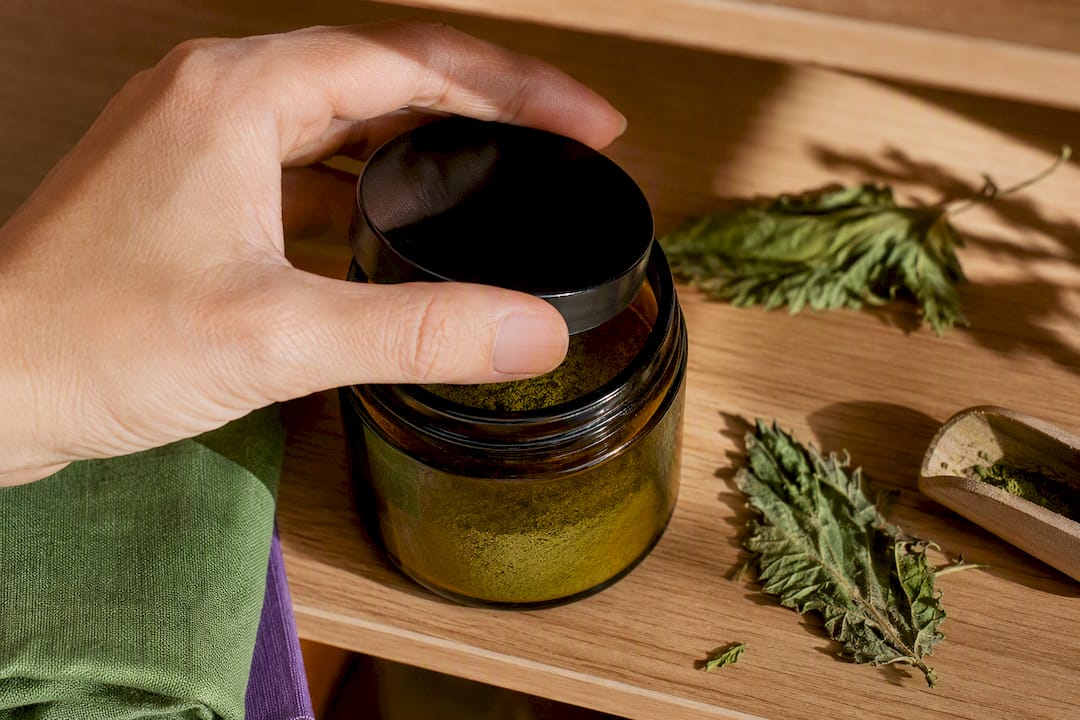
Pro Tip: Buy nettle as powder if iron intake is your main goal, and as dried leaf or fresh if flavor and tea ritual matter more to you. Store powder in an airtight container away from light and use it within a few months, since ground herbs lose potency faster than whole dried leaf.
For readers who want a broader look at preparing botanical infusions well beyond nettle alone, this guide to botanical beverage preparation covers steeping technique and flavor pairing in more depth.
Alkaherbs’ Sourcing, Product Options, and What They’re Built to Do
Alkaherbs sources organic, non-GMO herbs rooted in the alkaline dietary teachings associated with Dr. Sebi, with sourcing and preparation standards built around whole-leaf integrity rather than isolated extracts. That philosophy shapes every product in the nettle-adjacent lineup.
The catalog includes nettle in herbal tea form for readers who want the traditional preparation, alongside options positioned for readers focused specifically on iron support, including Bio Ferro capsules, formulated as a plant-based iron-support supplement rather than a substitute for prescribed treatment.
A few things worth knowing before you buy:
- Nettle tea from Alkaherbs is best suited to readers who want the traditional herbal experience and its broader mineral and hydration benefits, not a primary iron strategy.
- Bio Ferro is designed as a concentrated plant-based support option for people looking to supplement dietary iron intake, and it works best alongside the vitamin C pairing strategies covered earlier in this guide.
- Neither product is intended to diagnose, treat, or replace prescribed therapy for confirmed iron-deficiency anemia. That distinction sits at the center of Alkaherbs’ full herb catalog and how it frames every product description.
Readers managing diagnosed deficiency should treat these products as a dietary complement working alongside medical care, guided by actual lab numbers rather than assumption.
A Practical Note on Using Nettle Responsibly
Nettle earns its place in a health-conscious diet, but only when you’re honest about what it’s actually doing. It’s a genuine adjunct: a mineral-rich plant that can nudge your intake upward when eaten as powder or cooked greens and paired smartly with vitamin C, not a substitute for anything a lab test would catch.
If your energy is flagging or you suspect low iron, get a CBC and ferritin panel before you reach for anything herbal or otherwise. Let the numbers, and your clinician, decide whether dietary changes are enough or whether you need something stronger. Nettle works best as one smart piece of a bigger picture, never as the whole picture itself.
— Alka
Boosting Iron Intake With Alkaherbs’ Herbal Lineup
If you’ve read this far, you already know that closing the gap between “some iron” and “meaningful iron” means choosing the right nettle format, and that’s exactly where Alkaherbs’ catalog differs from grabbing a generic tea bag off a supermarket shelf: every product is built around whole-leaf, organic, non-GMO sourcing rather than diluted blends.
For readers who want the traditional preparation, Alkaherbs offers nettle and other alkaline herbal teas sourced with the same standards behind every product in the line. For readers specifically chasing iron support beyond what a cup of tea can offer, Bio Ferro capsules were formulated as a concentrated plant-based option to pair with the absorption strategies covered above, vitamin C pairing included. Neither replaces a prescribed iron protocol for diagnosed anemia, but both fit naturally into a diet-first approach for readers whose lab numbers don’t call for clinical intervention yet.
Browse the full range of alkaline herbal tea options to find the format that fits your routine, and start with a single product rather than overhauling your whole pantry at once.
Sources
The claims in this guide draw on peer-reviewed nutrient analyses and safety literature rather than general wellness commentary. For readers who want to verify the numbers directly:
- Iron in Nettle Tea (vs Nettle Leaf Powder) — HealWithFood
- Nutritional and pharmacological importance of stinging nettle (Urtica dioica L.): A review
- Safety and pharmacology-focused review (PMC article)