

A 12-Step Natural Immune System Building Checklist
A natural immune system building checklist works because it stacks small, evidence-backed habits instead of chasing a single miracle food or pill. The 12 highest-value moves: sleep 7 to 9 hours, get daily movement, rotate fiber-rich plants, stay hydrated, keep up with proven vaccines, wash your hands properly, drink less alcohol, skip tobacco, practice a daily stress tool, check key nutrient levels before supplementing, use herbal support cautiously, and stay socially connected.
- Sleep adequately each night
- Move your body daily
- Eat a variety of plant foods weekly
- Drink water consistently
- Stay current on vaccines
- Wash hands properly and often
- Limit alcohol intake
- Avoid tobacco entirely
- Practice a daily stress tool
- Test before megadosing supplements
- Use herbs like sea moss cautiously
- Keep regular social contact
Pro Tip: Don’t try to do all 12 at once. Fix sleep first. Everything else gets easier once you’re actually rested.
Key Takeaways
A natural immune system building checklist works best when sleep and fiber-rich nutrition come first, movement and prevention layer in next, and supplements stay reserved for tested deficiencies.
| Point | Details |
|---|---|
| Sleep first | Aim for 7 to 9 hours nightly; it’s typically the fastest habit to show measurable results. |
| Move consistently | Target 150 minutes of moderate activity weekly plus two strength sessions. |
| Rotate plant foods | Eat varied fiber sources to build microbiome diversity over 8 to 12 weeks. |
| Skip megadoses | Test for deficiencies in vitamin D, zinc, or B12 before supplementing long-term. |
| Layer in herbal support | Alkaherbs’ teas and sea moss offer gentle daily support alongside, not instead of, core habits. |
Table of Contents
- Your Daily and Weekly Immune Support Checklist
- What Does “Supporting Your Immune System” Actually Mean?
- Foods and Nutrients That Actually Support Immunity
- Sleep, Exercise, Weight, and Stress: The Non-Diet Pillars
- Hand Hygiene, Food Safety, and Vaccines: Your Prevention Layer
- Why Hydration and Gut Health Drive Immune Resilience
- Are Supplements and Herbal Support Worth It?
- How Long Until You See Results?
- Common Immune-Boosting Myths, Debunked
- A Simple Weekly Plan to Make This Stick
- Why Sequencing Beats Willpower
- Where AlkaHerbs Fits Into Your Routine
- Sources
Your Daily and Weekly Immune Support Checklist
A daily and weekly rhythm turns this natural immune system building checklist from a wish list into a habit. Nothing here is complicated. It’s the consistency that does the work.
Daily:
- Wake and get 5 to 10 minutes of morning sunlight
- Move your body daily for a moderate amount of time
- Ensure consistent, sufficient nightly sleep
- Take two or three 2 minute stress breaks
- Drink water steadily through the day, more if you’re active or it’s hot
- Fill two fist-sized portions of your plate with vegetables or fruit at each meal
Weekly:
- Hit 150 minutes of moderate activity, or 75 minutes vigorous, per federal exercise guidelines
- Include muscle-strengthening activities a couple of times a week
- Consume a fiber-rich diet with varied sources across the week
- Connect with at least one friend or family member in person
Pro Tip: Sequence matters. Fix your sleep window first, then add fiber-rich meals, then build up movement. Trying to overhaul all three simultaneously is how most people quit by week two.
What Does “Supporting Your Immune System” Actually Mean?
Supporting your immune system means building resilience and balance, not maximizing cell counts or “boosting” anything. More immune activity isn’t automatically better. It’s a network, not a single organ: skin, gut-associated lymphoid tissue (GALT), and the lymphatic system all coordinate the response.
Experts at Harvard Health frame it plainly: there is no single natural quick fix, because immune function reflects your entire lifestyle, not one lever you can pull.
Nutrition, sleep, and activity all shape how well that network responds, but current research has limits on exactly how much any single habit changes outcomes. Vaccines remain the most directly studied way to prime a specific defense.
Foods and Nutrients That Actually Support Immunity
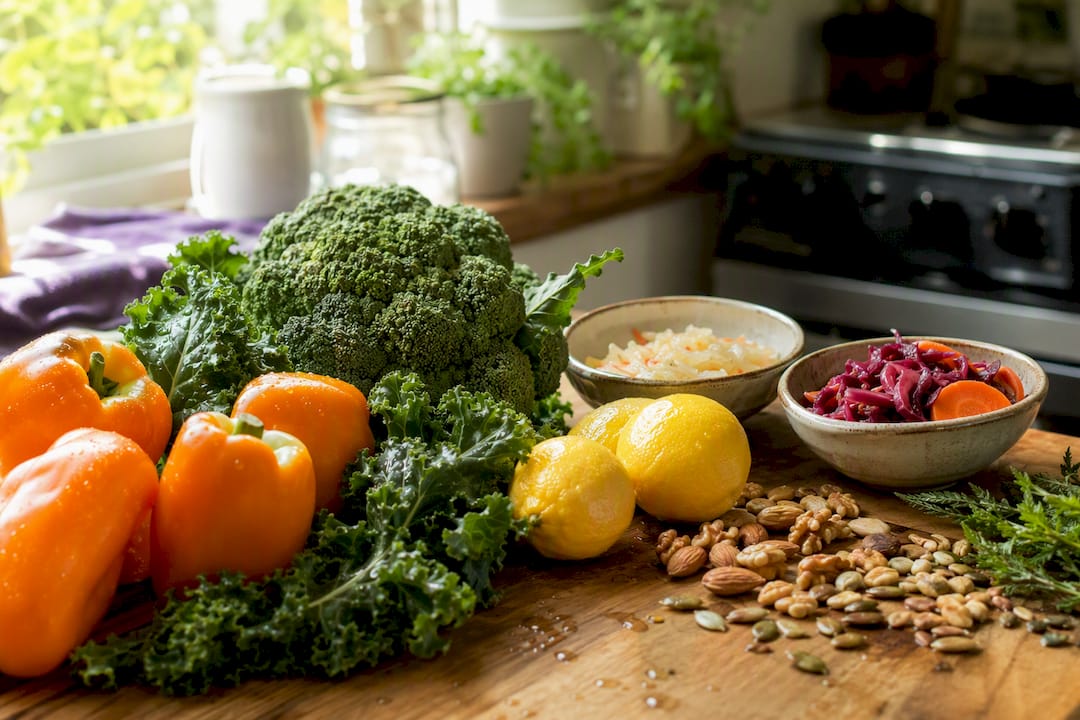
Whole foods beat supplements for most people because they deliver antioxidants, fiber, and phytochemicals together, in forms your body absorbs efficiently. MD Anderson Cancer Center makes this case directly: food-first nutrition, with supplements reserved for documented deficiencies.
High-impact foods worth stocking regularly:
- Citrus and red peppers for vitamin C
- Broccoli and leafy greens for fiber and polyphenols
- Garlic and ginger for compounds linked to immune signaling
- Nuts, seeds, and legumes for zinc, selenium, and plant protein
- Whole grains for steady fiber intake
- Fermented foods (yogurt, kimchi, sauerkraut) for probiotics
Three meal templates that hit these targets without overthinking it: a stir-fry with two-thirds vegetables and one-third tofu or chicken over brown rice; a lentil soup loaded with carrots, greens, and garlic; a big salad with chickpeas, citrus segments, pumpkin seeds, and olive oil.
Pro Tip: Rotate your plant choices weekly rather than eating the same five vegetables. Microbiome diversity responds to variety, not volume. Alkaherbs’ alkaline diet coverage digs deeper into food-first strategy if you want to go further.
| Food Group | Immune-Relevant Benefit |
|---|---|
| Citrus, peppers | Vitamin C for tissue repair and antioxidant support |
| Broccoli, leafy greens | Fiber and polyphenols for gut and inflammation balance |
| Legumes, whole grains | Steady fiber source for microbiome diversity |
| Fermented foods | Probiotic strains that support gut-immune signaling |
| Nuts and seeds | Zinc and selenium, both tied to immune cell function |
Before committing to long-term high-dose supplementation, get bloodwork done. Vitamin D, B12, and zinc deficiencies are common and worth ruling out, but megadosing without a known gap wastes money and can backfire.
Sleep, Exercise, Weight, and Stress: The Non-Diet Pillars
Sleep is likely your fastest lever. Consistent 7 to 9 hour nights produce measurable rebounds in immune markers faster than almost any other single habit. Keep your bedroom dark, cool, and screen-free for the last hour before bed, and go to sleep at roughly the same time each night.

Exercise guidelines are specific and worth following exactly: 150 minutes of moderate activity weekly, or 75 minutes vigorous, plus two strength sessions. A brisk 25 minute walk six days a week clears that bar without a gym membership.
Weight, smoking, and alcohol matter too. The CDC links a healthy weight, tobacco avoidance, and limited alcohol directly to immune resilience and chronic disease prevention. If you smoke, quitting is the single highest-leverage change on this entire list.
- Breathwork or a short meditation, 10 to 12 minutes daily
- One weekly social gathering, in person when possible
- A consistent bedtime, even on weekends
Pro Tip: Structured stress-reduction habits, even brief ones, show measurable drops in inflammatory markers within a few weeks, one of the better returns on time you’ll find in this checklist.
Hand Hygiene, Food Safety, and Vaccines: Your Prevention Layer
No amount of clean eating replaces basic infection prevention. This layer works alongside everything else, not instead of it.
- Wash hands for 20 seconds with soap, especially before eating and after public spaces
- Keep raw meat separate from produce and cook to safe temperatures
- Wear a mask in crowded indoor spaces during high-transmission periods
Vaccines prime your immune system to recognize specific pathogens before you’re ever exposed. The CDC describes this priming mechanism as foundational, not optional, alongside lifestyle habits.
- Confirm you’re current on recommended vaccines with your provider
- Ask about timing, since protection typically builds over one to two weeks, not instantly
- Prioritize vaccination before high-risk seasons or travel
Why Hydration and Gut Health Drive Immune Resilience
Most of your immune tissue lives in your gut, in the GALT, which is one reason fiber and hydration punch above their weight here.
Maintain adequate hydration daily, adjusting for activity and climate, more if you’re active or in heat. Beyond that baseline, gut-focused habits matter most:
- Increase both soluble fiber (oats, beans) and insoluble fiber (vegetable skins, whole grains)
- Rotate plant varieties weekly, instead of repeating the same handful
- Add fermented foods a few times a week, not necessarily daily
Pro Tip: If you only change one thing this month, add a daily serving of legumes. They deliver fiber and protein in one shot, and most people are chronically under their fiber target.
Are Supplements and Herbal Support Worth It?
Four nutrients have the strongest evidence behind them in specific, deficiency-driven contexts: vitamin D, zinc, omega-3s, and selenium. That evidence supports testing and treating actual deficiencies, not blanket high-dose supplementation for everyone.
The NIH Office of Dietary Supplements is direct about vitamin C: dietary intake is well supported, but extremely high routine supplemental doses don’t add general immune benefit and can carry real risks like digestive upset or kidney stone risk in some people. Always check with a clinician before starting any new supplement, especially if you’re pregnant, immunocompromised, or on medication that could interact.
Herbal support fits here too, with the same caveat: evidence is more limited than for core nutrients, and it should complement, not replace, the fundamentals. Alkaherbs’ herbal teas and sea moss products fall into this category: gentle, daily-use options rather than clinical treatments. Traditional herbal approaches to infection resistance go deeper on how these fit into a broader wellness routine.

Pro Tip: Reserve targeted, short-term supplementation for genuinely high-risk windows, cold season, travel, recovery from illness, rather than staying on megadoses year-round.
How Long Until You See Results?
Results arrive in stages, and knowing the timeline keeps you from quitting too early.
- Days to weeks: Sleep quality and stress markers improve first
- 4 to 8 weeks: Measurable shifts in immune markers show up in lifestyle studies
- 8 to 12 weeks: Gut microbiome diversity builds meaningfully with sustained fiber intake
- 3 to 6 months: Fewer sick days across a full season become noticeable
Stack habits in that order, sleep, then stress tools, then fiber, then movement, rather than overhauling everything on January 1st and burning out by February.
Common Immune-Boosting Myths, Debunked
Most “immune boosting” marketing sells shortcuts that don’t hold up.
- Myth: One supplement can cure or prevent illness. Fact: No single nutrient does this; a sustained healthy lifestyle is what actually works.
- Myth: More immune cells always means better protection. Fact: Balance and appropriate response matter more than raw cell counts.
- Myth: Cold exposure alone causes colds. Fact: Viruses cause colds; cold weather just means more indoor time and exposure.
- Myth: Megadoses are harmless because vitamins are “natural.” Fact: Excess intake of several nutrients carries documented risks.
The honest takeaway: skip the miracle claims and put your energy into sleep, food variety, movement, and prevention. That’s what the evidence actually supports.
A Simple Weekly Plan to Make This Stick
Turn the checklist into a repeatable week instead of a list you read once and forget.
- Monday to Friday: Fixed wake time, 10 minutes of morning sunlight, one plant-forward meal minimum
- Tuesday and Thursday: 30 minute walk plus a 10 minute stress-reduction practice
- Wednesday and Saturday: Strength training session
- Sunday: Meal prep with a plant-diversity goal, plus one social visit
Shopping list template for the week: citrus, leafy greens, one new vegetable you haven’t bought recently, legumes, a whole grain, a handful of nuts or seeds, and a fermented food. Rotate the “new vegetable” slot every week.
Track two numbers for 12 weeks: average sleep hours and sick days. That’s enough data to see whether the plan is working without turning your health into a spreadsheet obsession.
Why Sequencing Beats Willpower
Most people fail at immune-supportive habits not because they lack discipline, but because they try to fix everything simultaneously. I’ve found the sequencing question matters more than which specific food or supplement gets picked first.
Start with sleep, because it’s the fastest win and it makes every other habit easier to sustain. Layer in fiber-rich meals next, then movement, then stress tools. Herbal support, including Alkaherbs’ mineral-rich sea moss and teas, fits naturally into that routine as a gentle daily addition once your fundamentals are solid, always alongside a conversation with your clinician if you’re adding anything new.
Where AlkaHerbs Fits Into Your Routine
Once your sleep, movement, and fiber intake are dialed in, herbal support can round out the picture, not replace it. Alkaherbs is built around exactly that gap: gentle, mineral-dense options for the days when your diet needs backup, not a substitute for the fundamentals.
Alkaherbs’ alkaline herbal teas work well as a daily beverage swap for anyone building the plant-rotation habit above. The sea moss line offers mineral replenishment that fits the “gentle daily support” category discussed in the supplements section, and the broader herbal support catalog covers short-term, high-risk-season use as well.
None of these products replace vaccines, medical care, or a clinician’s guidance, especially if you’re pregnant, immunocompromised, or managing a chronic condition. Talk to your provider before adding anything new. If the fundamentals in this checklist are already in place and you want to explore herbal options as a next step, browse Alkaherbs’ immune-support herb selection and see what fits your routine.
Sources
- How to boost your immune system – Harvard Health
- Healthy Habits: Enhancing Immunity | CDC
- Whole foods or supplements? | MD Anderson Cancer Center
- Vitamin C — Consumer — Office of Dietary Supplements (ODS), NIH