

What Does Herbal Fever Response Mean in Alkaline Herbalism?
An herbal fever response is a Dr. Sebi–style alkaline herbal protocol, built around hot teas, sea moss, and mineral-rich botanical blends, used to support the body through fever, detoxification, and recovery. It is not a medical treatment or a claim about how body temperature works. It’s a traditional herbal practice: choosing specific plants and preparations to support sweating, hydration, and mineral replenishment while the body does its own work.
If you’ve searched for what this phrase actually means, you’re probably trying to sort practical guidance from vague wellness marketing. Here’s the short version before we go deeper:
- Diaphoretic herbs (stimulant types like ginger and relaxant types like elderflower) are chosen to support sweating and circulation.
- Nutritive alkaline herbs (nettle, burdock, dandelion) supply minerals rather than acting directly on temperature.
- Sea moss, including Sebian Sea Moss, functions as a mineral-dense staple in most Dr. Sebi–inspired formulas.
- Formats range from hot infusions and decoctions to sea moss gel and capsules.
- None of this replaces medical care. A registered dietitian at Stanford Health Care, Kate Donelan, has noted that herbal teas can supply minerals but won’t meaningfully shift blood pH, and any high or prolonged fever needs clinical evaluation.
Key Takeaways
An herbal fever response combines diaphoretic herbs, nutritive alkaline plants, and mineral-rich sea moss to support the body during fever and recovery, not to replace medical treatment.
| Point | Details |
|---|---|
| Definition | An herbal fever response is a Dr. Sebi–style alkaline protocol using teas, sea moss, and blends to support fever, detox, and recovery. |
| Herb categories matter | Stimulant diaphoretics (ginger) suit early chills; relaxant types (elderflower) suit established fever. |
| Heat does real work | Hot infusions and decoctions matter because hot water itself supports sweating alongside the herb. |
| Know the red flags | Fever above 104°F, symptoms past 72 hours, or breathing trouble mean it’s time for medical care. |
| Product quality checklist | Choose organic, non-GMO options with named ingredients and testing, like Alkaherbs’s sea moss and detox formulas. |
Table of Contents
- What Does an Herbal Fever Response Include?
- How Do You Use an Herbal Fever Response at Home?
- What Does the Evidence Actually Say About Alkaline Herbs and Fever?
- How Do You Choose a Quality Alkaline Herbal Product?
- Simple Recipes for an Herbal Fever Response
- When Should You See a Doctor Instead of Using Herbs?
- How Alkaherbs Supports an Herbal Fever Response
- An Alkaline Herbalist’s Take on Fever Support
- Sources
What Does an Herbal Fever Response Include?
The herbs used in this approach fall into a handful of functional categories, and understanding those categories matters more than memorizing a plant list. Traditional herbalists sort fever-support plants into stimulant diaphoretics, relaxant diaphoretics, and nutritive alkalizers, each chosen for a different job in the body’s process.
Stimulant diaphoretics like ginger, black pepper, and thyme warm the body and are typically used at the onset of chills, when circulation feels sluggish. Relaxant diaphoretics such as elderflower and yarrow are gentler and better suited once a fever is already established and sweating needs support rather than a jump start. Boneset sits between the two, historically used for aching, flu-like fevers. Nettle, burdock, and sea moss don’t act as diaphoretics at all. They’re nutritive, supplying potassium, magnesium, calcium, and chlorophyll to support the body through the depletion that fever and detox can cause. Bladderwrack and duck flower are typically grouped with lymphatic and detox support rather than fever action directly.
| Herb or Product | Primary Action | Typical Preparation |
|---|---|---|
| Ginger, black pepper, thyme | Stimulant diaphoretic (warming, early chills) | Hot infusion |
| Elderflower, yarrow | Relaxant diaphoretic (established fever, sweating) | Hot infusion |
| Boneset | Diaphoretic for aching, flu-like fever | Infusion or decoction |
| Nettle, burdock | Nutritive, alkalizing, mineral support | Infusion or decoction |
| Sea moss (Sebian/Irish) | Nutritive mineral foundation | Gel, powder, or capsule |
| Bladderwrack | Lymphatic and mineral support | Capsule or gel blend |
Alkaherbs sells several products built around these categories, including sea moss and bladderwrack capsules for readers who want measured, no-prep dosing, and Sebian Sea Moss for the gel form favored in traditional Dr. Sebi routines. Full-body formulas, rather than single herbs, are the norm in this practice; the Alkaline Protocol framework groups chelators, diuretics, lymphatic herbs, and nutritive herbs together specifically because they’re meant to work as a system, not in isolation.
How Do You Use an Herbal Fever Response at Home?
Hot teas and sea moss preparations sit at the center of this approach because heat itself has a diaphoretic effect. Hot water on its own encourages sweating, and adding herbs to it layers a second, more targeted action on top. That’s the whole logic behind the tea-first approach in this tradition.
A gentle, sequenced protocol tends to look like this:
- Notice the early signs. Chills, low energy, or the first sense that something’s coming on is the window for a stimulant diaphoretic like ginger or thyme tea.
- Switch to relaxant diaphoretics once fever sets in. Elderflower or yarrow infusions support sweating without the added warming push of ginger.
- Steep hot, not boiling. Pour water just off the boil over leaves and flowers, cover, and steep 10 to 15 minutes. Roots and bark (like burdock root) need a true decoction: a gentle simmer for 15 to 20 minutes.
- Add sea moss daily. A tablespoon of gel stirred into water or tea, or a capsule serving, supplies minerals during a period when appetite and intake often drop.
- Prioritize hydration and rest. Herbal tea alone doesn’t replace plain water; alternate the two throughout the day.
- Expect a short arc. Most gentle, self-limited fevers supported this way resolve within a few days. If nothing shifts by day two or three, that’s a signal to reassess, not push harder.
Pro Tip: For children or anyone sensitive to bitter flavors, cut stimulant herbs like ginger with honey and lemon, or lean on milder relaxant diaphoretics like elderflower instead of stronger bitters.
A few cautions belong inside this process, not tacked on at the end. Pregnant readers should check with a provider before using strong stimulant diaphoretics. Anyone on immunosuppressant medication or managing a chronic condition should loop in a clinician before adding new herbal formulas, since interactions are possible even with common plants.
What Does the Evidence Actually Say About Alkaline Herbs and Fever?
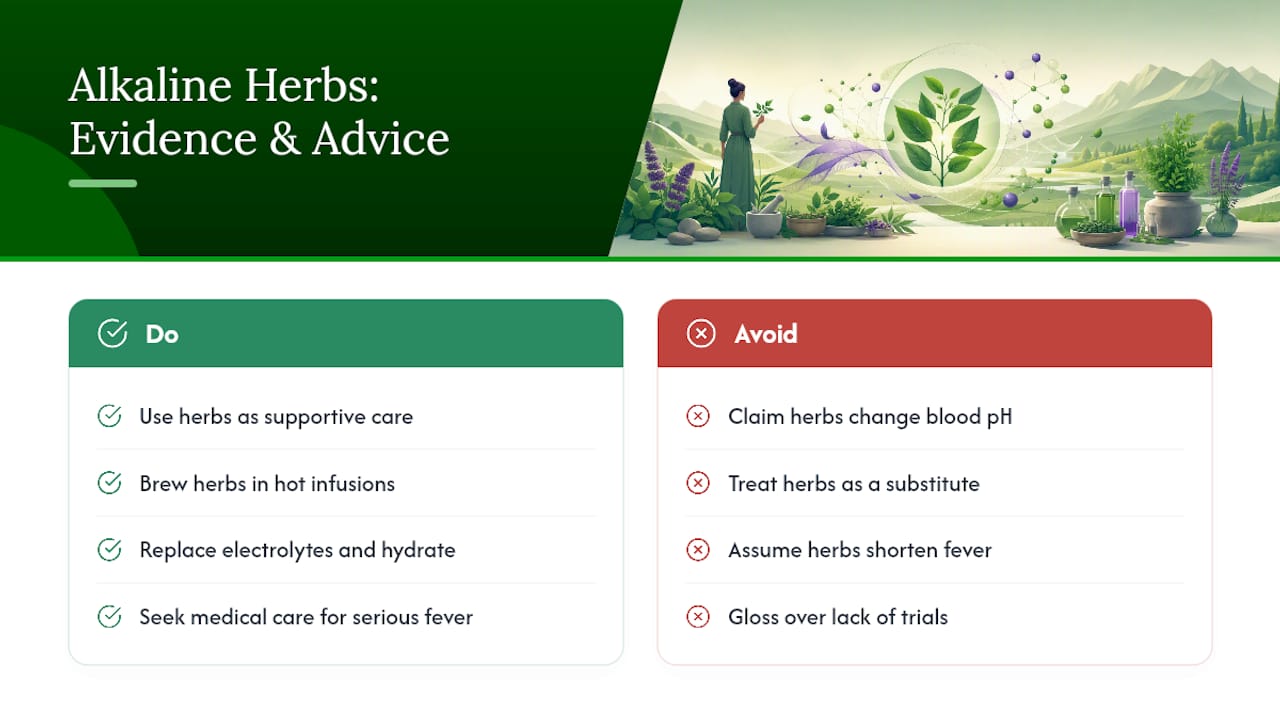
There’s a real, centuries-old herbal rationale behind this practice, but limited direct clinical trial evidence that alkaline herbal protocols change fever outcomes the way a clinical intervention would. That gap matters, and it’s worth naming plainly rather than glossing over.
The “alkaline” framing itself needs a caveat. Mainstream nutrition science doesn’t support the idea that diet meaningfully shifts blood pH, which the body regulates within a narrow range regardless of what’s eaten. What’s true is narrower and still useful: mineral-rich herbs can support hydration, electrolyte balance, and digestion, which matters a great deal when someone is sweating, eating less, and losing fluids during a fever.
Hot water itself acts as a diaphoretic, and herbal preparations are traditionally brewed as infusions or decoctions specifically because heat enhances that sweating response, working alongside the herb rather than replacing it.
Plausible mechanisms line up with what traditional practice has long claimed: diaphoretic action supporting sweating, mineral-dense herbs replacing what’s lost through fluid loss, bitter compounds stimulating digestion, and certain herbs supporting lymphatic drainage. None of that is the same as proof that a specific blend shortens a fever or changes its course, and Alkaherbs’s own writing on how alkaline herbs support the body during infection frames this as supportive care, not treatment. Herbs support the body. They don’t substitute for medical evaluation when a fever is high, prolonged, or accompanied by other concerning symptoms.
How Do You Choose a Quality Alkaline Herbal Product?
Pick products with transparent sourcing, organic or non-GMO labeling, and third-party testing for contaminants and heavy metals before anything else. Sea vegetables like sea moss and bladderwrack absorb whatever is in the water they grow in, which makes sourcing transparency more important here than with most land-grown herbs.
Run any product through this checklist before buying:
- Origin is stated specifically (a named coastal region, not just “wildcrafted” with no location).
- Organic or non-GMO certification appears on the label or product page, not just in marketing copy.
- Batch or lab testing results are available on request or published directly.
- Ingredients are named individually, not hidden behind a vague “proprietary blend.”
- Preparation format matches the herb, gel or powder for sea moss, capsules for standardized dosing, loose leaf or bagged for infusions.
Watch for the opposite of each of these: no stated country or region of harvest, no mention of testing, and blend labels that list a single word like “detox mix” without breaking down what’s actually inside. Products like Purple Sea Moss and the Full Body Detox formula are built to meet this checklist with named ingredients and clear sourcing rather than vague blend labeling. For readers who want to check quality themselves, there’s a practical guide to assessing herb purity at home worth reading before your next purchase.
Simple Recipes for an Herbal Fever Response
Prepare herbs as hot infusions or decoctions, then pair them with a nutritive sea moss form for the fuller traditional effect. Three preparations cover most situations.
For a relaxant diaphoretic tea, combine one teaspoon each of dried elderflower and lemon balm in a cup of water just off the boil. Cover and steep for 12 minutes, strain, and drink warm, up to three cups a day once a fever has set in and sweating needs gentle support.
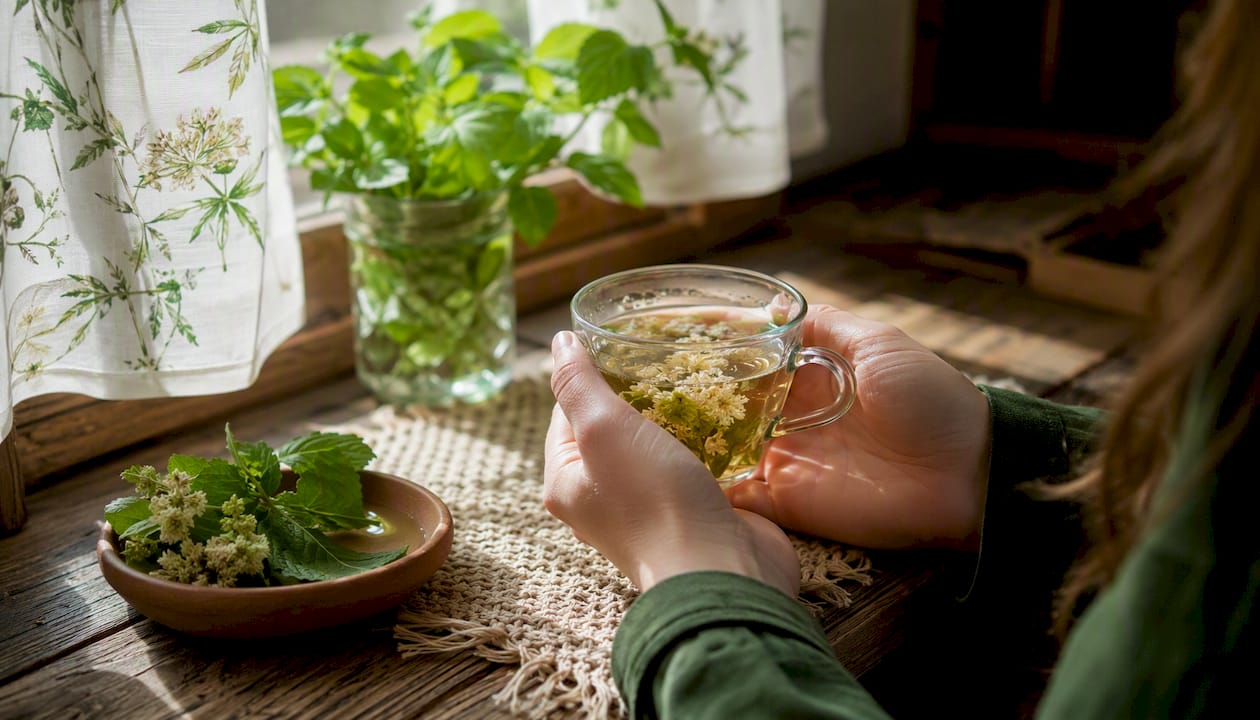
For a stimulant blend at the first sign of chills, simmer a thumb-sized piece of fresh ginger with a pinch of black pepper in two cups of water for 10 minutes. This warming decoction is best in the early hours, before switching to something gentler as the fever progresses.
For a sea moss restorative, stir one to two tablespoons of prepared sea moss gel into warm water, tea, or a smoothie once daily during recovery. Powdered forms typically reconstitute at a similar ratio; check the product label for exact serving guidance.
Pro Tip: Steep time and herb quantity both scale down for children. Use half the herb amount and steep for half the time, and always check with a pediatrician before giving herbal preparations to infants.
Skip stimulant herbs like ginger for anyone with a heart condition or high blood pressure without medical clearance first, and avoid sage in any diaphoretic blend since it works against sweating rather than supporting it.
When Should You See a Doctor Instead of Using Herbs?
Certain symptoms always call for medical attention, full stop, regardless of how well an herbal protocol is going. A high or persistent fever, signs of severe dehydration, trouble breathing, or confusion are not situations to manage with tea and rest.
Specific red flags include:
- Fever above 104°F at any point
- Fever lasting more than 48 to 72 hours without improvement
- Severe shortness of breath or chest tightness
- Confusion, unusual drowsiness, or trouble staying awake
- Signs of sepsis: rapid heartbeat, low blood pressure, cold or clammy skin, extreme weakness
- A fever in an infant under three months, or any fever in someone immunocompromised
If any of these appear, call your provider or go to urgent care or the emergency room immediately. Herbal support is not a substitute for that decision.
Pregnant readers, infants, and anyone on immunosuppressant therapy or other prescribed medications should talk to a clinician before starting herbal fever support, even a mild one, since interactions and risks vary by individual health status.
How Alkaherbs Supports an Herbal Fever Response
Alkaherbs offers organic, non-GMO sea moss, alkaline herbal tea blends, and detox formulas built around the same Dr. Sebi–style principles covered throughout this guide, not a scattershot supplement catalog.
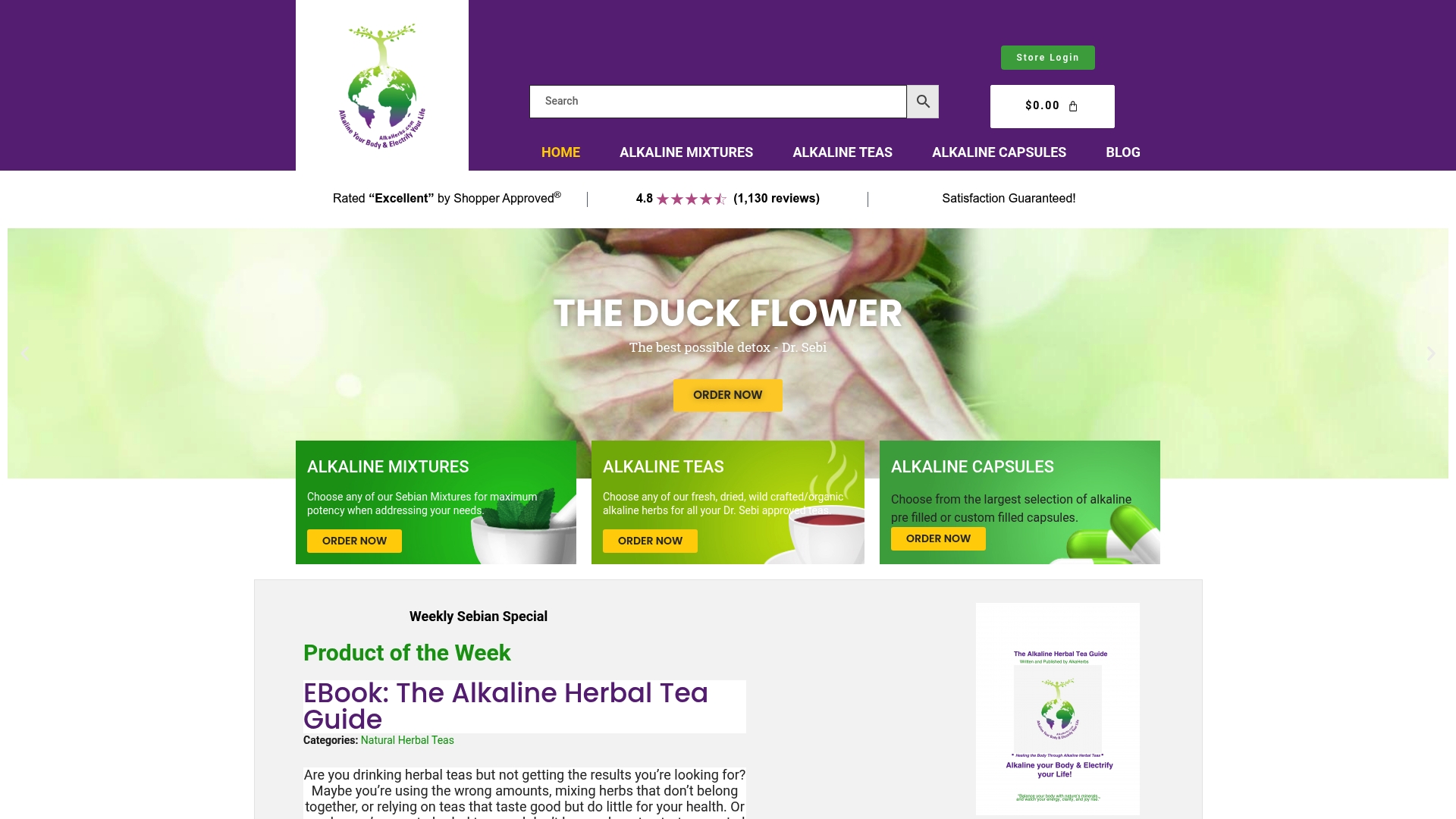
A few places to start: the Full Body Detox 30 Day Supply gives you a structured, longer-term formula for post-fever recovery and general detox support. Sea Moss and Bladderwrack Capsules suit anyone who wants sea moss’s mineral density without preparing gel from scratch. Purple Sea Moss works as a daily mineral staple for ongoing wellness routines. And the alkaline herbal tea category covers the diaphoretic and nutritive blends discussed above, ready-made rather than assembled from separate bulk herbs.
Every product page lists ingredients individually and notes sourcing so you’re not guessing what’s in a jar. Start with one product that matches where you are right now, whether that’s an active fever or general detox support, and always confirm dosage on the label and check with a clinician if symptoms are severe or don’t improve.
An Alkaline Herbalist’s Take on Fever Support
Working with alkaline herbs for years has taught me that the biggest mistake people make isn’t choosing the wrong herb, it’s expecting the wrong outcome. Herbal fever support was never meant to override the body’s own process. It was meant to give that process better raw material: fluids, minerals, warmth, and rest, delivered in a form the body can actually use during a period when eating and hydrating normally get harder.
What frustrates me about a lot of casual coverage of Dr. Sebi–style practice is the tendency to treat sea moss or a tea blend like a switch you flip. It isn’t. It’s a supportive layer underneath rest, hydration, and, when symptoms escalate, real medical care. Followers of this tradition who get the best results are the ones who treat the herbs as one piece of a broader recovery approach, not a replacement for paying attention to their own body’s signals.
If you’re building your own alkaline herbal routine, start with quality sourcing and a clear sense of what each herb is actually for. Alkaherbs’s alkaline herbs collection is a reasonable place to look, and a conversation with a qualified herbalist or your doctor is worth having before you lean on any protocol for something more than mild, short-lived symptoms.
Sources
- 5 Top Herbs for Treating Fever (A Vitalist Guide) – The School of Evolutionary Herbalism
- Herbal teas that are alkaline – Everyday Health
- Alkaline Protocol for Healing – Natural Remedy Club