

The Anti-Inflammatory Alkaline Foods List Worth Buying
If you want to shop smarter for your health, start here. The foods below are both alkaline-forming and backed by evidence for reducing chronic inflammation. Fill your cart with these first:
- Leafy greens (spinach, kale, Swiss chard) — rich in antioxidants and magnesium
- Cruciferous vegetables (broccoli, cauliflower, Brussels sprouts) — sulforaphane and fiber
- Berries (blueberries, cherries, strawberries) — dense in polyphenols
- Avocado — healthy monounsaturated fats that support anti-inflammatory pathways
- Walnuts and almonds — plant-based omega-3s and vitamin E
- Chia seeds and flaxseeds — ALA omega-3 fatty acids and fiber
- Turmeric and ginger — curcumin and gingerols, two of the most studied anti-inflammatory compounds
- Sea vegetables (dulse, sea moss) — trace minerals, alkaline-promoting
- Fermented foods (plain yogurt, kefir, sauerkraut) — probiotics that support gut-driven inflammation control
- Legumes (lentils, chickpeas, edamame) — fiber and plant protein
One caveat worth stating upfront: the “alkaline” label refers to how a food affects urine pH after digestion, not blood pH. Your blood pH is tightly regulated by your lungs and kidneys and does not shift based on what you eat, as MD Anderson Cancer Center makes clear. The real benefits come from the nutrients these foods deliver and the pro-inflammatory foods they replace.
Pro Tip: If you take blood thinners, immunosuppressants, or have chronic kidney disease, check with your clinician before dramatically increasing high-potassium or high-oxalate foods like spinach and beet greens.
Key Takeaways
The most effective approach to reducing chronic inflammation is a consistent dietary pattern built around alkaline-promoting, nutrient-dense whole foods, with targeted herbal support as a complement, not a replacement.
| Point | Details |
|---|---|
| Shop the list first | Leafy greens, berries, walnuts, chia, legumes, and sea vegetables cover the core alkaline and anti-inflammatory bases. |
| pH claims are limited | Alkaline foods affect urine pH, not blood pH; benefits come from nutrients like omega-3s, polyphenols, and fiber. |
| Cut the inflammatory staples | Removing refined carbs, processed meats, fried foods, and sugary drinks matters as much as adding good foods. |
| Pattern beats single foods | A Mediterranean or DASH-style eating pattern delivers sustained results; no single food works in isolation. |
| Alkaherbs for herbal support | Organic alkaline herbs and sea moss from Alkaherbs can complement a solid dietary foundation for targeted mineral and detox support. |
Table of Contents
- The full anti-inflammatory alkaline foods list, by category
- What “alkaline-forming” actually means, and how these foods fight inflammation
- Foods that drive inflammation and what to swap them for
- How to build meals from this list starting tomorrow
- How alkaline herbs and supplements can support your eating pattern
- Why whole foods should come before supplements
- Alkaherbs’ alkaline herb collection for targeted daily support
- Sources
The full anti-inflammatory alkaline foods list, by category
Non-starchy vegetables
These are the backbone of any alkaline-promoting, anti-inflammatory eating pattern. Eat them at every meal if you can.
- Spinach — magnesium, lutein, and vitamin K; alkaline-forming and anti-inflammatory
- Kale — quercetin and kaempferol, two polyphenols with well-documented anti-inflammatory activity
- Broccoli — sulforaphane activates the body’s own antioxidant defenses; one of the most studied crucifers
- Swiss chard — betalains and carotenoids; pairs well with olive oil to maximize fat-soluble nutrient absorption
- Cucumber and celery — high water content, mildly alkaline-forming, low inflammatory load
- Beets — betalain pigments act as antioxidants; roast or steam rather than boil to preserve them
Colorful fruits
- Blueberries — among the highest polyphenol densities of any common fruit; Harvard Health notes that polyphenols and carotenoids in colorful produce act against oxidative stress
- Cherries — anthocyanins reduce markers of muscle and joint inflammation
- Strawberries — vitamin C and ellagic acid; alkaline-forming after digestion
- Apples — quercetin in the skin; eat them unpeeled
- Watermelon — lycopene and citrulline; hydrating and mildly alkaline-forming
Nuts and seeds
- Walnuts — the highest ALA omega-3 content of any tree nut
- Almonds — vitamin E and magnesium; alkaline-forming and satiating
- Chia seeds — 5 grams of ALA per ounce, plus soluble fiber that feeds anti-inflammatory gut bacteria
- Flaxseeds — grind them fresh; whole seeds pass through largely undigested
- Hemp seeds — complete protein with a favorable omega-6 to omega-3 ratio
Herbs and spices
- Turmeric — curcumin is the active compound; absorption increases dramatically when paired with black pepper (piperine)
- Ginger — gingerols and shogaols inhibit inflammatory enzymes; effective fresh, dried, or as a tea
- Garlic — allicin and organosulfur compounds; anti-inflammatory and antimicrobial
- Oregano and thyme — rosmarinic acid and carvacrol; use liberally in cooking
Sea vegetables
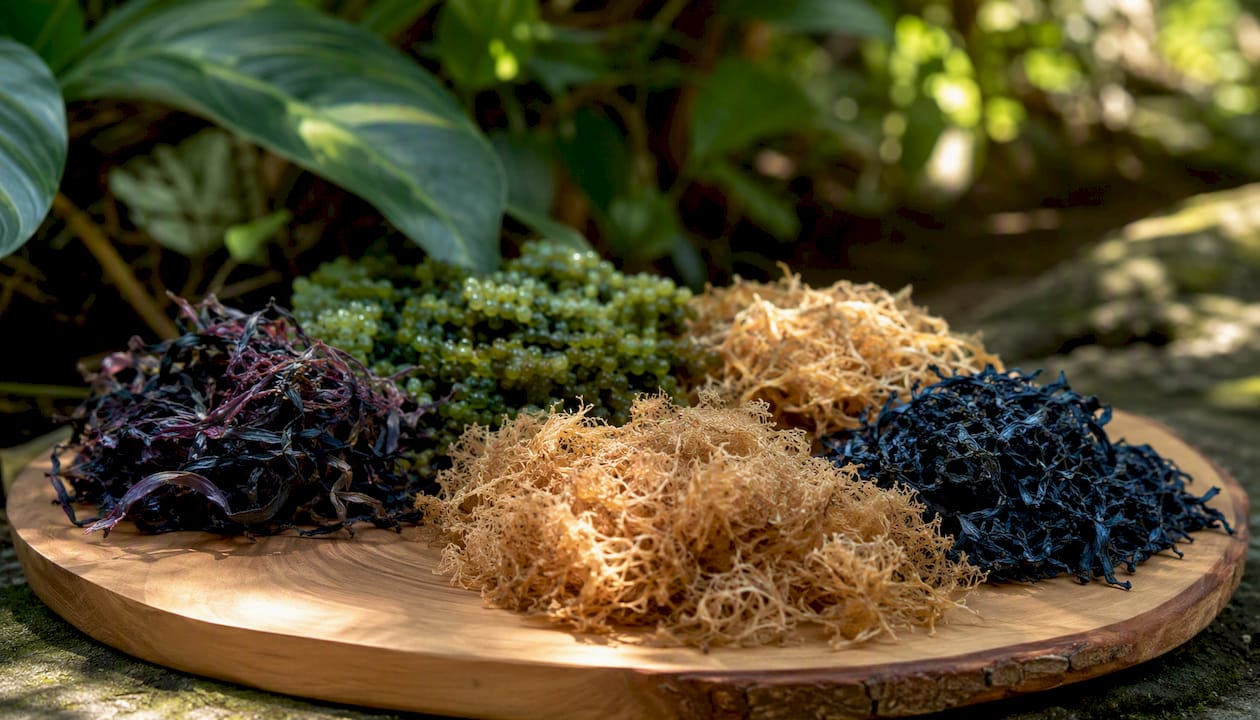
- Dulse — a red algae that supplies iodine, iron, and potassium; alkaline-promoting and mineral-dense. Alkaherbs sources dulse flakes from reputable suppliers with transparent sourcing
- Sea moss — provides a broad spectrum of trace minerals; choose suppliers who test for heavy metals, as contamination is a real risk with sea vegetables
Fermented foods
- Plain yogurt and kefir — live cultures (Lactobacillus, Bifidobacterium) support gut microbiome diversity, which is directly linked to lower systemic inflammation
- Sauerkraut and kimchi — fermented cabbage; fiber plus probiotics in one food
- Miso — fermented soy; use as a broth base rather than cooking it at high heat, which kills the live cultures
Legumes and soy
- Lentils — fiber, folate, and plant protein; one of the most alkaline-forming legumes
- Chickpeas — resistant starch feeds beneficial gut bacteria
- Edamame and tofu — soy isoflavones have mild anti-inflammatory properties; choose non-GMO
Pro Tip: Fat-soluble polyphenols and carotenoids (in kale, Swiss chard, tomatoes, and carrots) absorb far better when eaten with a small amount of healthy fat. Drizzle olive oil on your salad or add half an avocado — it’s not optional if you want the full anti-inflammatory benefit.
What “alkaline-forming” actually means, and how these foods fight inflammation
“Alkaline-forming” describes a food’s effect on urine pH after it is metabolized, not on blood pH. Blood pH sits in a narrow range of 7.35–7.45 and is regulated by the kidneys and respiratory system, not by diet. The Cleveland Clinic states plainly that the alkaline diet’s real value comes from its overlap with whole-food, plant-based eating rather than from any meaningful shift in blood chemistry.
The anti-inflammatory effects are real, but the mechanism is nutritional, not pH-based. Here is what the research actually supports:
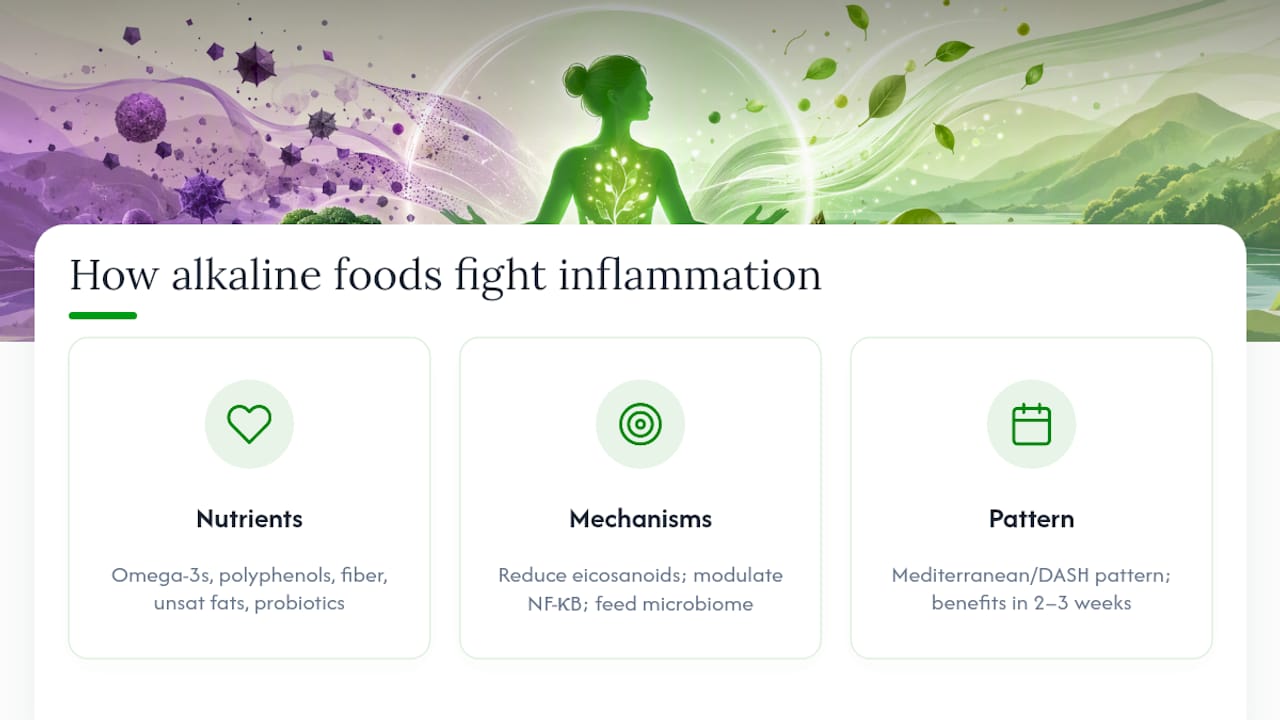
Omega-3 fatty acids (from walnuts, chia, flax, fatty fish) compete with omega-6 arachidonic acid for the same enzymes, reducing the production of pro-inflammatory eicosanoids. Polyphenols (from berries, leafy greens, olive oil) modulate NF-κB, a key inflammatory signaling pathway. Fiber feeds gut bacteria that produce short-chain fatty acids, which lower intestinal and systemic inflammation. Probiotics in fermented foods support microbiome diversity, which is increasingly recognized as a regulator of immune response.
A Harvard Health review identifies omega-3s, polyphenols, fiber, unsaturated fats, and probiotics as the key nutrient groups in an anti-inflammatory diet, and recommends Mediterranean or DASH-style patterns over single-food prescriptions.
The pattern matters more than any single food. Johns Hopkins Medicine and Harvard both favor a Mediterranean-style approach because it delivers all of these nutrient groups together, consistently, over time. Shifts away from inflammatory foods can show measurable improvements in inflammatory markers in as little as 2–3 weeks when the new pattern is followed consistently, according to Cleveland Clinic guidance.
Foods that drive inflammation and what to swap them for
The Mayo Clinic Health System identifies replacing pro-inflammatory Western staples with a plant-forward pattern as one of the most effective natural approaches to lowering chronic inflammation. Here are the main offenders and their practical replacements:
- White bread and refined carbs → sprouted whole-grain bread, oats, quinoa, or wild rice. Refined grains spike blood sugar rapidly, which triggers an inflammatory response.
- Processed meats (hot dogs, deli meats, bacon) → grilled salmon, lentil patties, or tempeh. Processed meats contain nitrates and advanced glycation end products that promote inflammation.
- Deep-fried foods (fries, fried chicken) → oven-roasted sweet potatoes, air-fried vegetables with olive oil. The trans fats and oxidized oils in fried food are among the most potent dietary inflammation triggers.
- Sugary beverages (soda, sweetened juice, energy drinks) → sparkling water with lemon, unsweetened herbal tea, or diluted tart cherry juice. Liquid sugar delivers fructose directly to the liver, driving inflammatory fat accumulation.
- Margarine and shortening → extra-virgin olive oil or avocado oil. These contain partially hydrogenated oils; even small amounts raise inflammatory markers.
When reading labels, watch for: high-fructose corn syrup, partially hydrogenated oils, sodium nitrate, and any ingredient list longer than five items on a product that should be simple. Harvard Health Publishing links ultra-processed foods directly to higher inflammatory markers.
How to build meals from this list starting tomorrow
You do not need to overhaul your kitchen overnight. Three structural changes cover most of the ground.
- Apply the half-plate rule. At every meal, fill at least half your plate with non-starchy vegetables or fruit from the list above. The other half splits between a plant or lean protein and a whole grain or legume.
- Add an omega-3 source daily. If you eat fish, aim for two servings of fatty fish per week (salmon, sardines, mackerel). If you eat plant-based, one tablespoon of ground flaxseed or a small handful of walnuts covers your ALA needs.
- Include a fermented food once a day. A half-cup of plain yogurt at breakfast, a tablespoon of sauerkraut at lunch, or a small glass of kefir as a snack is enough to maintain probiotic diversity without overcomplicating meals.
Portion and frequency notes
| Food category | Suggested frequency | Serving size |
|---|---|---|
| Leafy greens and crucifers | Daily | 2 cups raw or 1 cup cooked |
| Berries | 5–7 days per week | ½–1 cup |
| Nuts and seeds | Daily | 1 oz nuts or 1–2 tbsp seeds |
| Legumes | 4 days per week | ½ cup cooked |
| Fermented foods | Daily | ½ cup yogurt or kefir |
| Sea vegetables | 2–3 days per week | 1–2 tbsp flakes or gel |
A sample day
- Breakfast: Overnight oats with ground flaxseed, blueberries, and a dollop of plain kefir
- Lunch: Large spinach salad with chickpeas, cucumber, cherry tomatoes, avocado, and olive oil and lemon dressing; a tablespoon of sauerkraut on the side
- Snack: A small handful of walnuts and an apple (unpeeled)
- Dinner: Baked salmon or baked tofu over wild rice with steamed broccoli and a turmeric-ginger sauce
Every item on this day comes from the anti-inflammatory alkaline foods list above. Nothing is exotic, and the prep time is under 30 minutes for each meal.
How alkaline herbs and supplements can support your eating pattern
Whole foods come first. But for people who want targeted mineral support or a convenient way to extend their alkaline-promoting habits, certain herbal products can complement a well-built diet without replacing it.
Sea moss and sea vegetables supply iodine, potassium, and a range of trace minerals that are often low in standard American diets. Alkaherbs’ sea moss products are sourced with attention to heavy-metal testing, which matters because contamination is a documented risk with sea vegetables from unverified suppliers.
Alkaline herbal teas made from herbs like burdock root, dandelion, and elderflower provide polyphenols and mild diuretic support. They are a practical daily habit for people who want to increase their plant-compound intake without adding calories.
Concentrated alkaline herb blends (capsules or powders) can fill gaps in mineral intake, particularly for people following a plant-based diet. Look for:
- Certified organic and non-GMO sourcing
- Third-party testing for heavy metals and contaminants
- Transparent ingredient lists with no proprietary blends that hide dosages
- Alignment with Dr. Sebi’s approved herb list if that framework matters to you; see the alkaline diet starter herb list for a practical starting point
Safety note: Herbal supplements can interact with medications including blood thinners, thyroid drugs, and diuretics. People with kidney disease should be especially cautious with high-mineral sea vegetables and potassium-rich herbs. The Cleveland Clinic recommends consulting a clinician before adding concentrated supplements to your routine, particularly if you have an existing medical condition.
Pro Tip: Start with one herbal addition at a time, not three at once. It makes it far easier to notice any reaction and to know which product is helping.
Why whole foods should come before supplements
The supplement industry has a talent for making concentrated extracts sound more powerful than the foods they came from. In most cases, that is backwards. A handful of walnuts delivers omega-3s, fiber, vitamin E, and magnesium in a matrix that no capsule replicates. A bowl of blueberries gives you hundreds of polyphenol variants working together, not a single isolated compound at a high dose.
That said, there are real gaps that targeted herbal support can fill, particularly around trace minerals and the convenience of consistent daily intake. Sea moss, dulse, and specific alkaline herb blends are genuinely useful additions once the dietary foundation is solid. The mistake is reaching for the supplement before building the diet. Fix the plate first. Then use herbs for what they do best: targeted, complementary support where whole foods fall short.
The Dr. Sebi-inspired framework that Alkaherbs is built on makes exactly this point: herbs are healing tools, not shortcuts.
Alkaherbs’ alkaline herb collection for targeted daily support
Building a strong dietary foundation with the foods above is the first move. For readers who want to add concentrated alkaline herb support on top of that foundation, Alkaherbs offers a curated range of organic, non-GMO alkaline herbs and alkaline herbal teas sourced with the transparency and quality standards the wellness market rarely delivers. Every product is aligned with Dr. Sebi’s approved herb list and tested for purity. These herbs complement your diet; they are not a substitute for medical treatment, and if you are on medication or managing a chronic condition, a conversation with your clinician before starting is the right call. Browse the full herb collection at Alkaherbs and find the products that fit your current routine.
Sources
- Groceries to ease chronic inflammation – Mayo Clinic Health System
- What Is the Alkaline Diet, and Is It Safe? – Cleveland Clinic
- Anti-inflammatory diet – Johns Hopkins Medicine
- Alkaline diet: What cancer patients should know – MD Anderson Cancer Center
- Top anti-inflammatory foods — how your diet can reduce chronic inflammation – Harvard Health (Dr. Frank Hu commentary)