

Dandelion Root Detox: How It Works and What the Evidence Says
Dandelion root (Taraxacum officinale) supports natural detoxification by stimulating bile production, increasing urine output, delivering antioxidant phytochemicals, and supplying prebiotic inulin — not by “flushing out” stored toxins, which is not how the body actually works. The Cleveland Clinic notes that root preparations carry stronger liver-supporting activity than leaf preparations, and Alkaherbs sources organic dandelion root specifically for these purposes. The honest bottom line on evidence: the mechanisms are plausible and well-described, but most supporting data comes from animal and cell studies, with limited human clinical trials.
- Plant: Taraxacum officinale (dandelion), root preparations emphasized for liver and bile effects
- Authority context: Cleveland Clinic, PMC peer-reviewed reviews, and Healthline converge on cautious, mechanism-based language
- Brand: Alkaherbs offers organic dandelion root in multiple forms for US customers
- Evidence level: Promising preclinical findings; human RCT data remains limited for most outcomes
Table of Contents
- What dandelion root actually is and why the root matters
- How dandelion root works in the body during detox support
- What the evidence actually shows for each claimed benefit
- How to prepare and use dandelion root safely
- Side effects, interactions, and who should avoid dandelion root
- How quickly can you expect to notice effects?
- Simple dandelion root recipes and practical tips
- Key Takeaways
- Why dandelion root deserves a more honest conversation
- Alkaherbs dandelion root: organic options for every routine
- Authoritative sources and further reading
What dandelion root actually is and why the root matters
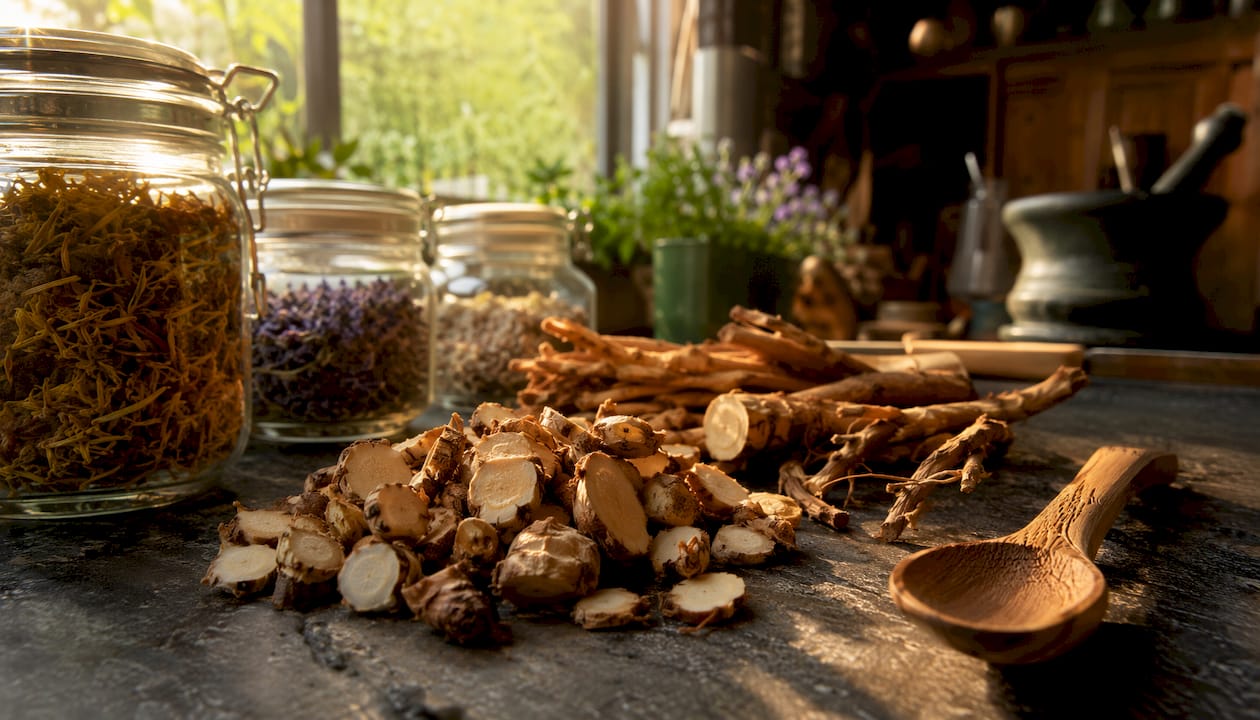
Taraxacum officinale is a perennial flowering plant found across North America, Europe, and Asia. Every part of it is used in some way: the leaves go into salads and teas, the flowers into wines and infusions, and the root into decoctions and extracts. For liver and bile support specifically, the root is the part that matters most. It contains higher concentrations of sesquiterpene lactones and bitter compounds than the leaf, and those bitters are what drive the choleretic (bile-stimulating) effect.
Common preparations include:
- Roasted root brew: dried, roasted root pieces steeped or simmered; mild, coffee-like flavor
- Root decoction (tea): raw or dried root simmered in water for 20–30 minutes
- Tincture: root extracted in alcohol or glycerin; concentrated and fast-acting
- Powdered extract or capsules: standardized or full-spectrum root powder in capsule form
- Dried cut root: loose herb for home decoctions
Traditionally, dandelion root has been used in European herbal medicine as a digestive bitter and liver tonic for centuries. The leaves have a long culinary history as a salad green, which speaks to the plant’s general safety profile at food-level doses.
How dandelion root works in the body during detox support
The most defensible mechanism is bile stimulation. Bitter compounds in the root, particularly taraxinic acids and sesquiterpene lactones, trigger choleretic activity: the liver produces more bile, and the gallbladder contracts to release it into the small intestine. Bile is how the liver exports fat-soluble waste products and metabolized compounds, so increasing bile flow genuinely supports one of the liver’s own elimination pathways. That is a real, mechanism-based contribution to what people loosely call “detox.”
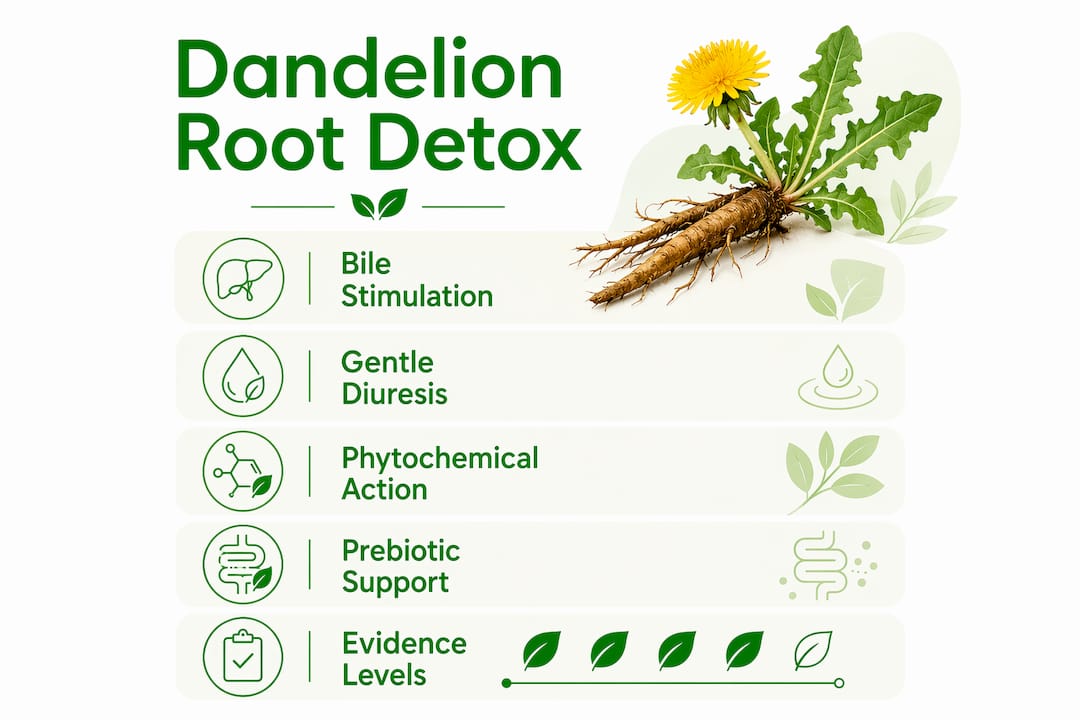
Dandelion root also acts as a volume diuretic, increasing urine output. This supports the kidneys’ normal function of filtering and excreting water-soluble metabolic waste. The key nuance: diuresis removes what is already circulating in the blood and filtered by the kidneys; it does not extract toxins from tissues or organs.
The root’s phytochemical profile adds another layer. Compounds including taraxasterol, chlorogenic acid, and chicoric acid have demonstrated antioxidant and anti-inflammatory activity in lab studies. These protect liver cells from oxidative stress in preclinical models, though the translation to human outcomes still needs clinical confirmation.

Finally, dandelion root is a notable source of inulin, a prebiotic fiber concentrated in the root. Inulin feeds beneficial gut bacteria, which can improve bowel transit and reduce the metabolic load the gut sends back to the liver via the enterohepatic circulation. It won’t detox the liver directly, but a healthier gut microbiome over time can mean less inflammatory signaling reaching the liver.
Pro Tip: Start with a single small cup of root tea or the lowest capsule dose listed on the label. Roots contain more concentrated bitters and inulin than leaves, so jumping straight to three cups daily can cause digestive cramping or more frequent urination than you want.
What the evidence actually shows for each claimed benefit
The table below maps each commonly cited benefit to the type of evidence behind it and a realistic evidence-level label.
| Benefit | Evidence Type | Evidence Level |
|---|---|---|
| Liver protection (hepatoprotective) | Animal models (CCl4, alcohol, APAP injury); in vitro cell studies | Preliminary |
| Bile stimulation (choleretic) | Preclinical reviews; European regulatory recognition (ESCOP, EMA) | Moderate |
| Diuresis / kidney waste removal | Small human pilot data; preclinical studies | Moderate |
| Antioxidant / anti-inflammatory | In vitro; animal studies via Nrf2 and NF-κB pathways | Preliminary |
| Metabolic / weight signals | Preclinical; diuresis-related water loss in humans | Preliminary |
| Digestive / prebiotic support | Inulin mechanism well-established; gut-liver link preclinical | Moderate |
A 2025 PMC review compiled preclinical evidence showing T. officinale root preparations protect against alcohol- and toxin-induced liver injury in rodent models, primarily through antioxidant and anti-inflammatory pathways involving Nrf2 activation and NF-κB suppression. The review explicitly calls for human clinical trials before these findings can be applied to patients. A comprehensive literature review catalogued multiple therapeutic properties reported across dozens of studies, noting hepatoprotective, antioxidant, and diuretic activities as the most frequently reported, while emphasizing that the majority of evidence remains preclinical.
The Cleveland Clinic and Healthline both frame dandelion as a supportive addition to a balanced diet rather than a medical treatment. That framing is accurate given where the science currently stands. The ESCOP and European Medicines Agency have formally recognized the root’s traditional use for liver and biliary function, which provides regulatory-level acknowledgment of the choleretic mechanism even in the absence of large human RCTs.
One claim worth flagging: weight-loss effects attributed to dandelion are primarily related to water loss from diuresis, not fat metabolism. That distinction matters for setting realistic expectations.
How to prepare and use dandelion root safely
Forms and their trade-offs
- Root decoction (tea): most traditional, allows you to control dose and observe effects; requires 20–30 minutes of simmering
- Tincture: fast-acting, concentrated, easy to travel with; alcohol content may not suit everyone
- Capsules/powdered extract: convenient, standardized dosing; harder to adjust gradually
- Roasted root brew: gentler flavor, slightly lower bitter-compound concentration than raw root
Step-by-step root decoction
- Measure 1–2 teaspoons of dried dandelion root per cup of water.
- Add root and cold water to a small saucepan.
- Bring to a gentle boil, then reduce heat and simmer for 20 minutes.
- Strain into a mug and allow to cool slightly before drinking.
- Start with one cup. Observe urine frequency and any GI response before increasing.
Per Cleveland Clinic guidance, a common starting point is one cup daily, with gradual increase to a few cups only if well tolerated. For capsules, follow the manufacturer’s label — dosing varies by extract concentration.
Product quality checklist
- Certified organic sourcing (no pesticide residue on roots)
- Full-spectrum root or standardized extract (not just leaf powder)
- Third-party testing for heavy metals and contaminants
- Clear country of origin and batch information on the label
- Non-GMO verified
Alkaherbs’ dandelion root product page lists sourcing details and form options, which makes it a practical starting point for checking these criteria before purchasing.
Side effects, interactions, and who should avoid dandelion root
Dandelion root is well-tolerated by most healthy adults at food-level and moderate supplement doses, but there are real safety considerations that deserve attention before you start.
Common side effects:
- Digestive upset, bloating, or loose stools (especially at higher doses due to inulin)
- Increased urination (expected diuretic effect; can become problematic if excessive)
- Contact dermatitis or allergic reaction in people sensitive to plants in the Asteraceae family (ragweed, chrysanthemums, marigolds)
Drug interactions to discuss with a clinician:
- Anticoagulants/blood thinners (e.g., warfarin): dandelion’s vitamin K content and potential effects on drug metabolism may alter anticoagulant activity
- Lithium: diuretic effect can raise lithium blood levels by reducing excretion
- Diuretic medications: additive effect increases risk of dehydration and electrolyte imbalance
- Hypoglycemic drugs: dandelion may have mild blood-sugar-lowering effects; combination could cause hypoglycemia
- Some antibiotics (particularly quinolones): dandelion may reduce absorption
Before starting dandelion root, run through this checklist: Are you taking a blood thinner, lithium, a diuretic, or a diabetes medication? Do you have a history of gallstones or gallbladder obstruction? Do you have severe kidney disease? Are you pregnant or breastfeeding? If yes to any of these, speak with your healthcare provider before use. The Cleveland Clinic specifically recommends provider consultation for these groups.
Absolute contraindications:
- Gallbladder obstruction or active gallstones (bile stimulation can trigger pain or complications)
- Severe kidney disease (increased diuresis is contraindicated)
- Known allergy to Asteraceae family plants
- Pregnancy and breastfeeding: insufficient safety data; avoid until cleared by a clinician
This article is general information, not medical advice. Confirm current guidance with your healthcare provider for your specific situation.
How quickly can you expect to notice effects?
Different mechanisms work on different timescales, and confusing them leads to unrealistic expectations.
Within hours:
- Diuretic effect: increased urine output typically begins within a few hours of a root dose
- Bitter-stimulated bile response: choleretic activity begins relatively quickly after ingestion of bitter compounds
Within days:
- Digestive changes: some people notice improved bowel regularity within a few days, driven by inulin’s prebiotic effect on gut transit
Over weeks:
- Metabolic or skin changes: any meaningful shift in metabolic markers or skin clarity, if it occurs, takes consistent use over several weeks
- Microbiome shifts from prebiotic inulin accumulate gradually
When to stop and seek medical advice:
- Prolonged GI symptoms (more than a few days of cramping or diarrhea)
- Sudden right-upper-quadrant pain (possible gallbladder involvement)
- Abnormal bruising or bleeding (possible anticoagulant interaction)
- Signs of electrolyte imbalance: muscle cramps, dizziness, or heart palpitations from excessive diuresis
Clinical outcomes like liver enzyme changes require formal blood testing and are unlikely to show measurable change in a short consumer trial. If you are monitoring liver health, work with a clinician who can order appropriate labs.
Simple dandelion root recipes and practical tips
Classic dandelion root decoction
- Add 2 teaspoons of dried, cut dandelion root to 2 cups of cold water in a small saucepan.
- Bring to a boil over medium heat, then reduce to a low simmer.
- Simmer uncovered for 20–25 minutes until the liquid reduces slightly and deepens in color.
- Strain through a fine mesh strainer into a mug.
- Drink warm. A small amount of raw honey or a squeeze of lemon can offset the bitterness without diminishing the bitter-compound activity significantly.
Dandelion root and ginger detox-style infusion
- Simmer 1 teaspoon of dried dandelion root and 3–4 thin slices of fresh ginger in 2 cups of water for 20 minutes.
- Strain and add a pinch of turmeric powder.
- Drink one cup in the morning before food to maximize the bitter-stimulated bile response on an empty stomach.
Ginger and turmeric both have anti-inflammatory phytochemical profiles that complement dandelion root’s antioxidant compounds, making this a sensible pairing for a morning tonic.
Three practical tips for daily use
- Drink in the morning or early afternoon. The diuretic effect is real; drinking a cup late in the evening means more trips to the bathroom overnight.
- Start with one cup for the first week. Inulin can cause bloating in people with sensitive digestion, and the bitter compounds can be intense if you are not used to them.
- Track your response in a simple note. Note urine frequency, digestion, and energy for the first two weeks. This gives you actual data to share with a clinician if you have questions.
Pro Tip: Roasting the dried root lightly in a dry pan for 5–7 minutes before simmering deepens the flavor considerably and makes the bitterness more palatable — closer to a chicory-style brew. It does not eliminate the active compounds, but it does make daily use more sustainable.
Key Takeaways
Dandelion root’s most defensible role in detox support is bile stimulation and gentle diuresis, both of which assist the body’s own elimination pathways rather than removing toxins directly.
| Point | Details |
|---|---|
| Primary mechanism | Choleretic (bile-stimulating) action via taraxinic acids is the best-supported pathway for liver support. |
| Evidence level | Most benefits are backed by preclinical (animal/in vitro) data; human clinical trials remain limited. |
| Safe starting dose | Begin with one cup of root decoction daily; increase to 2–3 cups only if well tolerated. |
| Key safety cautions | Avoid with gallbladder obstruction, severe kidney disease, or medications including blood thinners, lithium, and diuretics. |
| Alkaherbs option | Alkaherbs offers organic dandelion root with sourcing details and form options for US customers seeking a quality-verified product. |
Why dandelion root deserves a more honest conversation
Most “detox” content treats dandelion root as a magic flush. That framing does the herb a disservice, because the actual mechanisms are genuinely interesting and don’t need exaggeration to be worth your attention.
The choleretic effect is real. Bile stimulation is how the liver exports fat-soluble metabolic byproducts, and supporting that pathway with a bitter tonic has a long, rational history in herbal medicine. The diuretic effect is real too. What is not real is the idea that drinking dandelion tea “removes toxins” in some vague, unspecified way. The liver and kidneys do that work continuously, with or without herbal support. What dandelion root can do is give those systems a modest, evidence-plausible nudge.
The gap between preclinical promise and human trial confirmation is the honest limitation here. Rodent hepatoprotection studies are compelling, but they used doses far above what a person would consume in a daily cup of tea. That doesn’t mean the herb is useless at lower doses; it means the dose-response relationship in humans is still an open question.
What I find most underappreciated is the inulin angle. Most people focus on the liver and kidneys, but the gut-liver axis is where the long-term metabolic benefit likely lives. A healthier gut microbiome, fed by prebiotic inulin over weeks, can reduce the inflammatory load reaching the liver via the portal vein. That is a slow, quiet mechanism, not a dramatic “cleanse,” but it is the kind of sustained support that actually adds up.
Use dandelion root as a supportive tonic, not a treatment. Pair it with a diet that does not constantly overload the liver in the first place. And if you are on any medication listed in the interactions section, have that conversation with your clinician before you start.
Alkaherbs dandelion root: organic options for every routine
If you have read this far and want to try dandelion root as part of a consistent herbal routine, product quality is where the decision actually gets made. Organic sourcing, full-spectrum root (not just leaf powder), and clear batch information are the non-negotiables.
Alkaherbs carries organic dandelion root in forms suited to different routines: dried cut root for home decoctions, powdered root for capsule-style dosing, and ready-to-use preparations for those who want convenience without sacrificing sourcing standards. For readers who want dandelion root as part of a broader protocol, the Full Body Detox 30-Day Supply bundles complementary herbs in a structured program. You can also browse the full range of alkaline herbs to see how dandelion root fits alongside other liver- and blood-supporting botanicals in the Alkaherbs catalog.
Visit the dandelion root product page to check current sourcing details, available forms, and labeling information before you order.
Authoritative sources and further reading
The following sources informed this guide and are worth reading directly for deeper context:
- PMC: Role of Dandelion in Liver Health and Hepatoprotective Properties — 2025 narrative review compiling preclinical hepatoprotective evidence; the primary source for mechanism and evidence-level claims in this article.
- Cleveland Clinic: Dandelion Tea Benefits — Registered dietitian-reviewed clinical summary covering diuretic effects, root vs. leaf distinctions, drug interactions, and dosage guidance.
- Chloe Archard: Is Dandelion Really a Liver Detox? What PubMed Actually Says — Evidence-critical analysis of the “liver detox” framing; source for choleretic mechanism explanation and preclinical limitation discussion.
- Springer: Unveiling the Phytopharmacological Insights of Taraxacum officinale — Phytochemical profile including taraxasterol, chlorogenic acid, and chicoric acid with antioxidant and anti-inflammatory data.
- Springer: A Comprehensive Review of the Benefits of Taraxacum officinale on Human Health — Broad literature review cataloguing therapeutic properties across dozens of studies; useful for evidence-level context.
- Healthline: What Are the Benefits of Dandelion? — Consumer-facing summary with inulin/prebiotic content and expert framing of dandelion as a dietary supplement rather than a medical treatment.
- Burdock Root Detox: Natural Support for Liver and Skin Health — Alkaherbs guide to another liver-focused herb; useful for readers comparing herbal options for detox support.