

Parasite Cleanse Herbs: Evidence-Based Guide 2026
Parasite cleanse herbs are plants traditionally used to target intestinal parasites, disrupt their life cycles, or create an inhospitable gut environment. The most commonly cited include berberine-containing herbs (barberry, goldenseal, Coptis chinensis), garlic, ginger, pumpkin seeds, propolis, oregano (Origanum spp.), and thyme (Thymus vulgaris). These plants have deep roots in Ayurvedic, Traditional Chinese, and folk medicine traditions. The honest summary: lab studies show real antiparasitic activity for several of them, but no scientific evidence confirms that over-the-counter herbal parasite cleanses effectively treat or eliminate human parasitic infections.
Key facts to know before going further:
- None of these herbal products carry FDA approval for treating parasitic infections.
- Actual parasitic infections require laboratory diagnosis, usually via stool testing, before any treatment begins.
- Pharmaceutical antiparasitic drugs remain the medically validated standard of care.
- Herbal cleanses can cause real side effects including dehydration, electrolyte imbalance, and nutrient loss.
- Lab results showing antiparasitic activity do not automatically translate to safe or effective human use.
If you are exploring natural parasite remedies out of curiosity or as a complement to conventional care, this guide gives you the clearest picture of what the herbs actually do, what the science says, and where the real risks lie.
Table of Contents
- What are parasite cleanse herbs and how are they traditionally used?
- What does the science actually say about herbal parasite cleansing?
- Why doctors generally don’t recommend parasite cleanses without a diagnosis
- Potential risks and side effects you should know about
- How to approach herbal parasite cleansing safely
- Signs and symptoms that might prompt you to investigate further
- Post-cleanse care and what to watch for afterward
- Key Takeaways
What are parasite cleanse herbs and how are they traditionally used?
The term “parasite cleanse herbs” covers a broad category of plants used in traditional medicine to expel or suppress intestinal parasites, including worms, protozoa, and other organisms that colonize the gut. Herbalists have used these plants for centuries, often in combination, to address symptoms like bloating, cramping, and irregular digestion that were historically attributed to parasitic infestation.
The table below organizes the most commonly cited herbs, their key active compounds, traditional applications, and the biological mechanisms researchers have studied.
| Herb | Active Compounds | Traditional Use | Proposed Mechanism |
|---|---|---|---|
| Black walnut hull (Juglans nigra) | Juglone, tannins | Expel intestinal worms, skin parasites | Disrupts parasite cell membranes |
| Wormwood (Artemisia absinthium) | Absinthin, artemisinin | Expel roundworms, tapeworms | Bitter compounds irritate parasite nervous system |
| Clove (Syzygium aromaticum) | Eugenol | Target parasite eggs and larvae | Antimicrobial, disrupts egg hatching |
| Barberry (Berberis vulgaris) | Berberine | Digestive infections, protozoa | Inhibits parasite DNA replication |
| Goldenseal (Hydrastis canadensis) | Berberine, hydrastine | Intestinal infections, giardia | Antimicrobial, antiprotozoal activity |
| Coptis chinensis (Chinese gold thread) | Berberine | GI infections, dysentery | Disrupts parasite metabolism |
| Oregano (Origanum vulgare) | Carvacrol, thymol | Intestinal infections, candida | Disrupts microbial cell walls |
| Thyme (Thymus vulgaris) | Thymol, carvacrol | Respiratory and GI parasites | Antimicrobial, anthelmintic activity |
| Pumpkin seeds (Cucurbita pepo) | Cucurbitacin | Expel tapeworms, roundworms | Paralyzes worm musculature |
| Propolis (bee resin) | Flavonoids, phenolics | Antimicrobial, antiparasitic | Disrupts parasite cell integrity |
| Garlic (Allium sativum) | Allicin | Broad-spectrum antimicrobial | Damages parasite membranes |
| Ginger (Zingiber officinale) | Gingerols | Digestive support, antiparasitic | Anti-inflammatory, motility support |
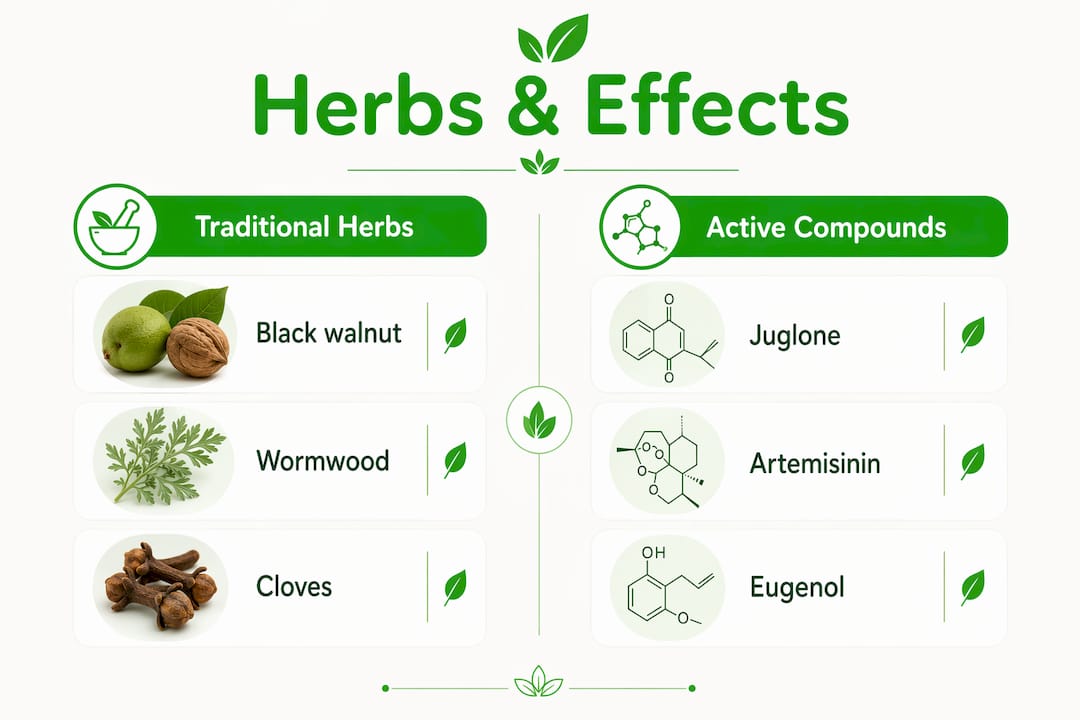
Traditional herbal protocols rarely used a single plant in isolation. Practitioners layered herbs to address different parasite life stages: adults, larvae, and eggs. Clove, for example, was specifically paired with wormwood and black walnut hull because each compound targets a different developmental stage. This layered herbal approach combining herbs with binders to clear debris is still the framework most herbalists follow today.
Dosage forms varied widely across traditions: teas, tinctures, capsules, raw seeds, and poultices. Duration varied, with some protocols cycling herbs on and off to catch newly hatched larvae. The logic was sound in principle; the evidence base, as you will see, is another matter.
What does the science actually say about herbal parasite cleansing?
The short answer: promising in the lab, unproven in humans. That gap matters more than most herbal supplement marketing lets on.

Garlic, ginger, pumpkin seeds, and berberine-containing herbs all show antiparasitic potential in lab studies, with in vitro research demonstrating activity against organisms like Giardia, Trichomonas, and various helminths. Pumpkin seed extracts, for instance, have shown the ability to paralyze worm musculature in animal models. Berberine has demonstrated antiprotozoal effects in cell cultures. These are real findings, not fabricated marketing claims.
The problem is the jump from test tube to human body. Concentrations that kill parasites in a Petra dish are often far higher than what reaches the gut after oral ingestion. Berberine is the clearest example: the doses required to replicate laboratory antiparasitic effects would exceed safe human dosage thresholds, creating toxicity risks before they create therapeutic ones. That is not a minor caveat; it is a fundamental barrier to clinical use.
“Some small studies suggest substances like papaya seeds, pumpkin seeds, and probiotics might marginally reduce intestinal parasite levels, but high-quality human trials are lacking.” — EBSCO Research Starters, Natural Treatments for Intestinal Parasites
The human trial data that does exist is thin. A handful of small studies suggest papaya seeds and pumpkin seeds may marginally reduce parasite burden in certain populations, but sample sizes are small, controls are inconsistent, and results have not been replicated at scale. No herbal product has cleared the clinical trial bar required for FDA approval as an antiparasitic treatment.
Safety data from unregulated supplements adds another layer of concern. Products marketed as herbal detox or herbal cleansing formulas can contain unlisted ingredients, variable concentrations, or contaminants. The NCCIH has documented cases where cleanse products caused organ damage, severe dehydration, and dangerous electrolyte shifts. The herbs themselves may be safe at appropriate doses; the products they are packaged in are not always what the label claims.
One more distinction worth making: traditional herbal medicine used fresh or minimally processed plant material in culturally specific contexts, often alongside dietary changes and practitioner oversight. Modern supplement versions are a different product in a different context, and the two should not be conflated when evaluating evidence.
Why doctors generally don’t recommend parasite cleanses without a diagnosis
The medical position on herbal parasite cleanses is not simply “herbs don’t work.” It is more specific than that: treating a suspected parasitic infection without confirming it first is bad medicine, regardless of whether the treatment is pharmaceutical or herbal.
Parasitic infections are diagnosed through stool ova and parasite (O&P) tests, blood panels for specific antibodies, or in some cases endoscopy. Without that confirmation, you do not know which organism you are dealing with, whether you actually have one, or whether your symptoms have a completely different cause. Chronic digestive symptoms like bloating, cramping, and irregular bowel habits are common to dozens of conditions, from irritable bowel syndrome to small intestinal bacterial overgrowth, and actual parasitic infections are relatively uncommon in otherwise healthy adults in the United States.
“Medical experts warn that self-treating with herbal cleanses may delay necessary professional care, risking worsening health conditions.” — Cleveland Clinic Health
That delay is the real danger. Someone with an actual Giardia infection who spends six weeks on an herbal protocol instead of seeking a diagnosis may see their infection worsen, spread, or cause lasting gut damage. Someone with Crohn’s disease mistaking their flares for parasites may avoid the gastroenterologist they actually need.
When a parasitic infection is confirmed, FDA-approved antiparasitic drugs are the standard of care. Albendazole and mebendazole cover most intestinal helminths. Metronidazole and nitazoxanide address protozoan infections like giardiasis and cryptosporidiosis. These drugs have established dosing protocols, known efficacy rates, and documented safety profiles from large clinical trials. That is not a dismissal of herbal medicine; it is a description of what “proven treatment” actually means.
The misconception driving most self-directed parasite cleanses is that unexplained chronic GI symptoms are probably caused by parasites. That belief is widespread online but not supported by epidemiological data. Ohio State University’s health resources note that parasite cleanses are rarely warranted without a confirmed diagnosis, and that most people pursuing them do not have a parasitic infection at all.
Potential risks and side effects you should know about
Herbal parasite cleanses carry real risks, and they are not limited to rare or extreme cases. The most common problems stem from the cleansing mechanism itself: many protocols rely on herbs with strong laxative or purgative effects, which can trigger diarrhea significant enough to cause dehydration, electrolyte imbalance, and nutrient loss. For someone already dealing with GI distress, that compounds the problem rather than resolving it.
Key safety concerns:
- Dehydration and electrolyte imbalance: Diarrhea from purgative herbs depletes sodium, potassium, and magnesium, which can affect heart rhythm and muscle function.
- Nutrient deficiencies: Accelerated gut transit time reduces absorption of fat-soluble vitamins and minerals during a cleanse.
- Organ toxicity: Some herbal ingredients, particularly at high doses or in poorly regulated products, have documented hepatotoxic (liver-damaging) or nephrotoxic (kidney-damaging) effects.
- Unregulated ingredients: Products not evaluated by the FDA for safety or efficacy may contain unlisted compounds, heavy metals, or inconsistent concentrations.
- Drug interactions: Herbs like goldenseal can inhibit cytochrome P450 enzymes, affecting how the body metabolizes prescription medications.
- Contraindications: Pregnancy, nursing, liver disease, kidney disease, and autoimmune conditions all increase risk from herbal cleanse protocols.
Pro Tip: If you are taking any prescription medication, check for herb-drug interactions before starting any herbal protocol. Goldenseal, in particular, can significantly alter blood levels of drugs metabolized by the liver.
“Herbal cleanse products are not FDA evaluated for safety or efficacy and can contain toxic ingredients causing organ damage, dehydration, nutrient deficiencies, and dangerous electrolyte imbalances.” — National Center for Complementary and Integrative Health (NCCIH)
The risk profile is not uniform across all herbs. Ginger and pumpkin seeds at culinary or moderate supplemental doses carry minimal risk for most healthy adults. Wormwood at high doses is a different story: Artemisia absinthium contains thujone, a compound with neurotoxic potential at elevated concentrations. The difference between a therapeutic dose and a harmful one is narrow, and without professional guidance, that line is easy to cross.
Herbal healing traditions, as explored in broader historical context, always embedded these plants within practitioner-guided frameworks with built-in dose controls. The modern supplement market strips that context away.
How to approach herbal parasite cleansing safely
If you are committed to exploring herbal options, the single most important step is getting a confirmed diagnosis first. That means a stool test, not a symptom checklist from a wellness blog. Once you know what you are dealing with, you can make an informed decision about whether herbal support makes sense alongside or after conventional treatment.
“Effective herbal parasite protocols often use a layered approach combining herbs targeting various parasite stages with binders to clear debris.” — The Wellthie One, Herbs That Kill Parasites
For those who want to incorporate herbs with a reasonable safety profile, here is what a thoughtful approach looks like:
- Start with lower-risk herbs: Garlic, ginger, pumpkin seeds, and thyme have long culinary histories and are generally well-tolerated at moderate doses. They make a sensible starting point.
- Support elimination pathways first: Before introducing antiparasitic herbs, make sure your bowels are moving regularly and your kidneys are well-hydrated. Mobilizing toxins without a clear exit route can cause them to recirculate.
- Use binders: Activated charcoal or bentonite clay, taken away from meals and medications, can help bind die-off debris in the gut and reduce the burden on your liver.
- Sequence, don’t stack: Introducing multiple strong herbs simultaneously increases the risk of adverse reactions and makes it harder to identify what is causing any side effect.
- Cycle the protocol: Many traditional protocols run herbs for three weeks, rest for one, then repeat. This accounts for parasite life cycles and reduces the risk of adaptation.
- Monitor your response: Track symptoms, energy, bowel habits, and any new reactions. If something worsens, stop and consult a practitioner.
Pro Tip: Open your drainage pathways before starting any herbal cleanse. Drink adequate water, support bile flow with bitter herbs like dandelion root, and confirm regular bowel movements. Antiparasitic herbs work better when the body can efficiently clear what they mobilize.
Alkaherbs offers alkaline herbal formulas rooted in Dr. Sebi’s healing traditions, with an emphasis on organic, non-GMO sourcing. Their parasite removal formulas are designed with this layered philosophy in mind. That said, no herbal product replaces a confirmed diagnosis or pharmaceutical treatment when one is medically indicated.
When herbal options are not enough, or when a confirmed infection requires it, FDA-approved antiparasitic drugs are the right call. There is no conflict between respecting herbal traditions and using pharmaceutical medicine when the situation calls for it.
Signs and symptoms that might prompt you to investigate further
No symptom list can confirm a parasitic infection. Only lab testing can do that. What symptoms can do is give you a reason to ask your doctor for a stool test rather than assuming the cause.
Symptoms that sometimes accompany intestinal parasitic infections include persistent bloating, abdominal cramping, unexplained diarrhea or constipation, nausea, fatigue that does not resolve with rest, and unexplained weight loss. Some infections, particularly those caused by helminths, may also produce itching around the anus (especially at night), visible worms in stool, or skin rashes. Iron-deficiency anemia without an obvious dietary cause can sometimes point to a hookworm infection.
The critical caveat: every one of these symptoms is also common to conditions that have nothing to do with parasites. IBS, SIBO, inflammatory bowel disease, food intolerances, and stress-related gut dysfunction all produce overlapping presentations. The myth that unexplained GI symptoms are mostly caused by parasites is one of the main drivers of unnecessary self-treatment.
Risk factors that genuinely raise the probability of a parasitic infection include recent travel to regions with poor water sanitation, drinking untreated water, working with animals or in agriculture, or living in close contact with someone who has a confirmed infection. If any of those apply alongside your symptoms, a stool test is a reasonable next step. If none of them apply, the probability of a parasitic cause drops considerably.
Post-cleanse care and what to watch for afterward
Whether you complete a pharmaceutical treatment or an herbal protocol, what happens after matters as much as the cleanse itself.
The gut microbiome takes a hit during any antiparasitic intervention. Broad-spectrum herbs and pharmaceutical drugs alike can reduce beneficial bacterial populations alongside their targets. Rebuilding that microbial balance is not optional; it directly affects digestion, immune function, and long-term gut health. Fermented foods like sauerkraut, kimchi, and kefir, along with prebiotic-rich vegetables, support microbial recovery better than most probiotic supplements alone.
Rehydration and mineral replenishment come first if the cleanse involved significant diarrhea. Electrolyte balance, particularly sodium, potassium, and magnesium, should be restored before focusing on anything else. Coconut water, mineral-rich broths, and foods high in potassium are practical starting points.
Follow-up stool testing is the only way to confirm whether a parasitic infection has actually cleared. Many practitioners recommend retesting four to six weeks after completing treatment, since some parasite eggs can survive the initial protocol and hatch afterward. Skipping follow-up testing is one of the most common mistakes people make, and it leaves reinfection undetected.
Watch for any new or worsening symptoms in the weeks after a cleanse. Fatigue, joint pain, skin reactions, or digestive changes that emerge post-protocol can indicate a detox reaction, a secondary infection, or an unrelated condition that the cleanse did not address. Any of those warrant a conversation with a healthcare provider rather than another round of herbs.
Alkaherbs’ full body detox formulas are designed to support the body through a complete cleansing cycle, including the recovery phase. Supporting your body’s natural elimination systems with herbal teas and mineral-rich botanicals during the post-cleanse period can help maintain the progress you have made.
Key Takeaways
Parasite cleanse herbs show real antiparasitic activity in laboratory settings, but no herbal product has been clinically proven to treat confirmed human parasitic infections safely or effectively without professional oversight.
| Point | Details |
|---|---|
| Lab evidence vs. human proof | Herbs like garlic, berberine, and pumpkin seeds show in vitro antiparasitic effects, but human clinical trial data remains thin. |
| Diagnosis comes first | A stool test is required to confirm any parasitic infection before starting herbal or pharmaceutical treatment. |
| FDA approval status | No herbal parasite cleanse product carries FDA approval; unregulated supplements can contain toxic ingredients. |
| Real side effect risks | Herbal cleanses can cause dehydration, electrolyte imbalance, nutrient loss, and organ stress, especially without monitoring. |
| Post-cleanse follow-up | Retesting four to six weeks after treatment is the only way to confirm an infection has cleared. |
This article is general health information, not medical advice. Confirm any suspected parasitic infection and its treatment with a qualified healthcare provider or infectious disease specialist.