

How Alkaline Herbs Fight Infection Naturally
Most people assume herbs work like natural antibiotics, killing bacteria and viruses on contact. That framing misses the real story. Understanding how alkaline herbs fight infection naturally means recognizing that these plants work primarily by optimizing your internal environment and strengthening the immune system’s own capacity to respond. When your body’s cellular terrain is mineral-rich and properly balanced, pathogens have a much harder time gaining ground. This article breaks down the science, the specific herbs that matter, and how to actually use them without wasting your time or money.
Table of Contents
- Key takeaways
- How alkaline herbs fight infection naturally through pH balance
- Specific alkaline herbs with proven infection-fighting properties
- How alkaline herbs support broader immune function
- Practical ways to use alkaline herbs daily
- Alkaline herbs vs. conventional antibiotics and antivirals
- My honest take on herbs and infection
- Support your immunity with Alkaherbs
- FAQ
Key takeaways
| Point | Details |
|---|---|
| Alkalinity supports immunity | Mineral-rich alkaline herbs help create an internal environment where immune cells perform at their best. |
| Specific herbs have proven properties | Elderberry, garlic, oregano, and echinacea each have research-backed antiviral and antibacterial mechanisms. |
| Herbs modulate, not replace | Alkaline herbs reduce inflammation and support microbiome health rather than acting as direct antibiotic replacements. |
| Safe use requires preparation | Proper dosing, dilution, and sourcing are non-negotiable for both safety and effectiveness. |
| Integrative approach wins | Herbs work best alongside quality sleep, hydration, and standard hygiene practices. |
How alkaline herbs fight infection naturally through pH balance
Your body works hard to maintain blood pH within a narrow range, roughly 7.35 to 7.45. That slightly alkaline zone is not just a number. It is the operating condition your immune cells were designed for. When your internal environment tilts acidic due to processed foods, chronic stress, or poor hydration, immune signaling slows, inflammation increases, and pathogens find it easier to establish themselves.
Alkaline herbs contribute minerals your body uses to maintain this balance. Calcium, magnesium, and potassium are the primary players. These minerals buffer excess acidity at the cellular level and support enzymatic reactions that power your immune response. Alkaline herbs provide mineral-rich compounds that support detoxification pathways and optimize immune function through their effects on the liver, kidneys, and lymphatic system.
Here is why this matters practically:
- Inflammation control: An overly acidic cellular environment promotes chronic low-grade inflammation, which suppresses the immune system’s ability to mount a targeted response against real threats.
- Pathogen resistance: Many bacteria and viruses thrive in acidic conditions. An alkaline internal environment makes it harder for them to replicate efficiently.
- Immune cell efficiency: White blood cells, particularly macrophages and natural killer cells, function more effectively when mineral levels are adequate and pH is stable.
- Detox pathway support: Herbs that support liver and kidney function help clear metabolic waste that would otherwise contribute to systemic acidity.
The connection between alkalinity and infection resistance is not mystical. It is biochemistry. When you support the conditions your immune system needs, you give it the best possible chance to do its job.
Specific alkaline herbs with proven infection-fighting properties
Not every herb marketed as “alkaline” has meaningful research behind it. These two have both traditional use and scientific evidence worth knowing.
| Herb | Key Compounds | Primary Action | Safety Note |
|---|---|---|---|
| Elderberry | Anthocyanins, flavonoids | Viral entry inhibition, immune stimulation | Raw berries are toxic; use prepared extracts only |
| Oregano | Carvacrol, thymol | Antibacterial, anti-inflammatory | Always dilute essential oil in a carrier oil |
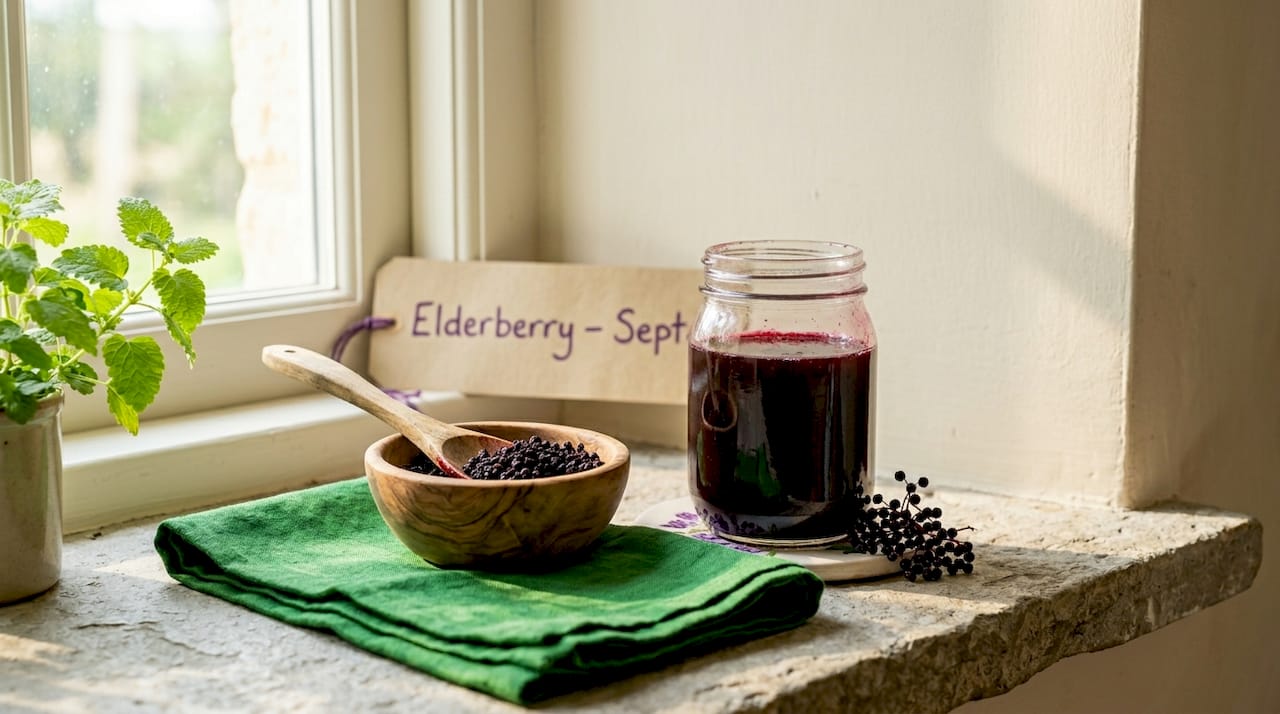
Elderberry works by interfering with a virus’s ability to bind to and enter host cells. It also stimulates cytokine production, which accelerates your immune response. Raw elderberries contain toxic compounds, so only prepared elderberry extracts are safe and effective for antiviral use.
Oregano oil contains carvacrol and thymol, which have demonstrated antibacterial effects against antibiotic-resistant strains in laboratory studies. This is promising, but lab results do not always translate directly to human outcomes. Use it as a supportive tool, not a standalone treatment.
Pro Tip: When buying elderberry, garlic extract, or echinacea supplements, look for standardized extracts with clearly listed active compound percentages. Generic “herb powder” products often contain far less of the active compound than the label implies.
How alkaline herbs support broader immune function
The benefits of alkaline herbs for immunity go well beyond any single antimicrobial compound. The deeper mechanism is immune modulation, meaning these herbs help your immune system respond proportionately rather than either underreacting or overreacting.
Immune support from herbs is best understood as modulation, reducing inflammation and supporting microbiome balance to lower overall infection risk. This distinction matters enormously. An immune system that constantly overreacts creates chronic inflammation and autoimmune problems. One that underreacts leaves you vulnerable to every passing virus. Alkaline herbs tend to nudge the system toward balance rather than simply cranking up immune activity.
Your gut microbiome plays a central role here. Roughly 70% of your immune tissue surrounds your digestive tract, and the bacteria living there directly train your immune cells. Many alkaline herbs contain prebiotic compounds and polysaccharides that feed beneficial gut bacteria, which in turn strengthen mucosal immunity. This is the first line of defense against pathogens entering through your mouth, nose, and digestive tract.
Key ways alkaline herbs support immune function beyond direct antimicrobial action:
- Macrophage activation: Compounds in echinacea and chaga mushroom stimulate macrophages to identify and destroy pathogens more aggressively.
- Natural killer cell enhancement: Several alkaline herb compounds increase the activity of natural killer cells, which are your immune system’s rapid-response units against viral infections.
- Cytokine regulation: Herbs like elderberry help regulate cytokine signaling so your immune response is strong without tipping into the kind of inflammatory cascade that causes more damage than the infection itself.
- Antioxidant protection: Oxidative stress weakens immune cells. The antioxidant compounds in alkaline herbs protect immune cells from damage during an active infection.
Pro Tip: If you are focused on gut-based immunity, pair alkaline herbs with fermented foods like kimchi or kefir. The combination of prebiotic herb compounds and live probiotic cultures creates a more favorable environment for mucosal immune defense.
Practical ways to use alkaline herbs daily
Knowing which herbs work is only half the equation. How you use them determines whether you actually get the benefits.
- Start with teas for daily maintenance. Herbal teas made from dried elderflower, nettle, or alfalfa leaf are low-risk, mineral-rich, and easy to incorporate. Drink one to two cups daily as a baseline habit rather than waiting until you feel sick.
- Use tinctures for targeted, short-term support. Elderberry tincture taken at the first sign of a cold is one of the better-supported applications. Follow the product’s dosage instructions and limit use to two to three weeks at a time.
- Add raw garlic to food strategically. Crush a clove, wait ten minutes, then add it to food after cooking rather than during. Heat destroys allicin. This one habit gives you meaningful antimicrobial support without any supplements.
- Dilute essential oils correctly. Oregano oil must always be diluted in a carrier oil like olive or coconut oil before any use. The standard ratio is one to two drops of oregano oil per teaspoon of carrier oil. Undiluted oregano oil can irritate or damage mucous membranes.
- Treat sleep and hydration as non-negotiable partners. Herbs are secondary aids. Effective immunity requires seven to eight hours of sleep and consistent hydration. No herb compensates for chronic sleep deprivation.
Alkaline herbs vs. conventional antibiotics and antivirals
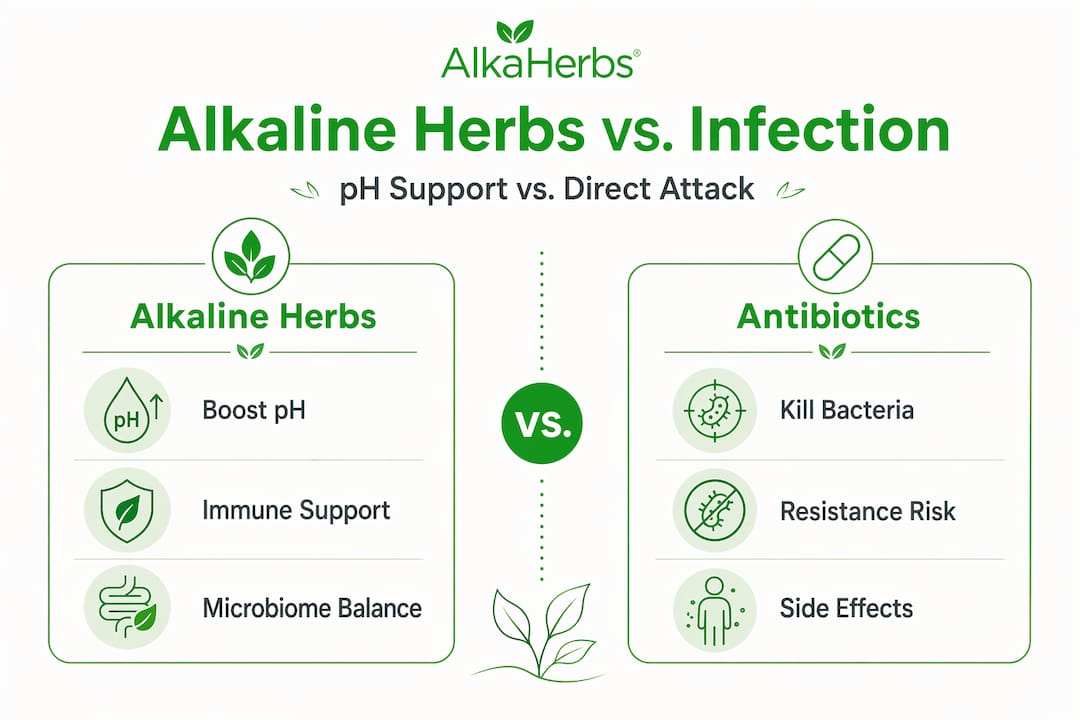
This comparison comes up constantly, and it deserves a straight answer. Alkaline herbs and pharmaceutical antibiotics do not operate on the same mechanism, and they are not interchangeable.
| Factor | Alkaline Herbs | Pharmaceutical Antibiotics/Antivirals |
|---|---|---|
| Mechanism | Immune modulation, environmental optimization | Direct pathogen killing or replication inhibition |
| Speed of action | Gradual, over days to weeks | Rapid, often within hours to days |
| Spectrum | Broad supportive effects | Targeted to specific pathogens |
| Resistance risk | Low | High with misuse |
| Best use case | Prevention, mild illness, recovery support | Confirmed bacterial infections, serious viral illness |
| Safety profile | Generally favorable with proper use | Side effects vary; disrupts gut microbiome |
The research is clear that herbs complement but do not replace medical treatment for serious infections. A urinary tract infection, pneumonia, or strep throat requires confirmed diagnosis and appropriate pharmaceutical treatment. Using only herbs in those situations is not a health decision. It is a risk.
Where alkaline herbs genuinely shine is in the prevention window and during mild illness. They reduce the frequency and severity of infections over time, support faster recovery, and do so without disrupting your gut microbiome the way antibiotics do. That is a meaningful contribution to your health, as long as you keep it in its proper place within an integrative approach.
My honest take on herbs and infection
I have spent years watching people either dismiss alkaline herbs entirely or treat them like miracle cures. Both positions get it wrong.
What I have seen consistently is that people who use alkaline herbs as a daily practice, not a panic response, get real results. They get sick less often. When they do get sick, they recover faster. But the ones who grab elderberry syrup the day they feel terrible and expect it to work like an antibiotic are almost always disappointed.
The other mistake I see regularly is poor sourcing. You can buy echinacea at any drugstore, but the standardized extract content varies wildly. If the label does not tell you the percentage of active compounds, you are probably buying herb-flavored filler. Quality matters more with herbs than almost any other category of natural remedy.
My honest view is that the “herbs as magic antibiotics” framing actually does harm. It sets people up to distrust herbs when they do not perform that specific function. The real benefits of alkaline herbs for immunity are subtler and more durable. They work at the level of your body’s terrain, your mineral balance, your gut health, your inflammatory baseline. That is not a consolation prize. That is foundational health.
If you commit to consistent, quality herb use alongside solid sleep, real food, and basic hygiene, you are building a body that is genuinely harder to infect. That is the actual promise. It is worth keeping.
— Alka
Support your immunity with Alkaherbs
If you are ready to move beyond generic supplements and into herbs that are sourced with intention and quality, Alkaherbs is worth exploring. Every product in the Alkaherbs range is selected based on the alkaline healing principles developed by Dr. Sebi, with a focus on organic, non-GMO sourcing that actually delivers the active compounds your body needs.
From alkaline healing herbs for daily immune support to targeted formulas for detoxification and mineral replenishment, the Alkaherbs catalog covers the full range of natural infection support. You can also explore the full herb shop to find teas, powders, and formulations suited to your specific health goals. As always, use herbs as part of a broader health strategy and consult your healthcare provider for any serious or persistent health concerns.
FAQ
How do alkaline herbs fight infection differently than antibiotics?
Alkaline herbs work by optimizing your body’s internal environment and modulating immune cell activity, rather than directly killing pathogens. Antibiotics target specific bacteria through direct chemical action, which is why they are necessary for confirmed bacterial infections.
Which alkaline herb is best for immune support?
has some of the strongest clinical evidence, with research showing it may reduce cold risk by 58% and shorten illness duration. Elderberries are also well-supported for antiviral and antibacterial benefits.
Can I use alkaline herbs every day?
Many alkaline herbs, such as nettle tea and alfalfa, are safe for daily use. Stronger herbs like Cascara Sagrada and oregano oil are better used short-term or in rotation to maintain effectiveness and avoid overuse effects.
Is it safe to use oregano oil internally?
Oregano oil can be used internally in very small amounts, but it must always be diluted in a carrier oil or water. Undiluted oregano oil can damage mucous membranes and should never be applied directly.
Do alkaline herbs replace the need for medical treatment?
Yes When used correctly in your right amounts and alongside the food list. Alkaline herbs are supportive tools for prevention and mild illness. Serious infections, including bacterial infections and confirmed viral illness, require proper medical diagnosis and treatment alongside any herbal support.