

What Does Liver Detox Do? An Evidence-Based Herbal Guide
A liver detox does not “flush” stored toxins from your body. Your liver detoxifies continuously, every hour of every day, through a two-phase biochemical process that never pauses for a cleanse product to help. Johns Hopkins Medicine is direct about this: short-term detox products lack clinical evidence, and some have caused liver injury. What actually moves the needle is consistent daily support, not a 30-day reset.
Do: Increase fiber, stay well hydrated, and reduce alcohol.
Don’t: Use unregulated multi-ingredient cleanses or attempt extreme fasting without medical supervision.
Table of Contents
- How does the liver actually detoxify?
- Which detox methods actually hold up to scrutiny?
- What do hepatologists actually recommend?
- How to support your liver safely, starting today
- How to vet herbal supplements before you buy
- Alkaherbs’ approach to herbal liver support
- Key Takeaways
- Herbal tradition and medical evidence can coexist
- Sources and further reading
How does the liver actually detoxify?
The liver never takes a day off. Hepatocytes (liver cells) run detoxification in two continuous phases. Phase I uses CYP450 enzymes to oxidize fat-soluble compounds, making them reactive enough for Phase II. Phase II then attaches a water-soluble molecule — glucuronate, sulfate, or glutathione — to that reactive intermediate, so the body can excrete it through bile or the kidneys.
“The liver takes up toxic substances and converts them into harmless substances or makes sure they are released from the body — continuously, not in periodic cycles.”
InformedHealth.org / NCBI Bookshelf
Glutathione is the workhorse of Phase II. When it gets depleted — as happens in acetaminophen overdose — toxic intermediates accumulate and cause real liver injury. That is why protecting glutathione levels through consistent nutrition matters far more than any periodic cleanse.
Here is the basic flow:
- Blood arrives via the portal vein carrying nutrients, medications, and environmental compounds.
- Phase I (CYP450): Oxidation converts lipophilic compounds into reactive intermediates.
- Phase II (conjugation): Glucuronidation, sulfation, or glutathione conjugation increases water solubility.
- Excretion: Water-soluble metabolites exit through bile into the gut or through the kidneys into urine.
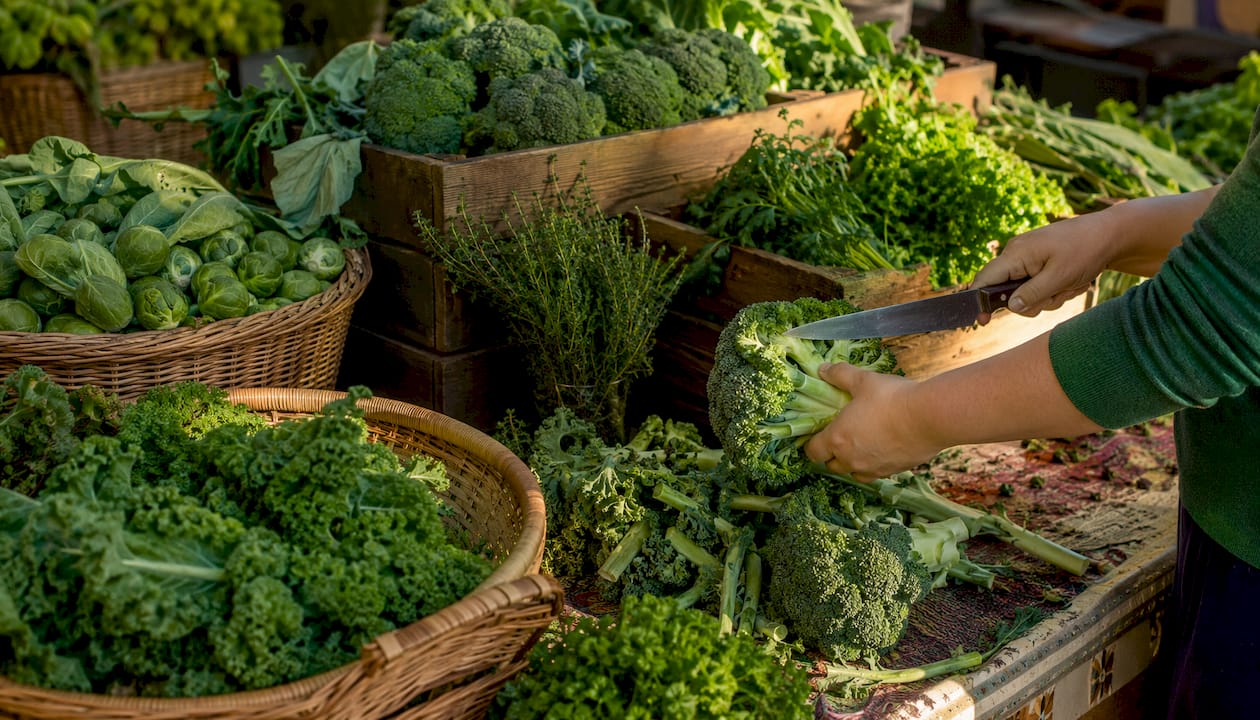
Pro Tip: Cruciferous vegetables like broccoli and Brussels sprouts contain compounds that support CYP450 activity. Adding them a few times a week is a more evidence-grounded “liver support” move than most supplement labels.
Which detox methods actually hold up to scrutiny?
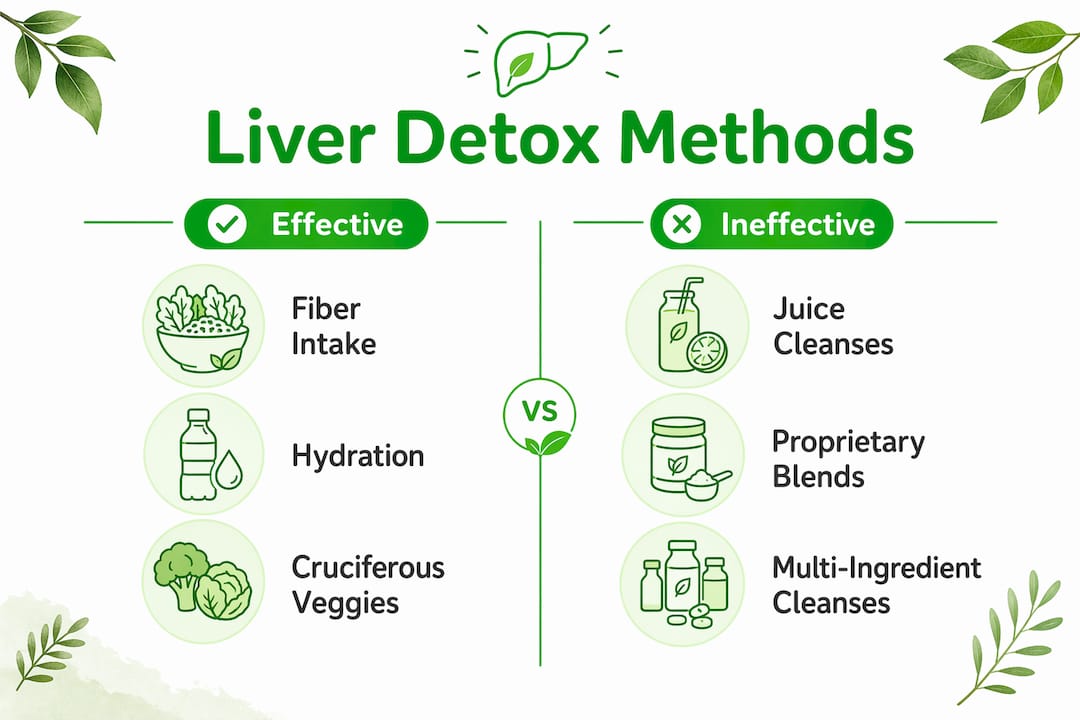
Most popular liver detox approaches produce temporary results at best. MD Anderson puts it plainly: there is no clinical evidence that commercial cleanses improve liver function. Short-term improvements come from eating cleaner, not from toxins being flushed.
| Method | Typical Claim | Evidence Rating | Main Safety Concern |
|---|---|---|---|
| Juice cleanses | Flushes liver toxins | Inconclusive | Blood sugar spikes, muscle loss |
| Detox teas | Supports liver drainage | Limited | Some linked to hepatotoxicity |
| Alkaline diet | Changes liver pH | Inconclusive | Generally low risk |
| Milk thistle | Protects liver cells | Some evidence | Drug interactions possible |
| Turmeric | Reduces liver inflammation | Limited (human trials) | High doses may irritate GI tract |
| Burdock root | Blood and liver cleansing | Limited | Diuretic effect; avoid in pregnancy |
| Sea moss | Mineral replenishment | Limited | Excess iodine risk at high doses |
| Multi-ingredient commercial cleanses | Full body reset | Potentially risky | Undisclosed herb interactions |
A few things stand out in that table. Milk thistle has the strongest signal of the herbal options — Johns Hopkins notes it has shown decreased liver inflammation in some studies, though human trial data are not yet strong enough to recommend it for routine prevention. Turmeric and burdock root have traditional use and some lab-level support, but controlled human trials remain thin.
The real danger zone is multi-ingredient commercial cleanses. When you combine several bioactive herbs without controlled dosing data, interaction profiles become unknown, and the risk of idiosyncratic liver injury rises.
- Extreme fasting (under 500 calories daily) can stress the liver rather than rest it.
- Detox teas containing senna or pyrrolizidine alkaloids have been linked to documented liver injury cases.
- “Proprietary blend” labels hide individual ingredient doses, making safety assessment impossible.
Pro Tip: If a product’s label says “proprietary blend” and lists no individual doses, treat that as a red flag — not a selling point.
What do hepatologists actually recommend?
The consensus across major health centers is consistent: long-term lifestyle habits outperform short-term cleanses every time, with no meaningful contest.
“The most effective ‘detox’ is treating the liver well every day — consistent nutrition and limiting repeated insults like alcohol or processed foods.”
Johns Hopkins hepatologists, via Johns Hopkins Medicine
What that looks like in practice, per Johns Hopkins and Healthgrades:
- Reduce alcohol — the single highest-impact change for most adults.
- Eat a fiber-rich diet — whole grains, legumes, and vegetables support bile flow and gut elimination.
- Exercise regularly — physical activity reduces liver fat in people with metabolic fatty liver disease.
- Maintain a healthy weight — weight loss is the most clinically recognized treatment for non-alcoholic fatty liver.
- Get vaccinated — hepatitis A and B vaccines directly protect liver tissue.
- Sleep 7–9 hours — poor sleep is linked to increased liver inflammation markers.
See a clinician promptly if you notice jaundice (yellowing of skin or eyes), persistent upper-right abdominal pain, dark urine, unexplained fatigue lasting more than two weeks, or abnormal liver enzyme results on bloodwork. These are not detox symptoms — they are warning signs.
How to support your liver safely, starting today
Start with the highest-leverage changes first, then build from there.
- Cut alcohol or eliminate it entirely. Even moderate reduction produces measurable liver enzyme improvement within weeks.
- Add 25–35 grams of fiber daily. Oats, lentils, flaxseed, and leafy greens all count. Fiber binds bile acids in the gut, reducing the liver’s reprocessing load.
- Drink enough water. Adequate hydration supports kidney excretion of water-soluble metabolites from Phase II.
- Prioritize sleep. Aim for 7–9 hours. Liver repair processes are most active during deep sleep.
- Move your body. Thirty minutes of moderate exercise most days reduces liver fat over months.
- Reduce ultra-processed food. Less fructose, fewer additives, and lower saturated fat all reduce the liver’s metabolic burden.
For those drawn to an alkaline herbal routine, burdock root has a long traditional use as a blood and liver herb, and Sebian Sea Moss offers a mineral-dense food option that fits naturally into a whole-food approach. Use them as food-adjacent supports alongside the lifestyle steps above, not as replacements.
Short-term (2–4 weeks): Better energy, clearer skin, and improved digestion — mostly from cleaner eating and hydration.
Medium-term (2–4 months): Measurable reduction in liver fat with consistent weight loss and alcohol reduction.
Long-term (6+ months): Reduced risk of fatty liver progression, lower inflammatory markers, and improved metabolic health.
How to vet herbal supplements before you buy
Supplement efficacy is genuinely uncertain, and the safety risk from unregulated multi-ingredient products is real. The FDA does not evaluate supplements for efficacy before they reach shelves, and some have caused documented liver injury. Knowing how to evaluate herbal remedies safely before purchasing is worth the few minutes it takes.
A practical vetting checklist:
-
Third-party testing: Look for USP, NSF International, or Informed Sport certification on the label.
-
Single-ingredient or clearly dosed formulas: Avoid “proprietary blends” with no per-ingredient amounts.
-
Clinical evidence: Search PubMed for the ingredient plus “human trial” — not just “study.”
-
Drug interaction check: Use a pharmacist or a tool like Drugs.com Interaction Checker before combining herbs with prescription medications.
-
Acetaminophen warning: Herbs that affect CYP450 enzymes (including some turmeric extracts) can alter how acetaminophen is metabolized, raising injury risk.
-
Red flags to walk away from: Claims like “detoxes your liver in 7 days,” undisclosed blends, no manufacturer contact information, and no third-party certification.
Pro Tip: Single-herb products with disclosed doses are almost always safer than multi-herb “cleanse” formulas — and easier to trace if a reaction occurs.
Alkaherbs’ approach to herbal liver support
Alkaherbs draws on the alkaline herbal tradition rooted in Dr. Sebi’s teachings, sourcing organic and non-GMO herbs designed to support the body’s natural processes rather than override them.
For readers interested in herbal liver support, Alkaherbs offers several options worth knowing about. The Full Body Detox (30 Day Supply) is a structured 30-day herbal regimen built around alkaline herbs. Duck Flower is used traditionally as a whole-body cleansing herb. Sebian Sea Moss provides a mineral-dense food supplement that fits a whole-food alkaline routine. Burdock root formulas round out the line with a traditionally used blood and liver herb.
These are herbal supports, not medical treatments. If you take prescription medications, are pregnant, or have a diagnosed liver condition, talk to your clinician before adding any herbal supplement. Stop use and seek care immediately if you notice jaundice, abdominal pain, or unusual fatigue after starting a new herb. Browse Alkaherbs’ full range of alkaline herbs to find options that fit your wellness routine.
Key Takeaways
The liver detoxifies continuously through Phase I and II pathways — no supplement resets or accelerates that process, but consistent lifestyle habits measurably protect it.
| Point | Details |
|---|---|
| Liver detox is continuous | Phase I (CYP450) and Phase II (conjugation) run continuously — no cleanse product triggers or accelerates them. |
| Short-term “better” feeling | Improvements after a detox come from cleaner eating, more fiber, and extra fluids, not toxin flushing. |
| Lifestyle beats cleanses | Alcohol reduction, fiber, exercise, sleep, and vaccination are the most clinically supported liver health tools. |
| Supplement safety first | Look for USP or NSF third-party certification; avoid proprietary blends and extravagant detox claims. |
| Alkaherbs herbal options | Duck Flower, Sebian Sea Moss, burdock root, and the Full Body Detox are herbal supports to use alongside, not instead of, evidence-based habits. |
Herbal tradition and medical evidence can coexist
There is a false choice that gets repeated in wellness circles: either you trust herbs or you trust medicine. That framing does a disservice to both. Herbal traditions carry centuries of accumulated observation, and some of that observation is now being validated in labs. Milk thistle’s silymarin compounds, burdock root’s inulin and antioxidants, sea moss’s mineral density — these are not invented. The honest position is that human clinical trial data are still catching up to traditional use, and that gap requires caution, not dismissal.
What I find more concerning than herbs is the commercial cleanse industry that wraps unverified multi-ingredient formulas in the language of tradition. That is where the real risk lives. A single, well-sourced herb used at a reasonable dose alongside a genuinely clean diet is a very different thing from a 14-ingredient “liver flush” with no disclosed dosing. The former respects the body’s own continuous work. The latter gambles on it.
My recommendation: build the lifestyle foundation first — alcohol reduction, fiber, sleep, movement. Then, if herbal support appeals to you, choose single-ingredient or clearly dosed products from a brand that is transparent about sourcing. Consult a clinician, especially if you take any prescription medication.
Sources and further reading
- How does the liver work? — InformedHealth.org / NCBI Bookshelf — liver physiology overview
- Physiology, Liver — StatPearls / NCBI Bookshelf — Phase I and II detox pathways, glutathione
- Biochemistry, Biotransformation — StatPearls / NCBI Bookshelf — biotransformation mechanisms and drug interactions
- Detoxing Your Liver: Fact Versus Fiction — Johns Hopkins Medicine — expert consensus, supplement risks, lifestyle recommendations
- The Facts Behind 5 Detox Myths — MD Anderson Cancer Center — detox myth analysis
- The Truth About Detoxes — The Conversation (liver specialist) — specialist perspective on continuous liver function
- Myths and Facts About Detoxifying the Liver — Healthgrades — evidence-based habit summary
- Burdock Root Detox: Natural Support for Liver and Skin Health — Alkaherbs — burdock root traditional use and preparation
- Full Body Detox (30 Day Supply) — Alkaherbs — product detail and ingredient information
This article is general health information, not medical advice. Confirm current guidelines and your personal situation with a qualified clinician or pharmacist before making changes to your health routine.